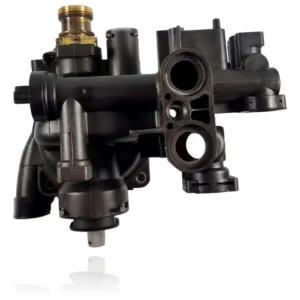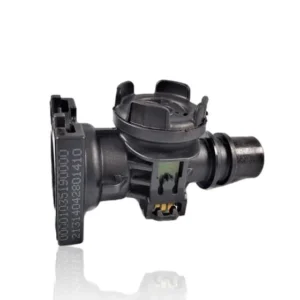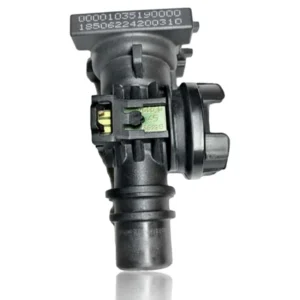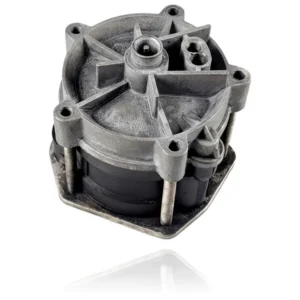


























































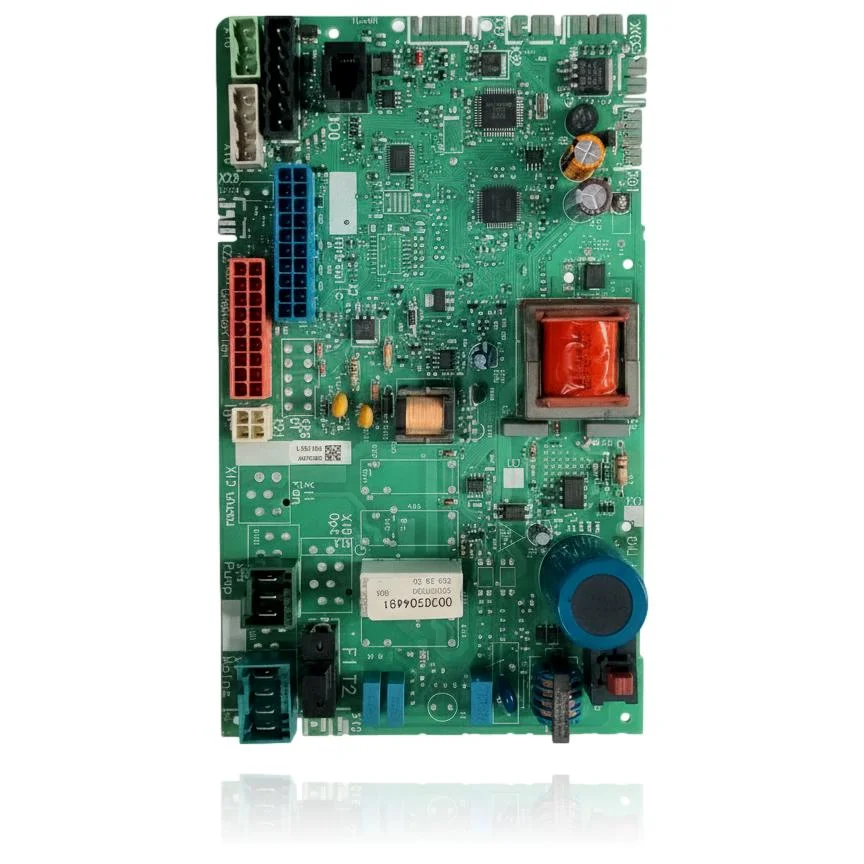
Main Control PCB Saunier Duval Themafast Condens F25 A Ref. 0020086375
If your boiler does not start, locks out, or exhibits erratic behavior, you may need the Saunier Duval Themafast Condens F25 A Main Control PCB. This board is responsible for controlling the ignition, burner modulation, pump, and safety features of the boiler. When it fails, you may notice fault codes such as F.63, F.65, F.64, F.61, or F.62. It is compatible with models Thema Condens F25, F25 A1, Themafast Condens F25, F30 A1, Semia Condens F25, and Hermann Micra Plus Condens 25, among others. It is recommended to replace it upon detecting these malfunction symptoms.
VAT included
Saunier Duval boilers compatible with reference 0020086375
PCB with reference 0020086375. Six confirmed compatibilities: F25 and F25 A1.
Proven compatibility
| Boiler model | Family | Verification |
|---|---|---|
| Saunier Duval F25 | Thema Condens | Contrasted |
| Saunier Duval F25 A1 | Thema Condens | Contrasted |
| Saunier Duval F25 | Themafast Condens | Contrasted |
| Saunier Duval F30 A1 | Themafast Condens | Contrasted |
| Saunier Duval F25 | Semia Condens | Contrasted |
| Saunier Duval 25 | Hermann Micra Plus Condens | Contrasted |
Can't see your model or have questions? The printed reference takes precedence. How to check it · Send us a photo via WhatsApp.
How to check if the reference 0020086375 is the part for your boiler.
What determines it is not the boiler model, but the reference printed on the part you already have installed.
- Find the reference printed on the installed part and check whether it matches the catalogue reference 0020086375. If it is not visible, do not identify the part from its shape alone.
- Check the full boiler model on its data plate and look for it in the model associations on this page.
- Compare the connections and physical body with the original part before installation.
- If anything is unclear, send us a photo of the marking via WhatsApp before placing your order.
Symptoms and faults that the PCB 0020086375 resolves.
The PCB controls the ignition, modulation, and safety features of the boiler. These are the typical symptoms and what to do:
Common symptoms and faults
- 01
The boiler shows no signs of life: no display, no pilot light, and no attempt to ignite.
Cause: There is no output voltage from the PCB to the rest of the components, so the boiler remains completely inactive even though mains power is supplied.
Check that the main fuse of the installation has not blown and that the boiler is receiving 230V at the input connector of the PCB.
- 02
The pump or the fan never stop, they keep running with the boiler turned off.
Cause: A relay on the PCB that controls that component can get stuck, keeping the output active even when the control unit is not requesting it.
Check the relay on the PCB (it is usually marked with a code like 0020204481); if it is blackened or swollen, it is a clear indication before replacing the entire board.
- 03
The display turns off and on by itself, or blinks for no apparent reason.
Cause: Moisture or condensation inside the control board casing causes micro-cuts in the power supply to the display.
Open the boiler cover and check for any signs of moisture or visible corrosion on the PCB before declaring it faulty.
- 04
The boiler modulates the flame poorly, increasing and decreasing power without any relation to the demand.
Cause: The signal that the PCB sends to the gas valve to regulate the flame becomes erratic when the control circuit fails.
Check that the flow sensor is not dirty or misaligned, as an incorrect reading can also cause improper modulation even if the PCB is functioning correctly.
Fault codes from Saunier Duval that this spare part resolves.
| Code | Fault | Diagnosis and solution |
|---|---|---|
| F.63 | EEPROM fault. | The integrated EEPROM memory on the main board is damaged; the manufacturer advises replacing the board. Check that it is not a power/grounding issue and, if it persists, replace the PCB. |
| F.65 | Electronic temp. fault. | The PCB electronics are overheated or defective. Check the temperature of the compartment and, if the fault persists, check/replace the PCB. |
| F.64 | Electronic fault/sensor. | A defect in the PCB electronics affects the reading/management of safety sensors. Check the NTC and wiring; if they are correct, the cause is the PCB. |
| F.61 | Fuel valve control fault. | The PCB does not properly excite the gas valve or detects an electrical fault in the circuit. Check the coils and harness; if they are fine, the main PCB is the cause. |
| F.62 | Fuel valve disconnection delay fault. | The electronics keep the gas valve energized or improperly manage the flame extinction. Check the valving/ionization; if correct, replace the PCB. |
| F.67 | Electronic/flame fault. | The flame detection electronics on the PCB give an implausible signal or are damaged. Check ionisation/grounding and, if they are fine, the PCB is the cause. |
| F.27 | Safety shutdown, flame simulation. | Moisture/fault in the flame control circuit of the PCB can cause false detection. Check electrode/ground; if the defect persists, replace the PCB. |
| F.32 | Fault: fan. | A fault in the PCB electronics (power supply/fan reading or Hall sensor) can trigger this code. Check connectors, Hall sensor, and inspect the PCB. |
| F.70 | Fault: invalid appliance code (DSN). | After replacing the display and/or main PCB, the identification of the appliance was not reprogrammed, or there is an incorrect coding resistor. Verify and adjust d.93; if it does not accept the coding, the PCB may be damaged. |
These symptoms can have more than one cause. If your boiler displays a fault code, send it to us via WhatsApp along with a photo of the labeling, and we'll tell you if this is the part.
Data sheet for the Saunier Duval PCB 0020086375.
- Catalogue reference
- 0020086375
- Brand
- Saunier Duval
- Type of part
- PCBs (control boards)
- Units in stock
- 1 unit
- Status
- Refurbished
- Warranty
- 1 year
- Shipping
- Delivery time shown at checkout
- Return
- 14 days
Data read on the part and in the manufacturer's documentation
What we have not been able to verify does not appear here.
- Component code (label)
- 0020204481
- Secondary code
- 70835225R
- Batch and manufacturing date
- 233_06_09 (batch 666)
Manuals and technical documentation
Official documentation of the boiler, useful for locating the part and cross-referencing the fault codes.
- Saunier Duval Thema Condens F25 Manual (PDF)Document © Saunier Duval, provided as a technical reference.
Frequently asked questions about the PCB 0020086375
Is the code 0020204481 the complete reference for this PCB?
What boiler is this PCB registered for?
Spare parts related to Saunier Duval Thema Condens