






























































Short answer
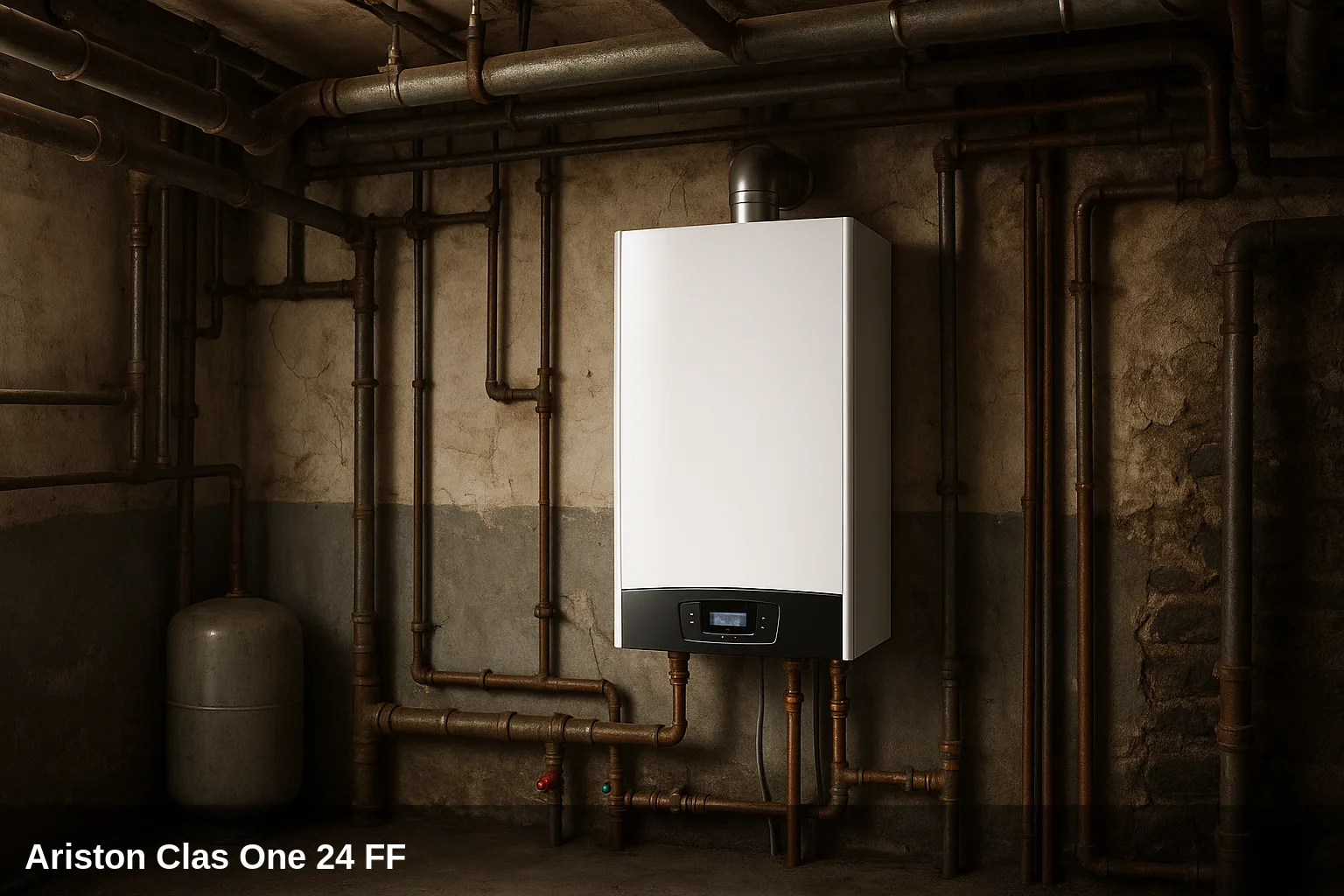
The Ariston Clas One 24 FF is it a wall-mounted gas condensing combi boiler 24 kW (22 kW heating / 26 kW domestic hot water), with XTRATECH stainless steel heat exchanger and energy efficiency class A+. Available in variants 24 FF, 30 FF and 35 FF, as well as in NET and WiFi versions for remote control. Manufacturer reference: 3301021 (24 kW natural gas).
Fault code table for the Clas One 24 FF
Quick summary of all fault codes. Below you have the details of each one with its cause and solution.
| Code | Meaning |
|---|---|
| 101 | Overtemperature in the heating circuit |
| 102 | Pressure sensor short-circuited or not connected |
| 103 | Insufficient circulation — flow temperature rises too quickly |
| 104 | Insufficient circulation — excessive flow/return temperature differential |
| 105 | Insufficient circulation — flow/return differential greater than 55 °C |
| 106 | Insufficient circulation — return temperature exceeds flow temperature (recurrent) |
| 107 | Insufficient circulation — return temperature exceeds flow temperature by 30 °C (sporadic) |
| 108 | Filling of the installation required — low pressure |
| 109 | Installation pressure above 3 bar |
| 110 | Open circuit or short circuit in the heating flow sensor |
| 112 | Open circuit or short circuit in heating return sensor |
| 114 | Open circuit or short circuit in the external sensor |
| 116 | Open floor safety thermostat |
| 118 | Problem with the primary circuit sensor |
| 203 | Open circuit or short circuit in accumulator sensor (SYSTEM version) |
| 301 | EEPROM fault on the display |
| 302 | Communication error between display and main PCB |
| 303 | Fault in the main PCB |
| 304 | Too many reset attempts — more than 5 in 15 minutes |
| 305 | Error in the main PCB (program fault) |
| 306 | Error in the main PCB (EEPROM of the PCB) |
| 307 | Fault in the main PCB (Hall sensor) |
| 501 | Flame absence — ignition fault lockout |
| 502 | Flame detected with gas valve closed |
| 504 | Flame shutdown during the operating cycle |
| 610 | Fan speed insufficient or out of range |
| 612 | Open flue circuit thermal fuse |
What can you check yourself?
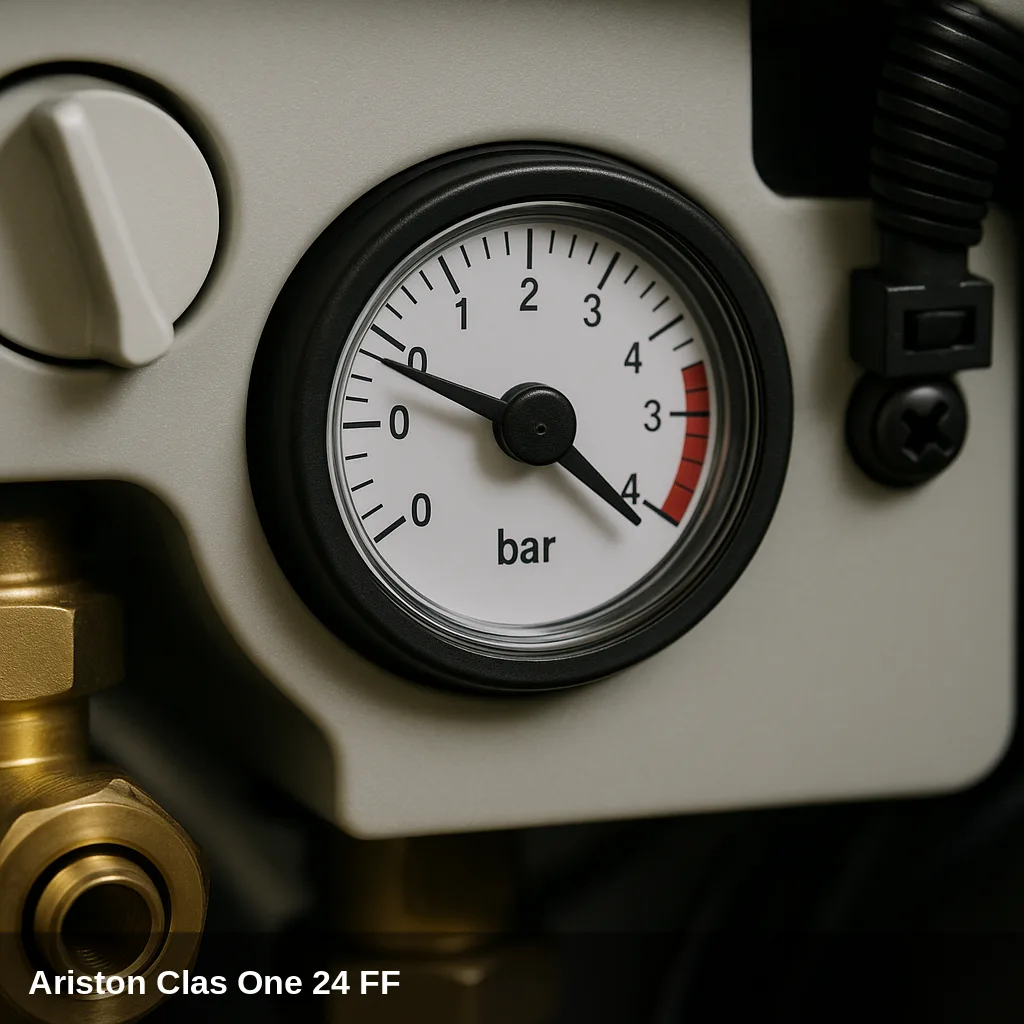
Some alerts can be resolved with simple and safe checks: replenishing the water pressure, bleeding the air from the radiators, checking that the gas valve is open, or resetting the boiler after a temporary lockout. If the code reappears after doing this, there is an underlying cause that should be reviewed by a qualified technician. Do not manipulate internal gas components nor electronics.
How to replenish the pressure step by step
- Locate the filling valve under the boiler.
- Open it slowly while observing the pressure gauge.
- Close the valve upon arrival at between 1 and 1.5 bar in cold.
- Bleed the radiators starting with the furthest one and check the pressure again.
- Reset the boiler; if the pressure warning disappears, the problem was resolved.
All fault codes and their solution
101 — Overtemperature in the heating circuit
Why does it appear: The flow NTC sensor detects a temperature above 102 °C. Common causes: defective circulation pump, blocked installation filter, scaling in the heat exchanger, incorrect gas pressure in the valve.
What to do: Verify the correct operation of the circulation pump. Check and clean the installation filter. Check the inlet gas pressure. If the problem persists, call a qualified technician to inspect the heat exchanger and the gas valve.
Affected component: Circulation pump
102 — Pressure detector short-circuited or not connected
Why does it appear: The pressure sensor of the heating circuit is short-circuited or disconnected (signal of 0 V or 5 V out of range). This may be due to a sensor fault or a wiring issue.
What to do: Visually inspect the electrical connections of the pressure sensor. If the fault persists after reconnecting, the sensor must be replaced by a qualified technician.
Browse catalogue: Catalogue: spare parts · Ariston
103 — Insufficient circulation — flow temperature rises too quickly
Why does it appear: The flow temperature increases by more than 7 °C per second, indicating very reduced circulation. Causes: defective or blocked circulation pump, air pockets in the system, blocked filter.
What to do: Bleed the air from the radiators and the system. Check the condition and operation of the circulation pump. Clean the hydraulic filter. If the problem persists, call a qualified technician.
Affected component: Circulation pump
104 — Insufficient circulation — excessive flow/return temperature differential
Why does it appear: The temperature difference between flow and return exceeds 20 °C per second. Indicates insufficient water circulation in the system. Similar causes to fault 103.
What to do: Bleed the heating circuit. Check the condition of the pump. Inspect the circuit valves. If the problem persists, call a qualified technician.
Affected component: Circulation pump
105 — Insufficient circulation — flow/return differential greater than 55 °C
Why does it appear: The difference between the flow and return temperature exceeds 55 °C. Indicates very low flow in the heating circuit: defective pump, closed valves, obstruction.
What to do: Check that all the valves in the installation are open. Bleed the circuit. Check the pump. If the problem persists, call a qualified technician.
Affected component: Circulation pump
106 — Insufficient circulation — return temperature exceeds flow temperature (recurrent)
Why does it appear: The return pipe temperature consistently exceeds the flow temperature by 10 °C. Possible flow inversion or serious circulation fault.
What to do: Check the correct hydraulic installation and the circulation direction of the pump. Call a qualified technician for diagnosis.
Affected component: Circulation pump
107 — Insufficient circulation — return temperature exceeds flow temperature by 30 °C (sporadic)
Why does it appear: The return temperature exceeds the flow temperature by 30 °C in a specific event. Possible transient fault of the pump or air pocket.
What to do: Bleed the heating circuit. If the fault repeats, call a qualified technician to check the pump and the hydraulic circuit.
Affected component: Circulation pump
108 — Installation filling required — low pressure
Why does it appear: The circuit pressure has dropped below the required minimum. Possible causes: water loss in the installation, filling tap not closed properly, deteriorated expansion vessel.
What to do: Fill the system by opening the filling tap until reaching between 1 and 1.5 bar when cold. If the pressure drops again, inspect the system for leaks and call a qualified technician.
Browse catalogue: Catalogue: spare parts · Ariston
109 — Installation pressure above 3 bar
Why does it appear: The pressure in the heating circuit exceeds 3 bar. Causes: filling valve not completely closed or expansion vessel damaged or not charged.
What to do: Completely close the filling valve. If the pressure remains excessive, bleed water from the system through the nearest bleed valve until the cold pressure is between 1 and 1.5 bar. If the problem persists, call a qualified technician to check the expansion vessel.
Browse catalogue: Catalogue: spare parts · Ariston
110 — Open circuit or short circuit in the heating flow sensor
Why does it appear: The heating circuit flow NTC sensor has an electrical fault: open circuit or short circuit. It may be due to sensor wear or damage to the wiring.
What to do: A qualified technician should check the resistance of the flow sensor and the condition of the wiring. Replace the sensor if it is outside the nominal values.
Affected component: Temperature sensor
112 — Open circuit or short circuit in heating return sensor
Why does it appear: The return NTC sensor of the heating circuit presents an electrical fault. Similar causes to fault code 110.
What to do: A qualified technician should check the connections and resistance of the return sensor. Replace if it is defective.
Affected component: Temperature sensor
114 — Open circuit or short circuit in external sensor
Why does it appear: The external temperature sensor (when installed) presents an electrical fault or is disconnected.
What to do: Verify that the external sensor is correctly connected to the PCB. Check the wiring and the resistance of the sensor. If it is defective, a qualified technician should replace it.
Affected component: Temperature sensor
116 — Floor safety thermostat open
Why does it appear: The floor safety thermostat contact is open (active), usually due to detecting excessive temperature in the underfloor heating circuit. It may also appear if there is no underfloor heating and the TA2 jumper on the PCB is not installed.
What to do: If there is underfloor heating: check that the circuit temperature is correct and that the safety thermostat can be reset. If there is no underfloor heating: a qualified technician should install the TA2 jumper on the control board.
Browse catalogue: Catalogue: circuit boards · Ariston
118 — Problem with the primary circuit sensor
Why does it appear: The primary circuit temperature sensor (heat exchanger) shows a signal anomaly. It may indicate a fault in the sensor or its connection.
What to do: A qualified technician should check the primary circuit sensor, its connections, and the wiring to the control board. Replace if necessary.
Affected component: Temperature sensor
203 — Open circuit or short circuit in accumulator sensor (SYSTEM version)
Why does it appear: Exclusive to the Clas One System version. The external storage tank sensor presents an electrical fault. This may be due to disconnection, damage to the sensor, or the wiring.
What to do: A qualified technician should check the connection and condition of the external tank sensor. Replace if defective.
Affected component: Temperature sensor
301 — Display EEPROM error
Why does it appear: Fault in the EEPROM memory of the display/control board. It may be due to an incorrect installation of the display module or a fault in the display.
What to do: Turn off and on the boiler to attempt a reset. If the fault persists, a qualified technician should check the correct installation of the display module and, if necessary, replace it.
Browse catalogue: Catalogue: circuit boards · Ariston
302 — Communication error between display and main PCB
Why does it appear: Interruption in communication between the display module and the main PCB. This may be due to a damaged connection cable or a fault in one of the two PCBs.
What to do: A qualified technician should inspect the connection cable between the display and the main PCB. If the wiring is in good condition, it may be necessary to replace one of the modules.
Browse catalogue: Catalogue: circuit boards · Ariston
303 — Fault in the main PCB
Why does it appear: Internal fault in the main control board. It may be due to an aged electronic component or a one-time software fault.
What to do: Turn off and on the boiler to attempt a reset. If the error persists, a qualified technician should diagnose and, if necessary, replace the main PCB.
Browse catalogue: Catalogue: circuit boards · Ariston
304 — Too many reset attempts — more than 5 in 15 minutes
Why does it appear: The boiler has undergone more than 5 resets/lockouts within a 15-minute period. This indicates an underlying recurrent problem (e.g., repeated flame failure, unstable pressure) that requires technical diagnosis.
What to do: Do not keep manually resetting the boiler. A qualified technician should identify the root cause of the recurring lockout (gas supply, ionisation electrode, pressure, etc.) and correct it.
Browse catalogue: Catalogue: circuit boards · Ariston
305 — Error in the main PCB (program fault)
Why does it appear: Software fault or internal components fault of the main PCB. Similar to fault code 303.
What to do: Turn off and on the boiler. If the fault persists, call a qualified technician for diagnosis and possible replacement of the PCB.
Browse catalogue: Catalogue: circuit boards · Ariston
306 — Error in the main PCB (PCB EEPROM)
Why does it appear: Fault in the EEPROM memory of the main PCB. It may be due to the deterioration of the PCB components.
What to do: Turn off and on the boiler. If the error persists, a qualified technician should inspect and replace the main PCB.
Browse catalogue: Catalogue: circuit boards · Ariston
307 — Error in the main PCB (Hall sensor)
Why does it appear: Hall sensor fault on the control board or the main PCB.
What to do: A qualified technician should diagnose the Hall sensor and, if it is defective, repair or replace the PCB.
Browse catalogue: Catalogue: circuit boards · Ariston
501 — Flame absence — ignition fault lockout
Why does it appear: The boiler does not detect a flame after the ignition attempt. Possible causes: gas valve closed or gas supply cut off, dirty or deteriorated ignition/ionisation electrode, defective gas valve, low gas pressure in the network.
What to do: Check that the gas shut-off valve is open. Verify that other gas appliances in the home are functioning correctly. If gas is available, press the reset button. If the error repeats, call a qualified technician to inspect the ionisation electrode, the gas valve, and the supply pressure.
Affected component: Ignition/Ionisation Electrode
502 — Flame detected with gas valve closed
Why does it appear: The PCB detects a flame signal when the gas valve should be closed. This could be due to moisture on the ionisation electrode, a fault in the gas valve (not closing completely), or an issue with the electrical ground/earth.
What to do: Turn off the boiler and call a qualified technician to check the ionisation electrode, the condition of the gas valve, and the appliance's grounding connection. Do not repeatedly reset.
Affected component: Ignition/Ionisation Electrode
504 — Flame extinguished during the operating cycle
Why does it appear: The flame extinguishes during normal operation. Causes: gas pressure fluctuation or low pressure, dirty or mispositioned ionisation electrode, obstruction in the flue outlet or air intake.
What to do: Check the gas supply and ensure that no other appliances are consuming excessively at the same time. Check that the flue is not obstructed. If the problem persists, call a qualified technician to inspect the electrode and the gas valve.
Affected component: Ignition/Ionisation Electrode
610 — Fan speed insufficient or out of range
Why does it appear: The fan does not reach the necessary reference speed for forced draught. Causes: damaged, dirty, or faulty bearing fan, Hall sensor fault in the fan, electrical problem in the wiring.
What to do: A qualified technician should check the mechanical and electrical condition of the fan. Clean or replace the fan if necessary.
Browse catalogue: Catalogue: flue fans · Ariston
612 — Flue circuit thermal fuse open
Why does it appear: The safety thermal fuse of the flue duct has activated, indicating excessive temperature in the duct. Causes: obstruction in the flue outlet, excessively long evacuation duct, or with excessive bends.
What to do: Do not reset without resolving the cause. Call a qualified technician to inspect the flue and replace the thermal fuse if it has permanently activated.
Browse catalogue: Catalogue: flue fans · Ariston
When to call a technician
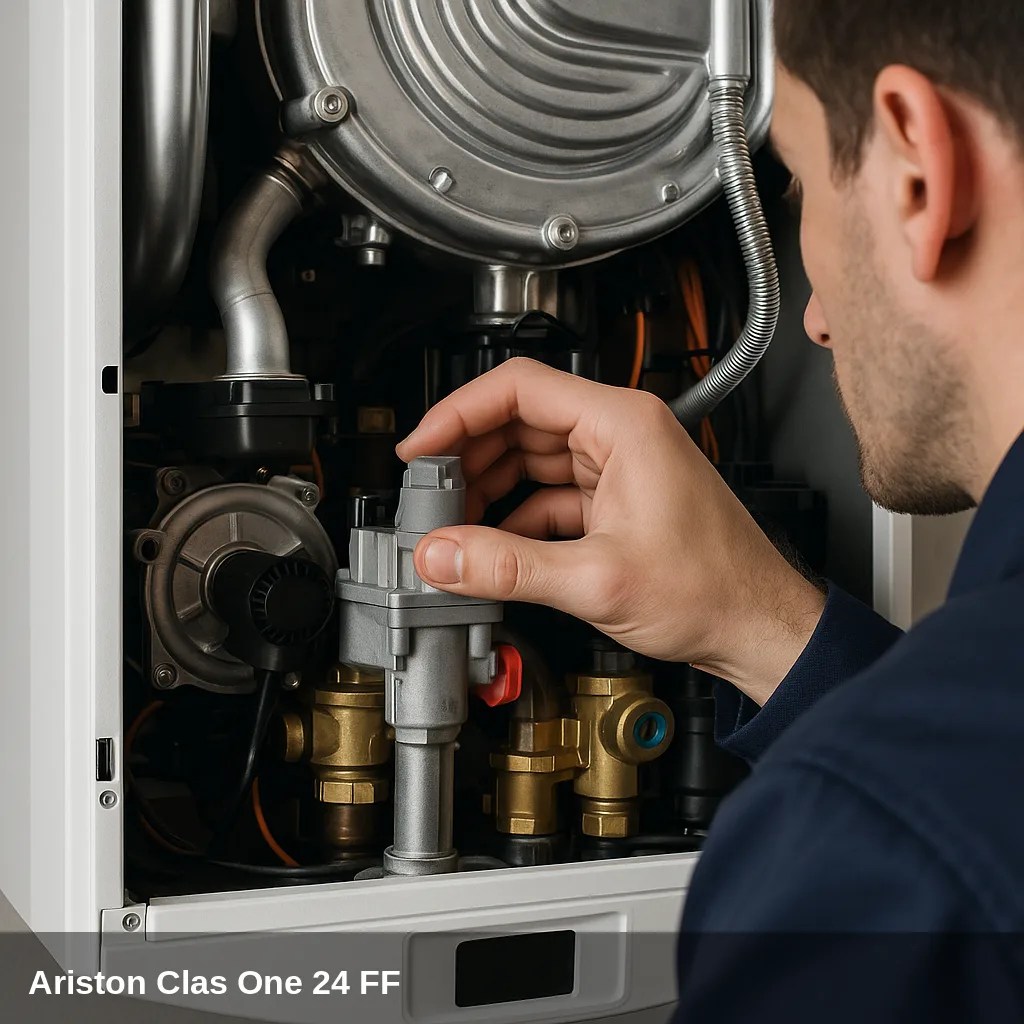
Fault codes related to sensors, electronics, gas valve, fan, or flue gas evacuation require a qualified technician with the appropriate equipment. If the same fault code reappears after a reset, or if the pressure drops repeatedly, a professional inspection is advisable. In Uniclima do you find spare parts for this boiler.
Frequently Asked Questions
In cold conditions (heating off), the circuit pressure should be between 1 and 1.5 bar, visible on the pressure gauge on the front panel. If it is below approximately 0.8 bar, error 108 will appear and the boiler will request filling. If it exceeds 3 bar, error 109 will be triggered. To refill, slowly open the filling tap until the correct range is reached and then close it completely.
When the boiler goes into lockout (fault that does not recover on its own), a lockout symbol appears on the display. Press and hold the power/reset button for about 3 seconds until the boiler attempts to restart. If the fault repeats more than 5 times in 15 minutes, code 304 will appear and a qualified technician will be required to identify the root cause.
As a user, you can safely check: (1) that the gas shut-off valve is open and other gas appliances are working, (2) that the pressure gauge reads between 1 and 1.5 bar when cold and refill if necessary, (3) that the thermostat or programmer is calling for heating or hot water, (4) that there is no power or gas supply outage in your area. Any other actions—internal inspection, valve adjustments, electrical components—should be carried out by a qualified technician.
Fault 501 (absence of flame) can appear even with gas supply if the ignition or ionisation electrode is dirty, deteriorated, or poorly positioned, if the gas pressure in the network is transiently low, or if the boiler's gas valve has an internal problem. After a single lockout, a manual reset can be attempted. If the fault repeats, a qualified technician should inspect the electrode and the gas valve.