






























































Short answer
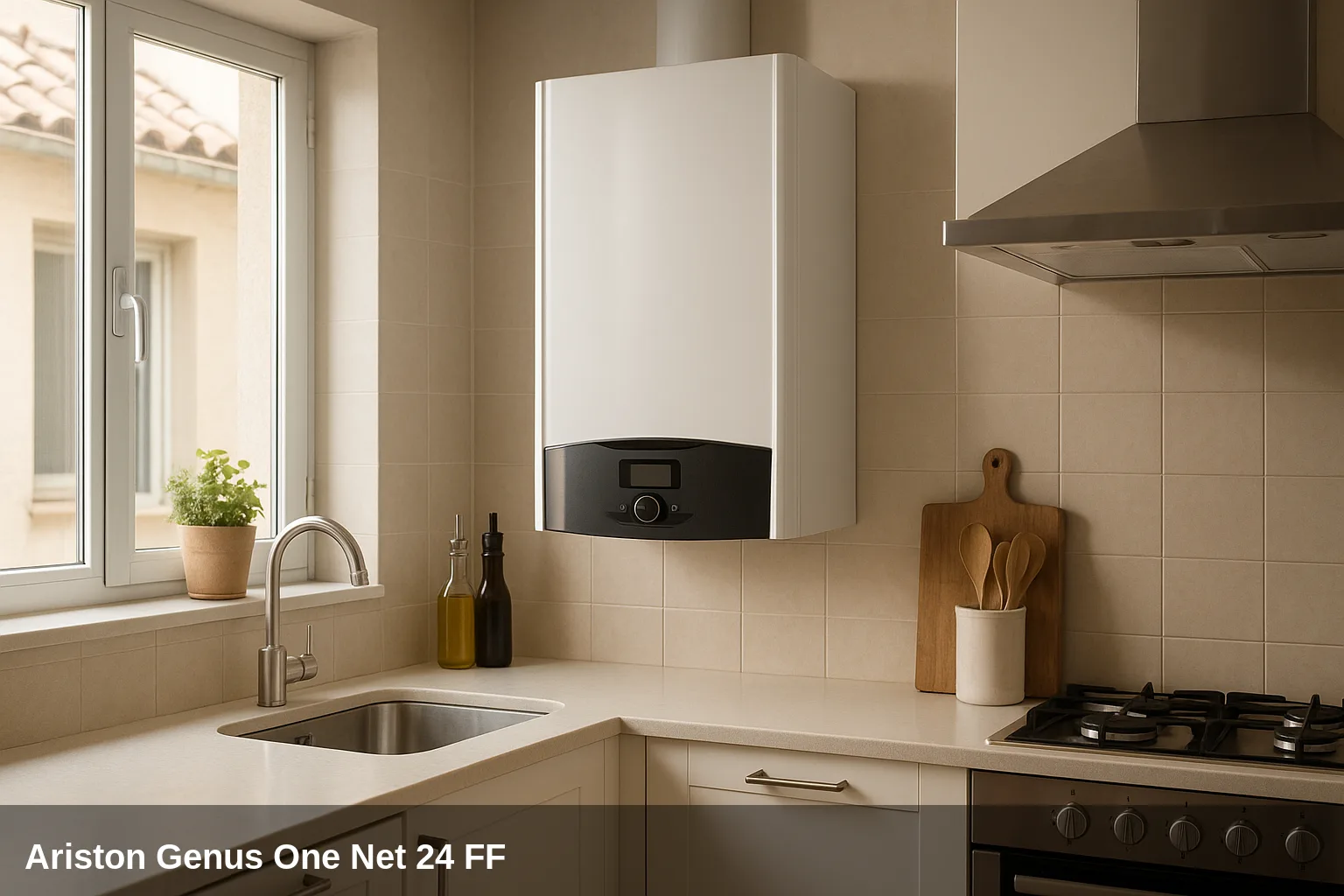
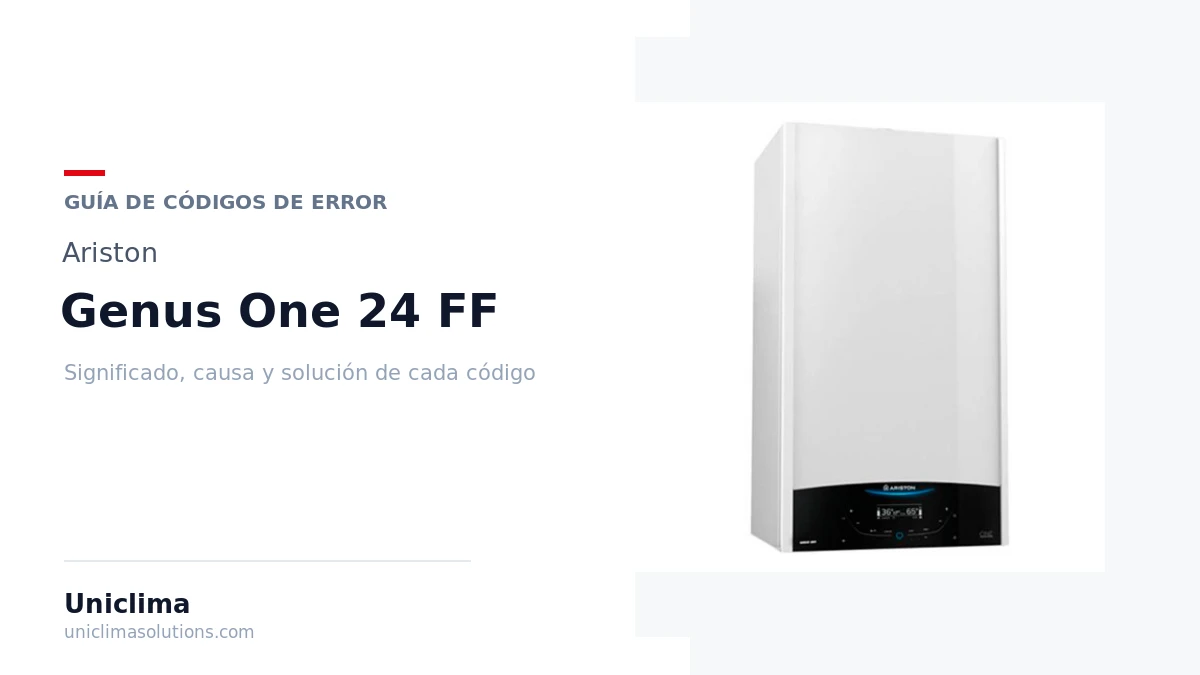
The Ariston Genus One Net 24 FF is a 24 kW wall-mounted gas condensing boiler, featuring an XTRATECH stainless steel heat exchanger, 1:10 modulation, LCD screen, integrated Ariston Net connectivity, and an A+ energy rating. Its electronic control system generates alphanumeric codes on the screen to identify the type of fault: codes 1xx correspond to the heating circuit, 2xx to the domestic hot water circuit, 3xx to the PCB, 5xx to ignition and flame detection, and 6xx to the ventilation and flue gas circuit. Codes with the prefix "P" (1P1, 1P4, 5P3…) are soft lockout warnings: the boiler attempts to recover on its own before permanently locking out.
Fault code table for the Genus One Net 24 FF
Quick summary of all fault codes. Below you have the details of each one with its cause and solution.
| Code | Meaning |
|---|---|
| 101 | Overtemperature in the primary circuit |
| 102 | Fault in the pressure sensor of the heating circuit |
| 105 | Insufficient circulation in the heating circuit |
| 108 | Insufficient heating circuit pressure — filling required |
| 109 | Heating circuit pressure above 3 bar |
| 110 | Fault in the NTC temperature sensor of the heating circuit |
| 112 | Fault in the NTC return temperature sensor of the heating circuit |
| 1P1 | Insufficient circulation warning (first signal) |
| 1P4 | Lack of water — circuit filling required |
| 1P7 | Too many automatic filling cycles in 50 minutes (more than 5) |
| 201 | Fault in the NTC sensor of the domestic hot water (DHW) circuit |
| 301 | EEPROM memory error on the PCB |
| 303 | Fault in the main PCB |
| 304 | Too many manual resets in 15 minutes (more than 5) |
| 309 | Gas valve relay fault |
| 313 | Low electrical supply voltage |
| 3P9 | Scheduled periodic maintenance notice |
| 501 | Absence of flame after ignition attempts |
| 502 | Flame detected with the gas valve closed |
| 504 | Flame shutdown during operation |
| 5P3 | Flame detachment during operation (repeated warning) |
| 5P6 | Ignition test fault |
| 604 | Insufficient fan speed |
| 611 | Fan warning — fault in air intake or flue gas evacuation |
| 612 | Fan fault — speed not measured correctly |
| 6P1 | Delay in the authorization of the flue pressure switch when starting ignition |
| 6P2 | The flue pressure switch opens during operation. |
What can you check yourself?
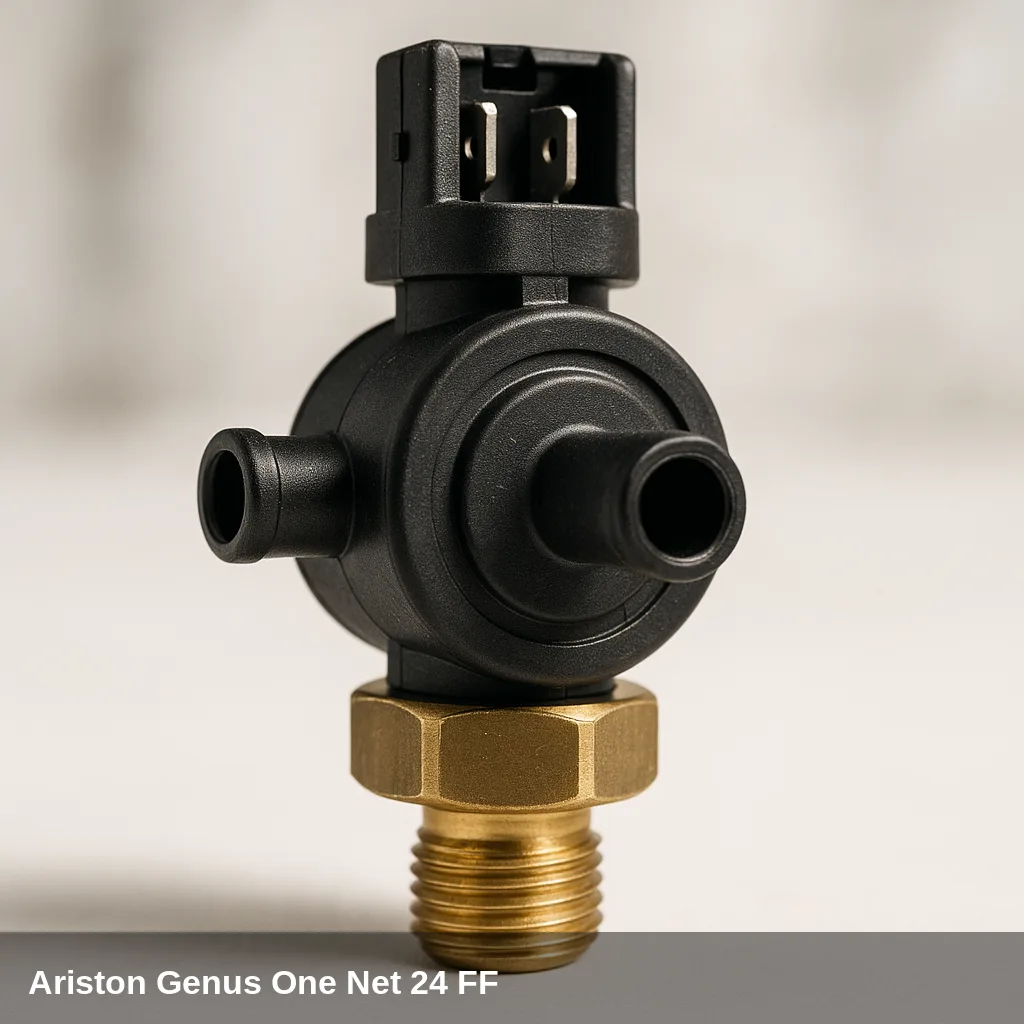
Some alerts can be resolved with simple and safe checks: replenishing the water pressure, bleeding the air from the radiators, checking that the gas valve is open, or resetting the boiler after a temporary lockout. If the code reappears after doing this, there is an underlying cause that should be reviewed by a qualified technician. Do not manipulate internal gas components nor electronics.
How to replenish the pressure step by step
- Locate the filling valve under the boiler.
- Open it slowly while observing the pressure gauge.
- Close the valve upon arrival at between 1 and 1.5 bar in cold.
- Bleed the radiators starting with the furthest one and check the pressure again.
- Reset the boiler; if the pressure warning disappears, the problem was resolved.
All fault codes and their solution
101 — Overtemperature in the primary circuit
Why does it appear: The outlet NTC sensor detects excessive temperature. Common causes: insufficient circulation due to a dirty filter or weak pump, lime scale build-up in the heat exchanger, or air in the circuit.
What to do: Bleed the air from the radiators, clean the boiler filter, and check the circuit pressure. If it persists, a technician should inspect the pump and the heat exchanger.
Browse catalogue: Catalogue: heat exchangers · Ariston
102 — Fault in the heating circuit pressure sensor
Why does it appear: Short circuit or open circuit in the pressure sensor. This may be due to damaged wiring or a faulty sensor.
What to do: A technician must check the wiring of the sensor and replace it if the fault is internal to the sensor.
Browse catalogue: Catalogue: spare parts · Ariston
105 — Insufficient circulation in the heating circuit
Why does it appear: Excessive temperature difference between flow and return. It may indicate a weak pump, closed valves, blocked filter, or installation with reduced flow.
What to do: Check that all zone valves are open, clean the mesh filter, and verify the correct operation of the pump.
Affected component: Circulation pump
108 — Insufficient heating circuit pressure — filling required
Why does it appear: The pressure has dropped below the minimum operating level (usually 0.5 bar). Causes: leak in the circuit, bleeding of radiators without refilling, or expansion vessel fault.
What to do: Open the filling tap until reaching between 1 and 1.5 bar and press RESET. If the pressure drops again in a short time, there may be a leak or the expansion vessel may be defective.
Browse catalogue: Catalogue: spare parts · Ariston
109 — Heating circuit pressure above 3 bar
Why does it appear: Overpressure due to excessive filling, filling valve stuck open, or expansion vessel without charge.
What to do: Turn off the boiler and let it cool down. Bleed water through the safety valve until it drops below 2 bar. Do not restart until the pressure is correct.
Browse catalogue: Catalogue: spare parts · Ariston
110 — Fault in the NTC temperature sensor of the heating circuit flow
Why does it appear: Open circuit or short circuit in the outlet temperature sensor. It could be a damaged sensor or deteriorated wiring.
What to do: A technician must measure the resistance of the NTC sensor and replace it if it is outside the specified range.
Affected component: Temperature sensor
112 — Fault in the NTC return temperature sensor of the heating circuit
Why does it appear: Open circuit or short circuit in the return temperature sensor. Damaged sensor or loose connections.
What to do: A technician must check the electrical connections of the return sensor and replace it if the resistance measurement is not correct.
Affected component: Temperature sensor
1P1 — Insufficient circulation warning (first signal)
Why does it appear: The temperature differential between flow and return exceeds the threshold but has not yet reached a definitive lockout. It could be air in the circuit, a pump at low speed, or partially closed valves.
What to do: Bleed the air from the heating circuit and check the pump flow rate. The boiler may recover on its own; if the warning repeats, call a technician.
Affected component: Circulation pump
1P4 — Lack of water — circuit filling required
Why does it appear: The pressure has dropped below 0.6 bar. Small leak, bleeding of radiators without subsequent refilling, or expansion vessel fault.
What to do: Fill the circuit until it reaches 1-1.5 bar using the filling tap. If the cycle repeats frequently, check the circuit for leaks.
Browse catalogue: Catalogue: spare parts · Ariston
1P7 — Too many automatic filling cycles in 50 minutes (more than 5)
Why does it appear: Active leak in the circuit or expansion vessel fault causing the boiler to refill with abnormal frequency.
What to do: Check the entire heating circuit for visible leaks. A technician should check the set pressure of the expansion vessel.
Browse catalogue: Catalogue: spare parts · Ariston
201 — Fault in the NTC sensor of the domestic hot water (DHW) circuit
Why does it appear: Open circuit or short circuit in the domestic hot water (DHW) NTC sensor. Damaged sensor or deteriorated connections.
What to do: A technician must check the connections and resistance of the DHW NTC sensor and replace it if necessary.
Affected component: Temperature sensor
301 — EEPROM memory error on the PCB
Why does it appear: Internal fault in the non-volatile memory of the control board. It can occur after a sudden power cut or due to aging of the board.
What to do: Attempt a reset using the RESET button. If the fault code persists, a technician should assess whether the PCB needs reprogramming or replacement.
Browse catalogue: Catalogue: circuit boards · Ariston
303 — Fault in the main PCB
Why does it appear: Internal fault of the microprocessor or the PCB circuits. In the Genus One, it is common to associate it with degraded SMD capacitors affecting the gas valve circuit.
What to do: Call technical service. In some documented cases, the cause is a ceramic capacitor of 1 nF or 22 nF in parallel to the gas valve solenoid that needs to be replaced.
Browse catalogue: Catalogue: circuit boards · Ariston
304 — Too many manual resets in 15 minutes (more than 5)
Why does it appear: The user has pressed RESET repeatedly without identifying the underlying fault. The boiler locks out to prevent damage.
What to do: Do not press RESET anymore. Call technical service to diagnose the root cause that generated the repeated resets.
Browse catalogue: Catalogue: circuit boards · Ariston
309 — Fault in the gas valve relay
Why does it appear: The relay that controls the opening of the gas valve presents an electrical fault. In the Genus One, it is frequently associated with the degradation of SMD components (BCP53-16 transistors or resistors) on the control board.
What to do: Technician required. The inspection includes the valve relay, connection wiring, and PCB inspection; it may be necessary to replace components or the entire PCB.
Browse catalogue: Catalogue: circuit boards · Ariston
313 — Low electrical supply voltage
Why does it appear: The mains voltage detected by the PCB is below the minimum required. It could be an issue with the domestic electrical installation or a fault in the PCB itself.
What to do: Check the voltage in the electrical panel. If the mains voltage is correct, a technician should inspect the PCB.
Affected component: Electrical installation
3P9 — Scheduled periodic maintenance notice
Why does it appear: It is not a fault. The boiler has reached the number of hours or the configured period for the annual inspection.
What to do: Contact the technical service to perform the annual maintenance. The notification can be temporarily deactivated from the service parameters menu (option 8.5, value 0).
501 — Flame absence after ignition attempts
Why does it appear: The boiler has not detected a flame after 5 attempts. Possible causes: gas valve closed or insufficient gas pressure, dirty or worn ionisation electrode, contaminated burner, or blocked flue pipe.
What to do: Check that the gas valves are open and that there is a supply (check other gas appliances). Press RESET once. If it repeats, a technician should clean or replace the ionisation electrode and inspect the burner.
Affected component: Ignition/Ionisation Electrode
502 — Flame detected with the gas valve closed
Why does it appear: The ionisation electrode sends a flame signal when the valve should be closed. It could be the electrode being wet or having conductive deposits, or the gas valve not closing properly.
What to do: Turn off the boiler. A technician should check the condition of the electrode, clean or replace it, and verify the proper closure of the gas valve.
Affected component: Ignition/Ionisation Electrode
504 — Flame extinguished during operation
Why does it appear: The flame has unexpectedly extinguished during the heating cycle. Common causes in the Genus One: unstable gas pressure, deteriorated ionisation electrode, or degradation of components on the control board (SMD capacitors in the gas valve circuit).
What to do: A technician must check the dynamic gas pressure at the burner, the condition of the electrode, and the PCB. Press RESET only once; if the lockout returns, do not persist.
Affected component: Ignition/Ionisation Electrode
5P3 — Flame detachment during operation (repeated warning)
Why does it appear: The flame intermittently separates from the burner. In the Genus One, it is one of the most frequent codes and is usually associated with: worn ionisation electrode, low gas pressure, or a fault in the PCB (degraded SMD capacitors next to the gas valve control transistor).
What to do: A technician should clean or replace the ionisation electrode, check the gas pressure, and if the problem persists, inspect the PCB with special attention to the capacitors in the valve circuit.
Affected component: Ignition/Ionisation Electrode
5P6 — Ignition test fault
Why does it appear: The ignition system self-check sequence does not complete correctly. It could be the ignition electrode, the ignition transformer, or the PCB.
What to do: A technician must check the ignition electrode, its connections, and the ignition transformer.
Affected component: Ignition/Ionisation Electrode
604 — Insufficient fan speed
Why does it appear: The fan does not reach the necessary revolutions to ensure safe combustion. Causes: dirty or blocked fan, worn fan motor, obstructed flue pipe, or electrical fault in the Hall sensor.
What to do: A technician must inspect and clean the fan, check the flue pipe, and verify the Hall sensor signals. If the motor is deteriorated, it must be replaced.
Browse catalogue: Catalogue: flue fans · Ariston
611 — Fan warning — fault in air intake or flue gas evacuation
Why does it appear: The system detects a problem in the ventilation circuit: flue pipe partially obstructed, fan dirty or rubbing, or condensate blocking the flue outlet on cold days.
What to do: Check that the flue pipe is neither blocked nor crushed. A technician should inspect the fan and the evacuation circuit.
Browse catalogue: Catalogue: flue fans · Ariston
612 — Fan error — speed not measured correctly
Why does it appear: The fan speed sensor (Hall sensor) is not sending a valid signal to the PCB. It could be a faulty sensor or the fan motor itself.
What to do: A technician must check the Hall sensor of the fan, the wiring, and the motor. If the motor does not give a signal, the assembly must be replaced.
Browse catalogue: Catalogue: flue fans · Ariston
6P1 — Delay in the flue pressure switch authorization during ignition startup
Why does it appear: The flue pressure switch does not close within the expected time when the fan starts. It could be the fan being slow to start, a defective pressure switch, a blocked capillary tube of the pressure switch, or the flue pipe having excessive resistance.
What to do: A technician must check the correct start-up of the fan, the connection of the pressure switch capillary tube, and the condition of the pressure switch itself.
Browse catalogue: Catalogue: flue fans · Ariston
6P2 — The flue pressure switch opens during operation
Why does it appear: The pressure switch loses the pressure signal while the boiler is running. Indicates a drop in flow in the fan, partial obstruction of the flue circuit, or a deteriorated pressure switch.
What to do: A technician must check the fan under load, the pressure switch capillary tube, and the exhaust circuit.
Browse catalogue: Catalogue: flue fans · Ariston
When to call a technician
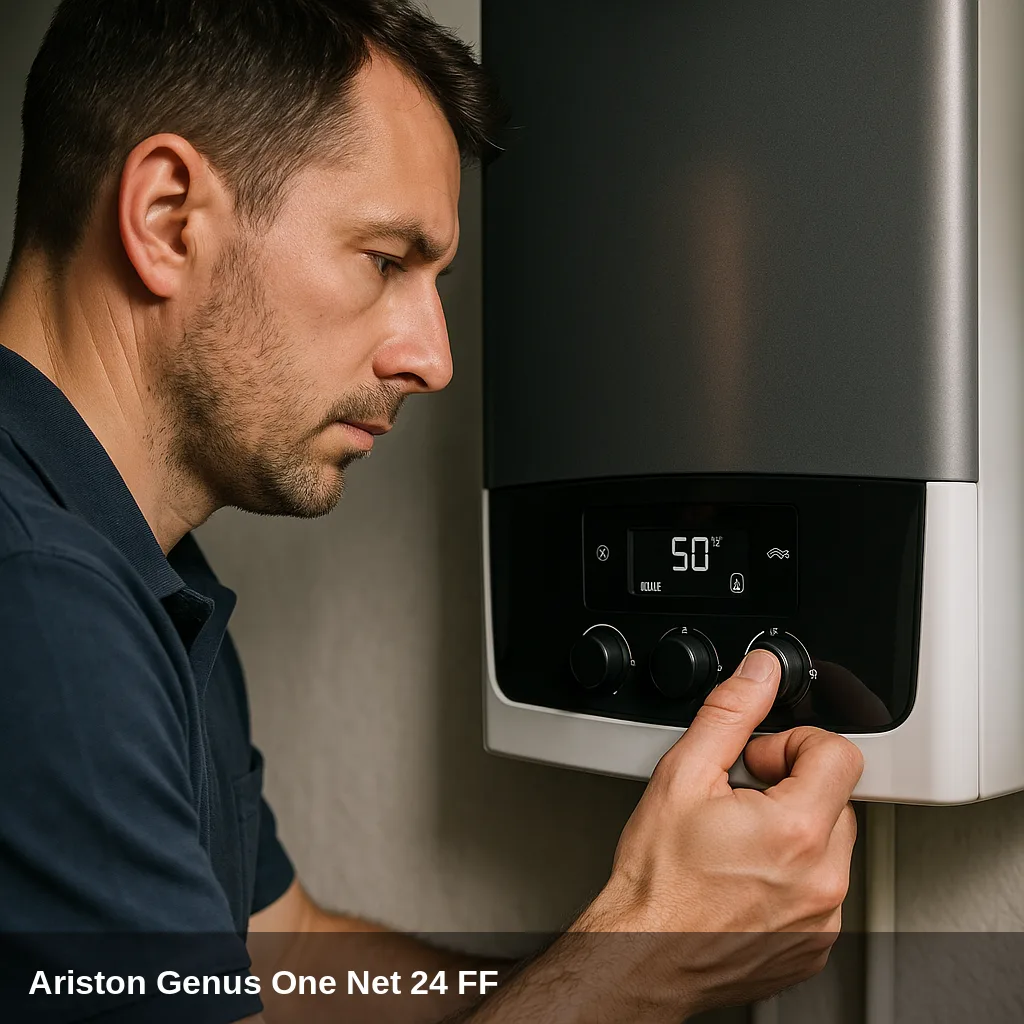
Fault codes related to sensors, electronics, gas valve, fan, or flue gas evacuation require a qualified technician with the appropriate equipment. If the same fault code reappears after a reset, or if the pressure drops repeatedly, a professional inspection is advisable. In Uniclima do you find spare parts for this boiler.
Frequently Asked Questions
The fault code 108 indicates that the pressure in the heating circuit is too low. Locate the filling tap (usually a fitting with a handle beneath the boiler), open it slowly until the pressure gauge reads between 1 and 1.5 bar, and press RESET. If the pressure drops again in the following days, there may be a leak in the circuit or the expansion vessel may need checking.
The fault code 501 means that the boiler has not detected a flame after several attempts. First, check that the gas shut-off valve is open and that other gas appliances are functioning normally. Press RESET once. If the lockout occurs frequently, the ionisation electrode may be dirty or worn and needs to be inspected by a technician.
This combination of codes is characteristic of the Genus One. In many cases, it is caused by the deterioration of the ionisation electrode, but when a new electrode does not resolve the issue, the cause is often the degradation of SMD ceramic capacitors on the PCB, specifically in the gas valve control circuit. It requires diagnosis by a technician with measuring equipment.
The code 3P9 is not a fault: it is a reminder for scheduled periodic maintenance. The boiler continues to operate normally. However, it is advisable to contact the technical service to carry out the annual check recommended by the manufacturer, which includes cleaning the burner, checking combustion, and reviewing safety features.