






























































Short answer
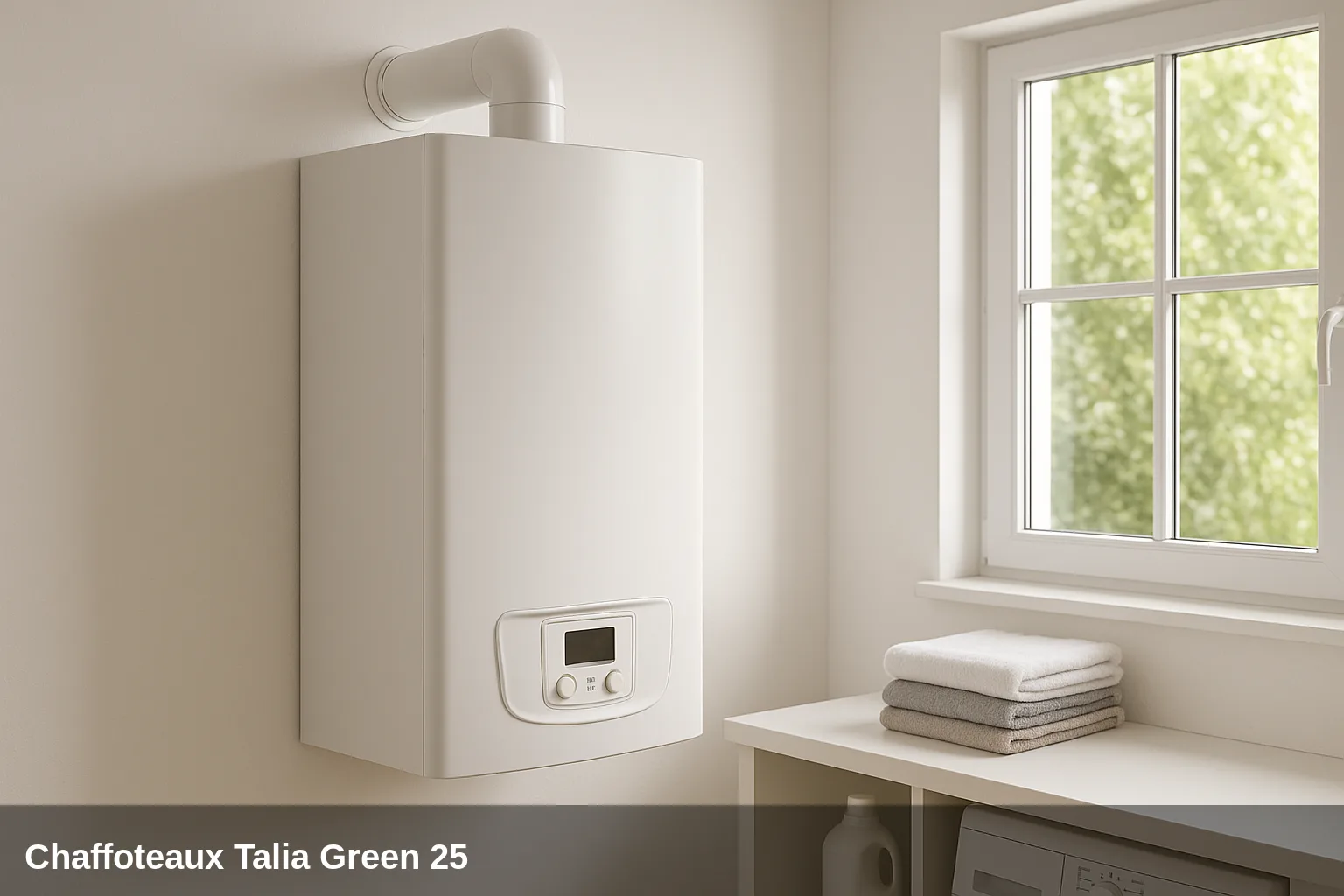
The Chaffoteaux Talia and the Talia Green they display their faults through codes on the screen, such as 1 01, 1 P4 or 5 01In this guide, you have the meaning of each code, why it appears, and how to solve it, as well as the exact spare part when the fault corresponds to a specific component. Chaffoteaux and Ariston share the diagnostic system, so their codes match those of other models of the brand.
Fault code table for Talia / Talia Green 25
Quick summary of all fault codes. Below you have the details of each one with its cause and solution.
| Code | Meaning |
|---|---|
| 101 | Overtemperature of the primary circuit |
| 102 | Anomaly in the pressure detector (pressure switch) |
| 103 | Insufficient circulation in the heating circuit |
| 108 | Lack of water in the circuit (low pressure) |
| 109 | Excessive installation pressure |
| 110 | Anomaly in the heating flow temperature sensor |
| 112 | Anomaly in the heating return temperature sensor |
| 114 | Anomaly in the external sensor |
| 201 | Anomaly in the domestic hot water (DHW) sensor |
| 203 | Anomaly in the accumulator sensor |
| 301 | EEPROM error on the display |
| 302 | Communication error between the PCB and the display |
| 501 | Absence of flame after the ignition process |
| 502 | Flame detected with the gas valve closed |
| 504 | Repeated flame detachment (6 occurrences) |
| 605 | Anomaly in the flue gas sensor |
| 610 | Thermal fuse open (safety thermostat) |
| 611 | Fan or air inlet anomaly warning (20-minute lockout) |
| 612 | Fan speed insufficient or out of range |
| 801 | Combustion auto-calibration request |
| 802 | Fault in the auto-calibration procedure |
| 803 | Parameter 229 incorrect (nominal power of the boiler) |
| 804 | Busbar disconnector necessary for solar or hybrid system |
What can you check yourself?
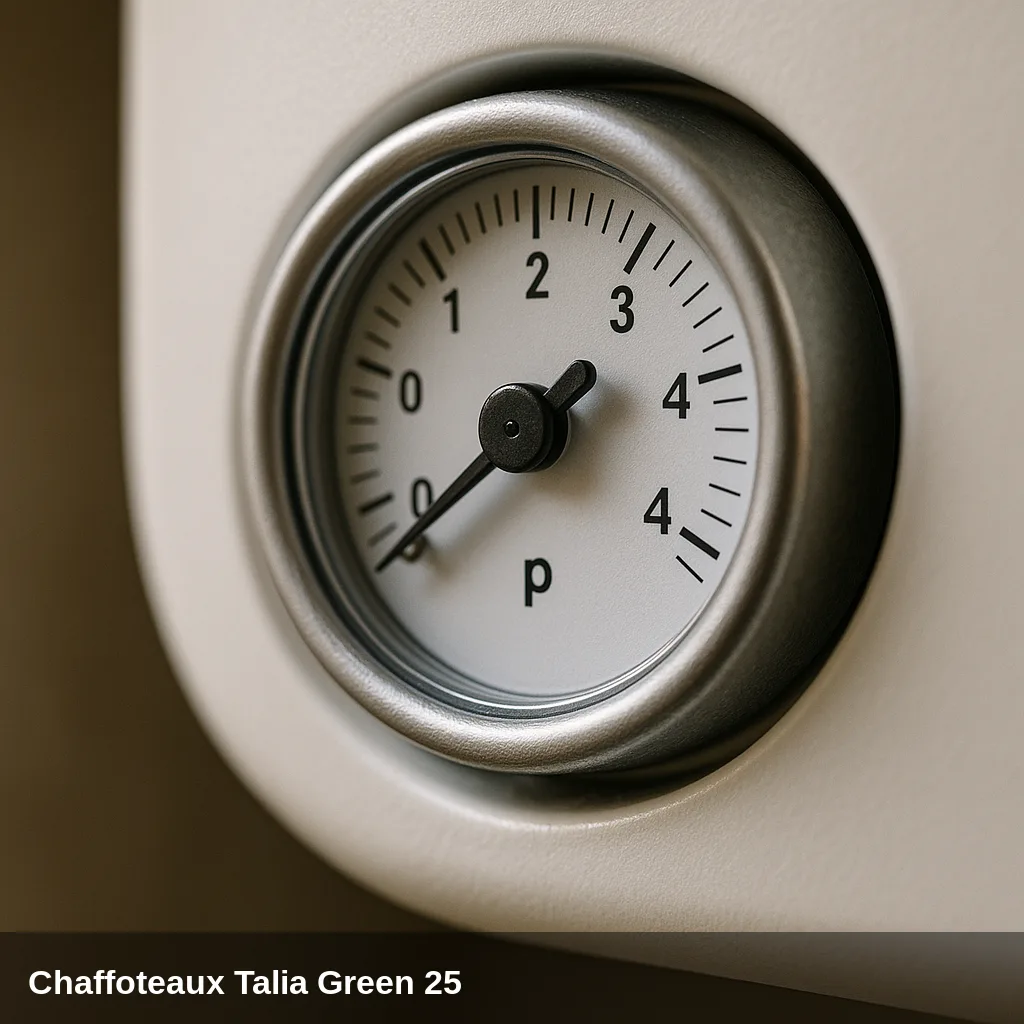
Some alerts can be resolved with simple and safe checks: replenishing the water pressure, bleeding the air from the radiators, checking that the gas valve is open, or resetting the boiler after a temporary lockout. If the code reappears after doing this, there is an underlying cause that should be reviewed by a qualified technician. Do not manipulate internal gas components nor electronics.
How to replenish the pressure step by step
- Locate the filling valve under the boiler.
- Open it slowly while observing the pressure gauge.
- Close the valve upon arrival at between 1 and 1.5 bar in cold.
- Bleed the radiators starting with the furthest one and check the pressure again.
- Reset the boiler; if the pressure warning disappears, the problem was resolved.
All fault codes and their solution
101 — Overtemperature of the primary circuit
Why does it appear: The water temperature exceeds the safety limit. This may be due to poor circulation, a blocked pump, or a dirty heat exchanger.
What to do: Turn off the boiler and allow it to cool. Check that the circulator is working and that the circuit valves are open. If the problem persists, contact a qualified technician.
Browse catalogue: Catalogue: heat exchangers · Chaffoteaux
102 — Anomaly in the pressure detector (pressure switch)
Why does it appear: The pressure switch may be short-circuited, disconnected, or damaged. It may also appear if the pressure is abnormally low or high.
What to do: Check the circuit pressure (it should be between 1 and 1.5 bar when cold). Verify the wiring of the pressure switch. If the component is faulty, it requires replacement by a qualified technician.
Browse catalogue: Catalogue: spare parts · Chaffoteaux
103 — Insufficient circulation in the heating circuit
Why does it appear: Insufficient water flow due to worn or blocked pump, closed valves, clogged filter, or air in the circuit.
What to do: Bleed the heating circuit to remove air. Check that the zone valves are open. If the pump does not rotate or makes noise, it requires inspection by a qualified technician.
Browse catalogue: Catalogue: circulation pumps · Chaffoteaux
108 — Lack of water in the circuit (low pressure)
Why does it appear: The circuit pressure has dropped below the minimum operating level. This may be due to a leak, recent bleeding, or insufficient filling pressure.
What to do: Fill the circuit until it reaches between 1 and 1.5 bar using the filling valve. If the pressure loss repeats, there may be a leak that should be located by a qualified technician.
Browse catalogue: Catalogue: spare parts · Chaffoteaux
109 — Excessive installation pressure
Why does it appear: The pressure exceeds 3 bar, possibly due to overfilling or a poorly charged or depleted expansion vessel.
What to do: Reduce the pressure using the bleeder or the safety valve until the gauge is in the correct range. If the expansion vessel is defective, the technical service should inspect it.
Browse catalogue: Catalogue: spare parts · Chaffoteaux
110 — Anomaly in the heating flow temperature sensor
Why does it appear: Open circuit or short circuit in the flow NTC sensor. This may be due to a broken sensor, stripped cable, or disconnected connector.
What to do: Check the continuity of the wiring and the connection of the sensor on the PCB. The replacement of the sensor or the inspection of the wiring should be carried out by a qualified technician.
Affected component: Temperature sensor
112 — Fault in the heating return temperature sensor
Why does it appear: Open circuit or short circuit in the return NTC sensor. Same causes as fault code 110 but in the return sensor.
What to do: Check the continuity of the return sensor wiring. Replacement of the sensor or inspection of the connector requires a qualified technician.
Affected component: Temperature sensor
114 — Anomaly in the external sensor
Why does it appear: Open circuit or short circuit in the outdoor weather compensation sensor.
What to do: Check the condition of the cable and the external sensor (especially exposed to the elements). If it is damaged, it requires replacement by a qualified technician.
Affected component: Temperature sensor
201 — Anomaly in the domestic hot water (DHW) sensor
Why does it appear: Open circuit or short circuit in the DHW NTC sensor.
What to do: Check the connections of the DHW sensor. If the fault persists, the sensor should be inspected or replaced by a qualified technician.
Affected component: Temperature sensor
203 — Anomaly in the accumulator sensor
Why does it appear: Open circuit or short circuit in the DHW tank sensor (in installations with external tank).
What to do: Check the wiring of the accumulator sensor. Requires inspection by a qualified technician if the sensor is defective.
Affected component: Temperature sensor
301 — EEPROM error on the display
Why does it appear: Fault in the internal memory of the display or the PCB. It may occur after a power outage.
What to do: Try resetting the boiler by disconnecting the electrical supply for a few minutes. If the fault persists, it requires intervention from the official technical service.
Browse catalogue: Catalogue: circuit boards · Chaffoteaux
302 — Communication error between the PCB and the display
Why does it appear: Internal communication bus fault (OpenTherm or proprietary bus). Defective communication cable or damaged PCB.
What to do: Check that the wiring between the display and the main PCB is properly connected. If the error persists, it requires intervention from technical service.
Browse catalogue: Catalogue: circuit boards · Chaffoteaux
501 — Flame absence after the ignition process
Why does it appear: The boiler has attempted to ignite and has not detected a flame. Causes: gas supply cut off or insufficient, gas valve closed, dirty or faulty ionisation electrode, obstructed flue.
What to do: Check that the gas tap is open and there is supply. Press the reset button. Do not perform more than 5 resets in 15 minutes. If the error persists after resetting, contact a qualified technician to inspect the electrode, gas valve, and flue outlet.
Affected component: Ignition/Ionisation Electrode
502 — Flame detected with the gas valve closed
Why does it appear: The ioniser detects a flame signal when the gas valve should be closed. This may indicate a gas valve that is not closing properly or electrical interference.
What to do: Do not attempt to operate the boiler in this condition. It requires immediate intervention by a qualified technician to inspect the gas valve.
Browse catalogue: Catalogue: gas valves · Chaffoteaux
504 — Repeated flame detachment (6 occurrences)
Why does it appear: The flame goes out recurrently during operation. Causes: low gas pressure, dirty burner, blocked heat exchanger, or worn electrode.
What to do: Check the gas supply pressure. If the problem persists, the burner and ionisation electrode require inspection by a qualified technician.
Affected component: Ignition/Ionisation Electrode
605 — Combustion gas sensor anomaly
Why does it appear: Open circuit or short circuit in the flue gas temperature sensor.
What to do: Check the wiring of the flue gas sensor. Inspection or replacement requires a qualified technician.
Affected component: Temperature sensor
610 — Thermal fuse open (safety thermostat)
Why does it appear: The safety thermostat has tripped due to overheating in the heat exchanger or in the combustion gases.
What to do: Do not attempt to short-circuit the thermal fuse. It requires diagnosis and replacement by a qualified technician to determine the cause of the overheating.
Browse catalogue: Catalogue: heat exchangers · Chaffoteaux
611 — Fan or air inlet anomaly warning (20-minute lockout)
Why does it appear: The fan does not reach the correct speed, the air intake is blocked, or there is a problem in the flue circuit.
What to do: Check that the flue outlet/inlet is not blocked (nests, dirt, ice in winter). If the fan is damaged or blocked, it requires intervention by a qualified technician.
Browse catalogue: Catalogue: flue fans · Chaffoteaux
612 — Fan speed insufficient or out of range
Why does it appear: The fan does not reach the programmed RPM. Worn motor, defective capacitor, or incorrect tachometer signal.
What to do: Requires inspection of the fan and its wiring by a qualified technician.
Browse catalogue: Catalogue: flue fans · Chaffoteaux
801 — Request for combustion self-calibration
Why does it appear: The boiler requires executing the auto-calibration procedure. It may appear after changes in the gas supply or following an initial start-up.
What to do: Follow the calibration procedure indicated in the installation manual. The installation technician must execute the commissioning menu.
Browse catalogue: Catalogue: circuit boards · Chaffoteaux
802 — Fault in the auto-calibration procedure
Why does it appear: The combustion calibration has not been completed correctly. Possible issue with the modulating valve or the ionisation sensor.
What to do: Repeat the calibration procedure. If the fault persists, a qualified technician should inspect the gas valve and the flame detection system.
Browse catalogue: Catalogue: gas valves · Chaffoteaux
803 — Parameter 229 incorrect (nominal power of the boiler)
Why does it appear: The nominal power set on the PCB does not match the installed model. This can occur after a PCB replacement.
What to do: It requires a qualified technician to access the installer menu and correctly configure the nominal power parameter of the model.
Browse catalogue: Catalogue: circuit boards · Chaffoteaux
804 — Bus disconnector required for solar or hybrid system
Why does it appear: The boiler detects a non-permitted combination with a solar or hybrid system without the decoupling accessory installed.
What to do: Install the clip-in bus decoupling accessory (reference Chaffoteaux 331917). Operation to be carried out by a qualified technician.
Affected component: Electrical installation
When to call a technician
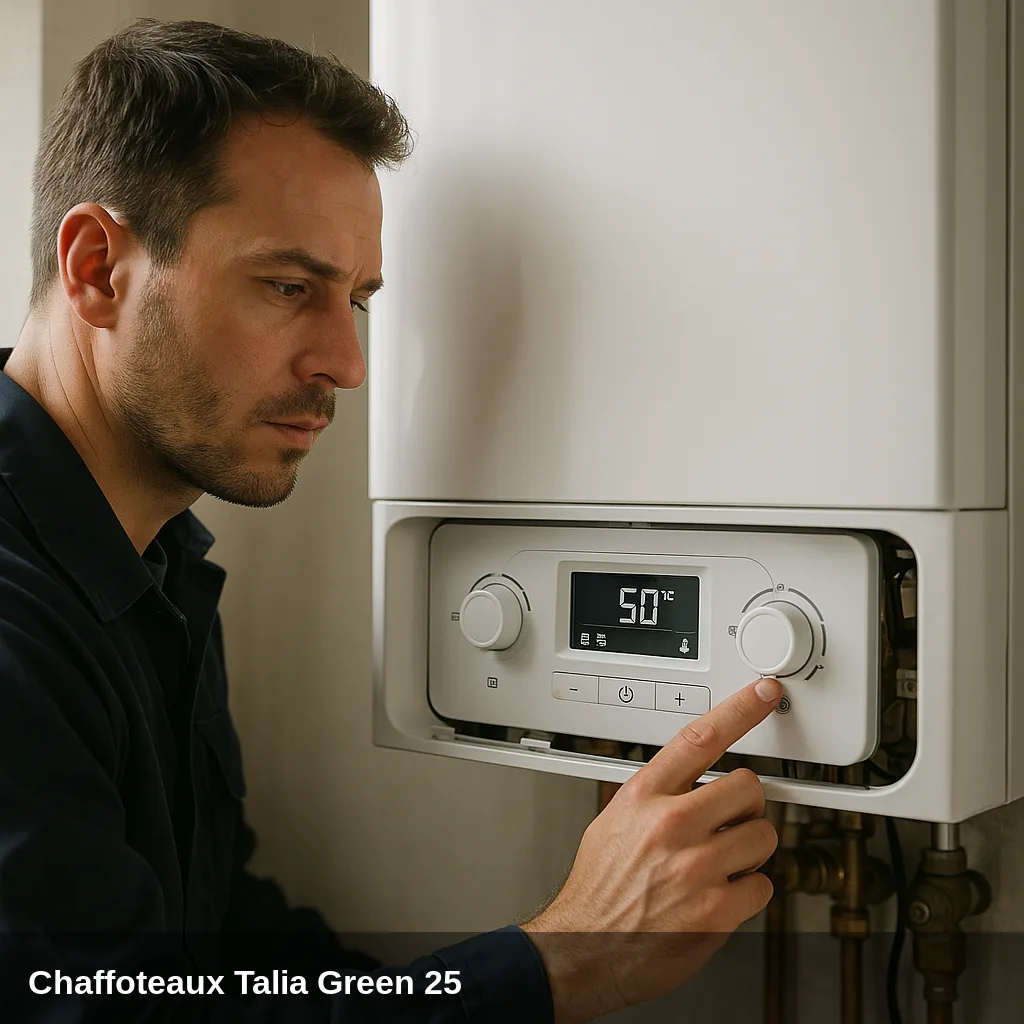
Fault codes related to sensors, electronics, gas valve, fan, or flue gas evacuation require a qualified technician with the appropriate equipment. If the same fault code reappears after a reset, or if the pressure drops repeatedly, a professional inspection is advisable. In Uniclima do you find spare parts for this boiler.
Frequently Asked Questions
It is an overheating issue: the boiler shuts down due to excessive temperature, usually caused by a lack of water circulation (low pressure, air in the circuit, or a blocked pump). Check the pressure and bleed the radiators; if it persists, a technician should inspect it.
The correct cold pressure is 1 to 1.5 bar. If a low pressure warning appears and it drops again after refilling, there is usually a leak in the installation or in the boiler that a technician must locate.
With the reset button on the panel. If the code reappears after resetting, do not insist repeatedly: it indicates an underlying fault that should be diagnosed by a qualified technician.