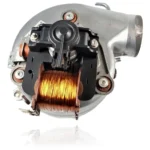

























































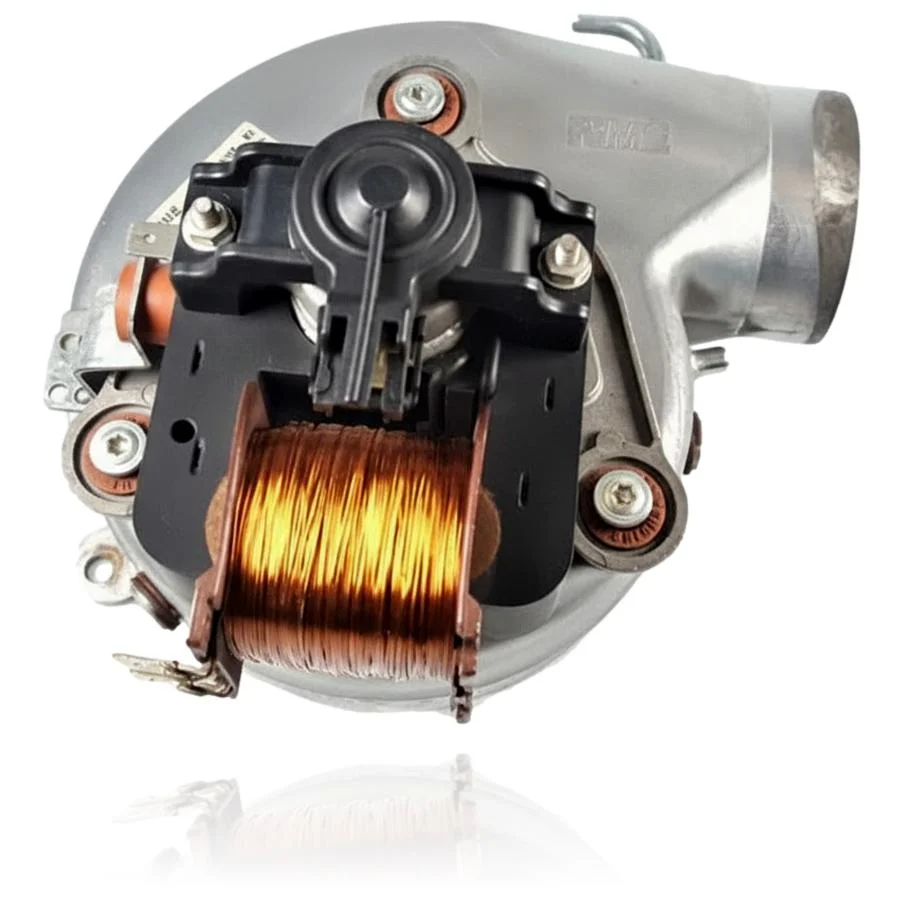
Chaffoteaux Niagara Delta 30 FF Extractor Fime GR01705C Ref. 61020925
When the heating starts, the Chaffoteaux Niagara Delta 30 FF Fime GR01705C fan is responsible for expelling the combustion gases, creating the necessary draft for the boiler to operate. If this flue fan fails, you will notice that the boiler does not ignite or locks out due to a fault in the flue gas evacuation, which can generate fault code 12: Fan error. This fan is compatible with boilers from the Niagara Delta range, such as the Niagara Delta 24 FF, Niagara Delta 28 FF, and Niagara Delta 30 FF, among others. Replacement is necessary when you experience these ignition or lockout issues.
VAT included
Consult via WhatsAppChaffoteaux boilers compatible with reference 61020925
Extractor with reference 61020925. Eight confirmed compatibilities: Niagara Delta 24 FF and Niagara Delta 28 FF.
Proven compatibility
| Boiler model | Family | Verification |
|---|---|---|
| Chaffoteaux Niagara Delta 24 FF | Niagara Delta | Contrasted |
| Chaffoteaux Niagara Delta 28 FF | Niagara Delta | Contrasted |
| Chaffoteaux Niagara Delta 30 FF | Niagara Delta | Contrasted |
| Chaffoteaux Aludra Delta 24 FF | Aludra Delta | Contrasted |
| Chaffoteaux Aludra Delta 28 FF | Aludra Delta | Contrasted |
| Chaffoteaux Amphora Delta 24 FF | Amphora Delta | Contrasted |
| Chaffoteaux Amphora Delta 28 FF | Amphora Delta | Contrasted |
| Chaffoteaux Balixia 24 FF | Balixia | Contrasted |
Can't see your model or have questions? The printed reference takes precedence. How to check it · Send us a photo via WhatsApp.
How to check if ref. 61020925 is the part for your boiler
What determines it is not the boiler model, but the reference printed on the part you already have installed.
- Find the reference printed on the installed part and check whether it matches the catalogue reference 61020925. If it is not visible, do not identify the part from its shape alone.
- Check the full boiler model on its data plate and look for it in the model associations on this page.
- Compare the connections and physical body with the original part before installation.
- If anything is unclear, send us a photo of the marking via WhatsApp before placing your order.
Symptoms and faults that the extractor 61020925 resolves.
The extractor evacuates the combustion gases with forced draft. These are the typical symptoms and what to do:
Common symptoms and faults
- 01
The boiler tries to ignite, makes a starting noise, and stops after a few seconds without producing a flame.
Cause: The extractor does not rotate at the necessary speed for the air pressure switch to confirm the extraction, and without that signal, the control board does not allow the gas to pass.
With the boiler unplugged, spin the fan with your finger: if it's hard to turn or you feel resistance, check the flue first.
- 02
A loud buzzing or metallic beeping is heard in the rear area of the boiler when starting up.
Cause: Bearing wear or accumulated dirt on the blades unbalances the turbine and causes it to rub against the housing.
Open the flue chamber cover and check if the blades have dust or grease; a cleaning sometimes resolves the noise without changing the part.
- 03
The extractor is spinning, but the boiler continues to lock out due to a flue or smoke extraction fault.
Cause: Even if the motor is running, if it does not reach the pressure required by the pressure switch, the control board interprets that there is not enough extraction and blocks for safety reasons.
Check that the flue duct is not blocked, crushed, or has any objects inside before declaring the extractor faulty.
- 04
The fan does not start at all, it doesn't even attempt to spin.
Cause: There may be a power issue in the motor due to a loose connector or a fuse on the PCB, it is not always the motor that has failed.
With the boiler turned off, check that the extractor connector is properly fitted and without loose or burnt wires.
Fault codes Chaffoteaux that this part resolves
| Code | Fault | Diagnosis and solution |
|---|---|---|
| 12 | Fan fault | The fan is operating outside the established parameters. This can cause poor performance of the boiler. If you notice that the boiler is not heating properly and the fan does not sound as it should, it may be the fault of the extractor. |
These symptoms can have more than one cause. If your boiler displays a fault code, send it to us via WhatsApp along with a photo of the labeling, and we'll tell you if this is the part.
Chaffoteaux 61020925 fan datasheet
- Catalogue reference
- 61020925
- Brand
- Chaffoteaux
- Type of part
- Extractor fans
- Units in stock
- 4 units
- Status
- Refurbished
- Warranty
- 1 year
- Shipping
- Delivery time shown at checkout
- Return
- 14 days
Manuals and technical documentation
Official documentation of the boiler, useful for locating the part and cross-referencing the fault codes.
- Chaffoteaux Niagara Delta 28 FF Manual (PDF)Document © Chaffoteaux, provided as a technical reference.
Frequently asked questions about the extractor 61020925
Is this extractor suitable for a Chaffoteaux Aludra Delta 28 FF?
Is it also suitable for a Chaffoteaux Balixia 24 FF boiler?
Spare parts related to Chaffoteaux Niagara Delta