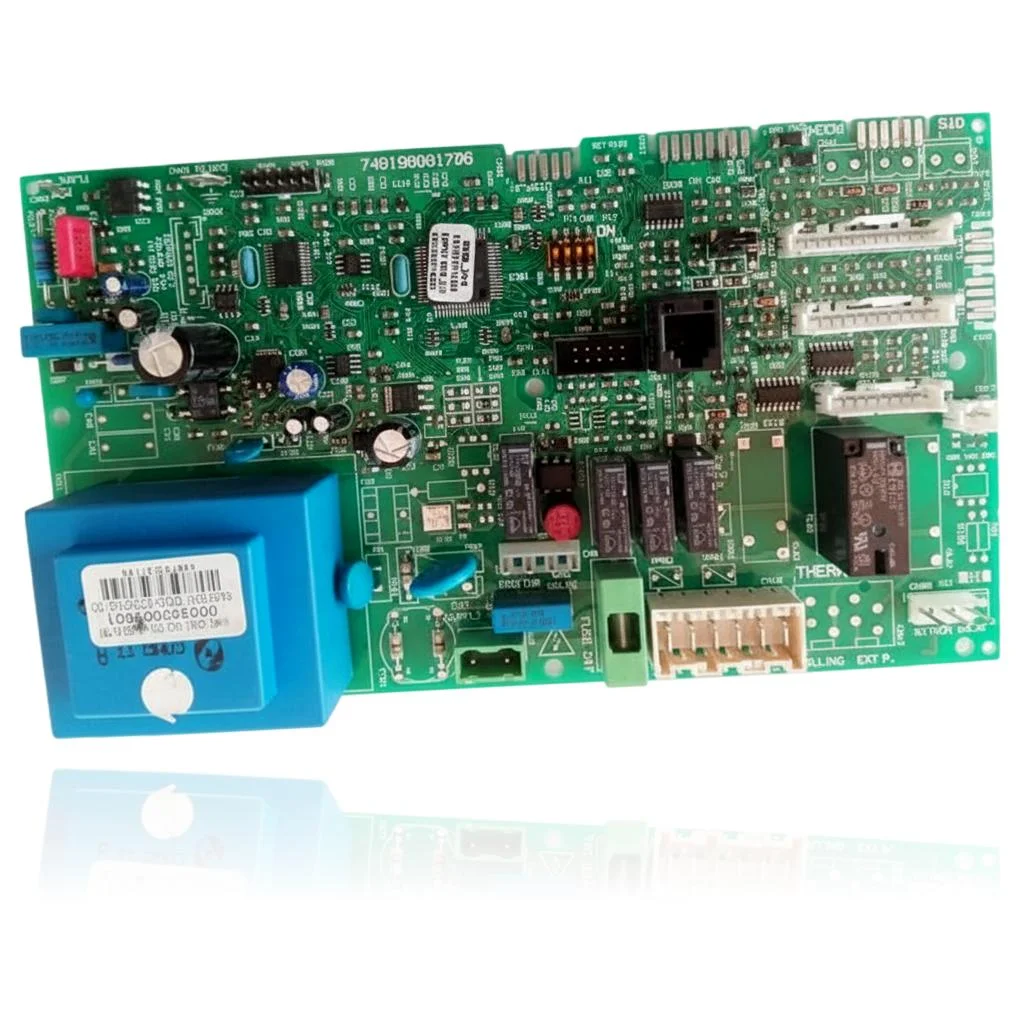
| EEPROM error | EEPROM memory fault on the PCB. | The integrated EEPROM on the main PCB is corrupted/damaged; check for stable voltages on the board and, if the error persists after resets, confirm with a reader/programmer or replace the PCB. |
| Communication error between boiler PCB and user interface board | Communication fault between the main PCB and the user panel. | Interruption/noise in the data bus between the main PCB and display due to damage in the PCB or connectors; check the flat cable, 5 V on the interface, and TX/RX signals; if they are correct and the display is good, replace the PCB. |
| Main PCB fault code | Anomaly in the main PCB. | Self-diagnosis detects a general fault in the PCB (5/12 V regulators, microcontroller, relays); check 230 V input, fuse, and low voltages; if missing or shorted, replace the board. |
| 3 02 | Communication error (GP–GIU). | Communication fault between the main PCB (GP) and the user interface; after checking wiring/connectors and 5 V, if there is no signal on the bus or the fault persists with a tested display, the cause is the PCB. |
| 3 03 | Main PCB fault. | The control electronics detect an internal fault in the PCB (e.g., relays/outputs or supervision); confirm by measuring service voltages and signals; if abnormal or intermittent, replace the board. |
| 3 05 | Main PCB fault. | Internal fault of the main PCB; check 5/12 V sources and the condition of relays/driver; if the measurements are not correct or the error persists, replace the PCB. |
| 3 06 | Main PCB fault. | Fault detected in the PCB (control components/circuits); check low voltage supply and circuit continuity; if there are deviations, replace the board. |
| 3 07 | Main PCB fault. | Self-diagnosis identifies a critical anomaly in the PCB; check voltages/outputs and, if it persists after reset and peripheral check, replace the PCB. |