





























































Short answer
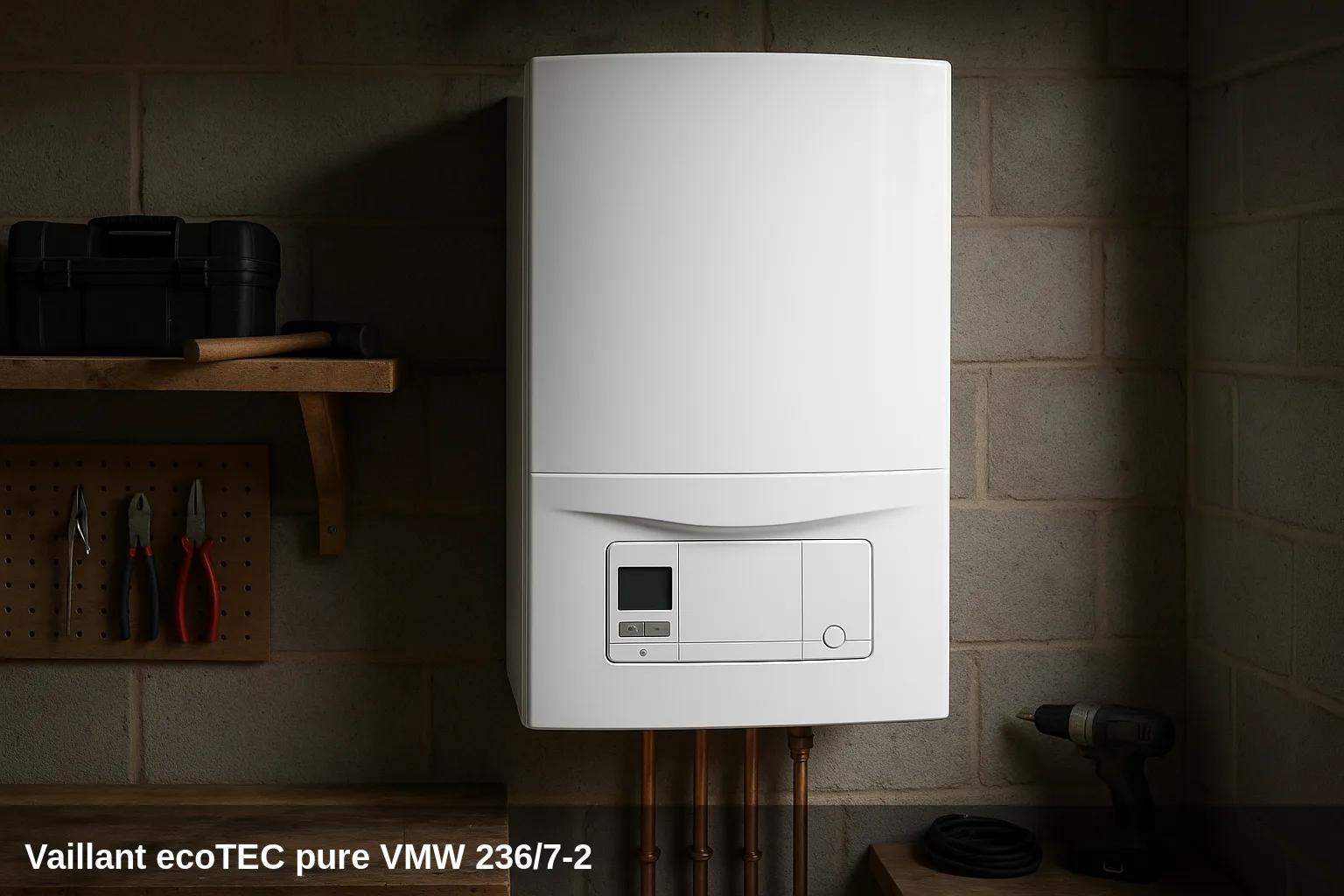
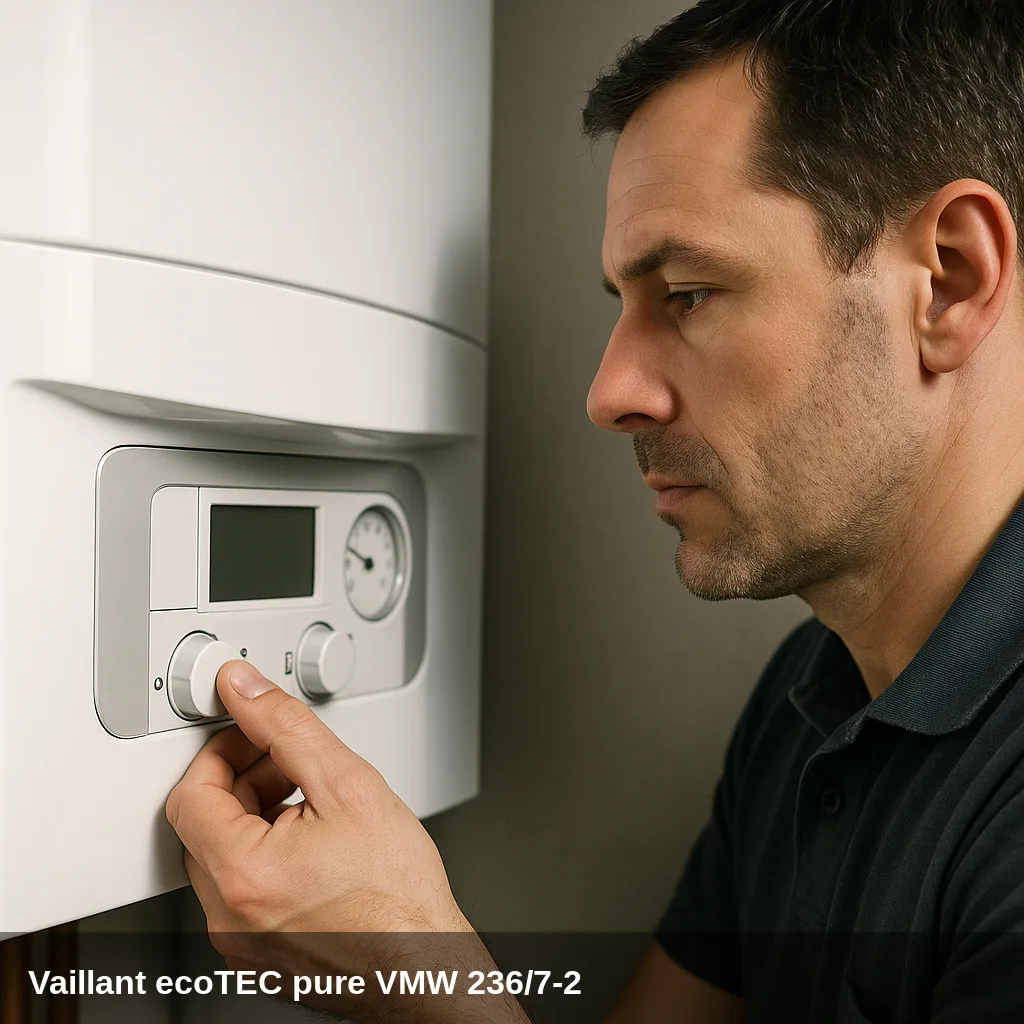
The boiler Vaillant ecoTEC pure (variants VMW 236/7-2 and VMW 286/7-2) displays its faults with fault codes type F.xx on the display, and status notifications like S.xx that are NOT faults. Here is the complete list of fault codes: what each one means, why it appears, and how to solve it, as well as what you can check yourself and when to call a technician.
Fault code table for the ecoTEC pure VMW 236/7-2 and 286/7-2
Quick summary of all fault codes. Below you have the details of each one with its cause and solution.
| Code | Meaning |
|---|---|
| F.00 | Interruption in the flow temperature sensor |
| F.01 | Interruption in the return temperature sensor |
| F.10 | Short circuit in the flow temperature sensor |
| F.11 | Short circuit in the return temperature sensor |
| F.13 | Short circuit in the DHW tank sensor |
| F.20 | Safety shutdown due to overheating |
| F.22 | Safety shutdown due to lack of water |
| F.23 | Excessive temperature variation between flow and return |
| F.24 | Rapid temperature increase (lack of water) |
| F.25 | Combustion gas temperature too high |
| F.26 | Fault in the gas valve |
| F.27 | Detection of strange flame (signal with valve closed) |
| F.28 | Start-up fault: ignition without result |
| F.29 | The flame goes out during operation |
| F.32 | Fan speed out of tolerance |
| F.36 | Combustion gases detected by the safety sensor |
| F.42 | Invalid model configuration parameter (1) |
| F.43 | Invalid model configuration parameter (2) |
| F.46 | Short circuit in the solar sensor (optional solar kit) |
| F.49 | eBUS error (short circuit or overload) |
| F.54 | Zero or insufficient gas pressure (alongside F.28/F.29) |
| F.60 | Gas valve fault (activation 1) |
| F.61 | Gas valve fault (activation 2): short circuit to ground |
| F.62 | Defective gas valve disconnection delay |
| F.63 | Fault in the EEPROM memory of the electronics |
| F.64 | Electronic fault, sensor or analogue-digital converter |
| F.65 | Excessive electronics temperature |
| F.66 | Communication fault on the I2C bus |
| F.67 | Incorrect ASIC value: flame detection fault |
| F.68 | Unstable flame |
| F.70 | Invalid product code (DSN) |
| F.71 | Flow or return sensor with constant value |
| F.72 | Excessive deviation between return pressure and temperature sensors |
| F.73 | Water pressure sensor not connected or short-circuited |
| F.74 | Electrical problem in the water pressure sensor |
| F.75 | No change in pressure detected when the pump starts |
| F.76 | Overheat protection of the primary heat exchanger |
| F.77 | Fault in the condensate pump or the non-return flap |
| F.83 | No change in temperature in the sensor when the burner starts |
| F.84 | Flow and return sensors mismatch (crossed values) |
| F.85 | Temperature sensor installed on the wrong pipe |
| F.87 | Ignition electrode fault |
| F.88 | Gas valve fault (connection) |
| F.89 | Circulation pump error (connection) |
What can you check yourself?
Some alerts can be resolved with simple and safe checks: replenishing the water pressure, bleeding the air from the radiators, checking that the gas valve is open, or resetting the boiler after a temporary lockout. If the code reappears after doing this, there is an underlying cause that should be reviewed by a qualified technician. Do not manipulate internal gas components nor electronics.
How to replenish the pressure step by step
- Locate the filling valve under the boiler.
- Open it slowly while observing the pressure gauge.
- Close the valve upon arrival at between 1 and 1.5 bar in cold.
- Bleed the radiators starting with the furthest one and check the pressure again.
- Reset the boiler; if the pressure warning disappears, the problem was resolved.
All fault codes and their solution
F.00 — Interruption in the flow temperature sensor
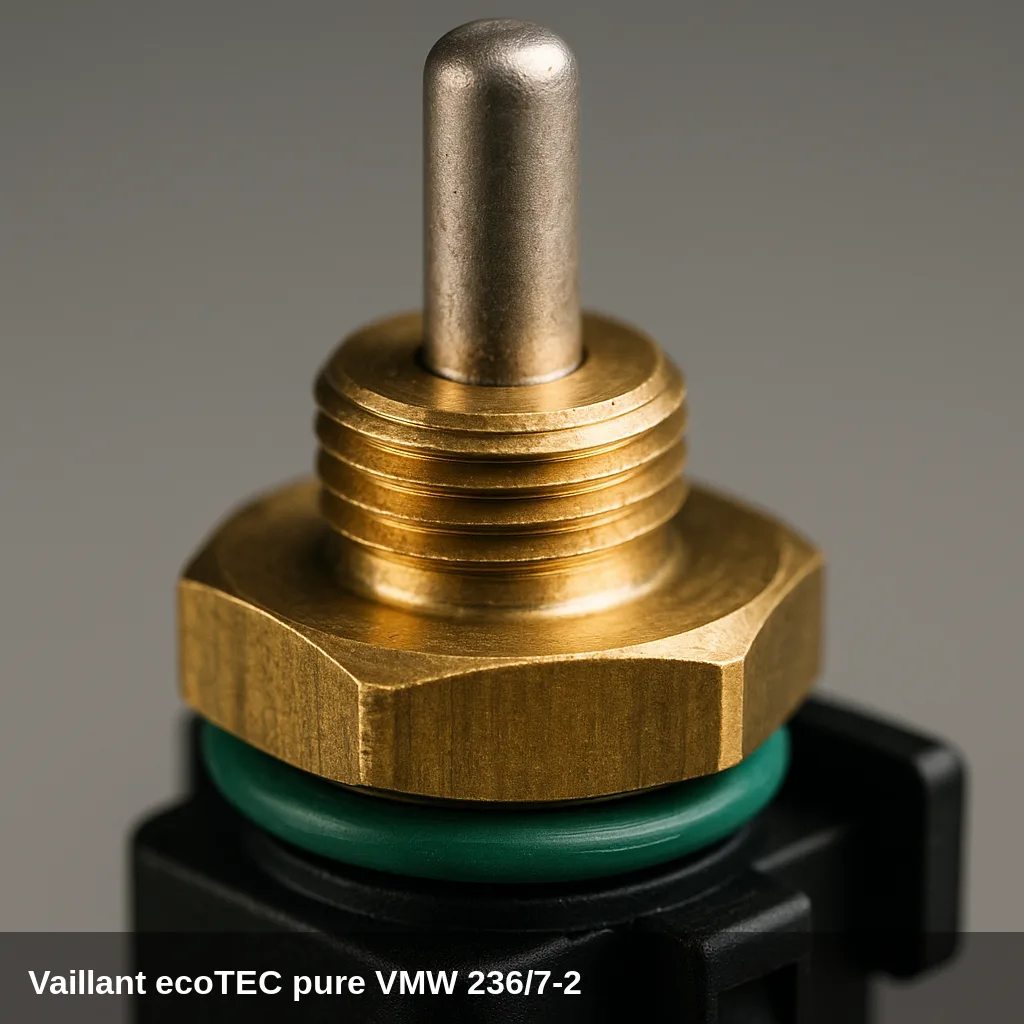
Why does it appear: Loose NTC connector, interrupted wiring harness, or defective sensor.
What to do: The inspection of the connector and, if necessary, the replacement of the sensor is carried out by a qualified technician.
Affected component: Temperature sensor
F.01 — Interruption in the return temperature sensor
Why does it appear: Loose NTC connector, interrupted wiring harness, or defective sensor.
What to do: The inspection of the connector and the replacement of the sensor are carried out by a qualified technician.
Affected component: Temperature sensor
F.10 — Short circuit in the flow temperature sensor
Why does it appear: Defective NTC sensor or short circuit in the wiring.
What to do: The inspection of the sensor and wiring is carried out by a qualified technician.
Affected component: Temperature sensor
F.11 — Short circuit in the return temperature sensor
Why does it appear: Defective NTC sensor or short circuit in the wiring.
What to do: The inspection of the sensor and wiring is carried out by a qualified technician.
Affected component: Temperature sensor
F.13 — Short circuit in the DHW tank sensor
Why does it appear: Defective accumulator sensor or short circuit in the harness.
What to do: The inspection and replacement of the sensor is carried out by a qualified technician.
Affected component: Temperature sensor
F.20 — Safety shutdown due to overheating
Why does it appear: Excessive temperature, insufficient water, defective sensor, or pump with reduced power.
What to do: Check that the flow and return valves are open, bleed the radiators, and verify the pressure (1-1.5 bar). If it repeats, contact a qualified technician.
Affected component: Circulation pump
F.22 — Safety shutdown due to lack of water
Why does it appear: Circuit pressure very low or zero, defective pressure sensor or loose cable.
What to do: Fill the circuit to 1-1.5 bar using the filling key and bleed if necessary. If the issue persists after filling, contact a qualified technician.
Affected component: Pressure sensor / filling key
F.23 — Excessive temperature variation between flow and return
Why does it appear: Blocked or weak pump, air in the circuit, or swapped sensors.
What to do: Bleed the circuit and check the pump. The sensors should be inspected by a qualified technician.
Affected component: Circulation pump
F.24 — Temperature increase too rapid (lack of water)
Why does it appear: Pump blocked, insufficient pressure, or air in the appliance.
What to do: Bleed the air and check the pressure. The pump unlocking should be done by a qualified technician.
Affected component: Circulation pump
F.25 — Flue gas temperature too high
Why does it appear: Dirty or blocked heat exchanger, or faulty flue gas temperature sensor.
What to do: The inspection of the heat exchanger and the sensor is carried out by a qualified technician.
Affected component: Heat exchanger
F.26 — Gas valve error
Why does it appear: Defective, blocked, or unresponsive gas valve.
What to do: The inspection and replacement of the gas valve should be carried out by a qualified technician.
Affected component: Gas valve
F.27 — Detection of strange flame (signal with valve closed)
Why does it appear: Moisture in the electronics or sealed gas solenoid valve.
What to do: The electronics and solenoid valve check is carried out by a qualified technician.
Affected component: Ignition/Ionisation Electrode
F.28 — Start-up fault: ignition unsuccessful
Why does it appear: Low gas pressure, air in the gas, ignition electrode or transformer, blocked valve.
What to do: Check that the gas valve is open and there is supply, then retry ignition. If it persists, contact a qualified technician.
Affected component: Ignition/Ionisation Electrode
F.29 — The flame goes out during operation
Why does it appear: Gas interruption, flue gas recirculation, ignition transformer, or incorrect grounding.
What to do: Check the gas supply. If it repeats, qualified technician.
Affected component: Ignition/Ionisation Electrode
F.32 — Fan speed out of tolerance
Why does it appear: Fan blocked or deteriorated, or faulty speed sensor.
What to do: The cleaning or replacement of the fan is done by a qualified technician.
Affected component: Fan / extractor
F.36 — Combustion gases detected by the safety sensor
Why does it appear: Detection of burnt gases (exceptional in the ecoTEC pure).
What to do: The inspection of the flue is carried out by a qualified technician.
Affected component: Heat exchanger
F.42 — Invalid model configuration parameter (1)
Why does it appear: Incorrect or unassigned device configuration.
What to do: The reconfiguration of the device is carried out by a qualified technician.
Affected component: PCB (control board)
F.43 — Invalid model configuration parameter (2)
Why does it appear: Incorrect or unassigned device configuration.
What to do: The reconfiguration of the device is carried out by a qualified technician.
Affected component: PCB (control board)
F.46 — Short circuit in the solar sensor (optional solar kit)
Why does it appear: Defective or short-circuited solar sensor.
What to do: The inspection and replacement of the solar sensor is carried out by a qualified technician.
Affected component: Temperature sensor
F.49 — Error in the eBUS (short circuit or overload)
Why does it appear: Short circuit in the eBUS wiring, overload or incorrect polarity.
What to do: The inspection of the eBUS wiring and connected devices is carried out by a qualified technician.
Affected component: PCB (control board)
F.54 — Zero or insufficient gas pressure (along with F.28/F.29)
Why does it appear: Gas supply non-existent or very low, or gas valve closed.
What to do: Check that the gas valve is open and there is supply. If correct, qualified technician.
Affected component: Gas valve
F.60 — Gas valve error (activation 1)
Why does it appear: Defective or non-activated gas valve.
What to do: The inspection and replacement of the gas valve is carried out by a qualified technician.
Affected component: Gas valve
F.61 — Gas valve fault (activation 2): short circuit to ground
Why does it appear: Short circuit to ground in the wiring of the gas valve or defective gas valve.
What to do: The wiring inspection of the gas valve is carried out by a qualified technician.
Affected component: Gas valve
F.62 — Faulty gas valve disconnection delay
Why does it appear: Non-sealed gas valve or defective electronic control.
What to do: The inspection and replacement of the gas valve is carried out by a qualified technician.
Affected component: Gas valve
F.63 — Fault in the EEPROM memory of the electronics
Why does it appear: Fault in the memory component of the PCB.
What to do: The replacement of the PCB is carried out by a qualified technician.
Affected component: PCB (control board)
F.64 — Electronics fault, sensor or analogue-digital converter
Why does it appear: Short circuit in an NTC sensor or fault in the PCB converter.
What to do: The circuit inspection or the replacement of the PCB is carried out by a qualified technician.
Affected component: PCB (control board)
F.65 — Excessive electronics temperature
Why does it appear: Overheating of the PCB due to external cause or lack of ventilation.
What to do: The improvement of the ventilation and the inspection of the PCB are carried out by a qualified technician.
Affected component: PCB (control board)
F.66 — Communication fault on the I2C bus
Why does it appear: Internal communication error between electronic components.
What to do: The inspection of the internal connections and the PCB is carried out by a qualified technician.
Affected component: PCB (control board)
F.67 — Incorrect ASIC value: flame detection fault
Why does it appear: Incoherent flame detection signal or ASIC component fault.
What to do: The inspection of the ionisation electrode and the PCB is carried out by a qualified technician.
Affected component: PCB (control board)
F.68 — Unstable flame
Why does it appear: Air in the gas circuit, low gas pressure, incorrect nozzle, or interrupted ionisation.
What to do: The inspection of the gas pressure, nozzle, and electrode is carried out by a qualified technician.
Affected component: Ignition/Ionisation Electrode
F.70 — Invalid product code (DSN)
Why does it appear: Replacement of screen and PCB without reconfiguring the appliance identification.
What to do: The reconfiguration of the DSN is done by a qualified technician.
Affected component: PCB (control board)
F.71 — Flow or return sensor with constant value
Why does it appear: Sensor improperly positioned on the pipe or faulty.
What to do: The repositioning or replacement of the sensor is done by a qualified technician.
Affected component: Temperature sensor
F.72 — Excessive deviation between pressure and return temperature sensors
Why does it appear: Incoherent temperature difference between sensors or defective sensor.
What to do: The inspection and replacement of the sensors is carried out by a qualified technician.
Affected component: Temperature sensor
F.73 — Water pressure sensor not connected or short-circuited
Why does it appear: Interruption or short circuit in the pressure sensor or its wiring.
What to do: The inspection of the pressure sensor and its wiring is carried out by a qualified technician.
Affected component: Pressure sensor / filling key
F.74 — Electrical problem in the water pressure sensor
Why does it appear: Short circuit in the sensor power line or internal fault.
What to do: The replacement of the pressure sensor is done by a qualified technician.
Affected component: Pressure sensor / filling key
F.75 — No pressure change detected when the pump starts
Why does it appear: Defective pressure sensor, blocked pump, air in the circuit, or low water.
What to do: Bleed the circuit and check the pressure (1-1.5 bar). If it persists, a qualified technician should inspect the sensor and pump.
Affected component: Circulation pump
F.76 — Overheating protection of the primary heat exchanger
Why does it appear: Excessive temperature in the heat exchanger or insufficient circulation.
What to do: Allow the equipment to cool down. The circulation and heat exchanger inspection should be carried out by a qualified technician.
Affected component: Heat exchanger
F.77 — Fault in the condensate pump or the non-return flap
Why does it appear: Optional condensate pump fault or blocked flap.
What to do: The cleaning or replacement of the condensate pump or the flap is done by a qualified technician.
Affected component: Circulation pump
F.83 — No change in temperature at the sensor when the burner starts
Why does it appear: Insufficient water in the circuit or improperly placed sensor.
What to do: Check the pressure and refill if necessary. The repositioning of the sensor should be done by a qualified technician.
Affected component: Temperature sensor
F.84 — Flow and return sensors not matching (crossed values)
Why does it appear: Sensors swapped or incoherent difference in values.
What to do: The inspection of the sensor installation is carried out by a qualified technician.
Affected component: Temperature sensor
F.85 — Temperature sensor installed on the incorrect pipe
Why does it appear: Incorrect sensors in pipes or faulty connection.
What to do: The relocation of the sensors is done by a qualified technician.
Affected component: Temperature sensor
F.87 — Ignition electrode fault
Why does it appear: Electrode poorly positioned or short circuit in its wiring.
What to do: The repositioning or replacement of the electrode is done by a qualified technician.
Affected component: Ignition/Ionisation Electrode
F.88 — Gas valve (connection) error
Why does it appear: Valve poorly connected or short circuit in its wiring.
What to do: The inspection and reconnection of the gas valve should be carried out by a qualified technician.
Affected component: Gas valve
F.89 — Circulation pump fault (connection)
Why does it appear: Pump incorrectly connected or short circuit in its wiring.
What to do: The inspection and reconnection of the pump should be carried out by a qualified technician.
Affected component: Circulation pump
When to call a technician
Fault codes related to sensors, electronics, gas valve, fan, or flue gas evacuation require a qualified technician with the appropriate equipment. If the same fault code reappears after a reset, or if the pressure drops repeatedly, a professional inspection is advisable. In Uniclima do you find spare parts for this boiler.
Frequently Asked Questions
Between 1 and 1.5 bar when cold. If it drops, the water shortage warning F.22 appears; above 2.7 bar, the status warning S.41 may appear.
The F. codes (F.xx) are faults that block or limit the boiler. The S. codes (S.xx) are normal status notifications indicating what the boiler is doing at that moment (ignition, pump running, etc.) and do not require any action.
Yes. Both variants share the same electronics and the same list of codes; only the power changes.
Pressure issues (F.22, F.75): fill the circuit to 1-1.5 bar and bleed; and check that the gas valve is open (F.28, F.54). The rest (sensors, electronics, gas valve, fan) require a qualified technician.