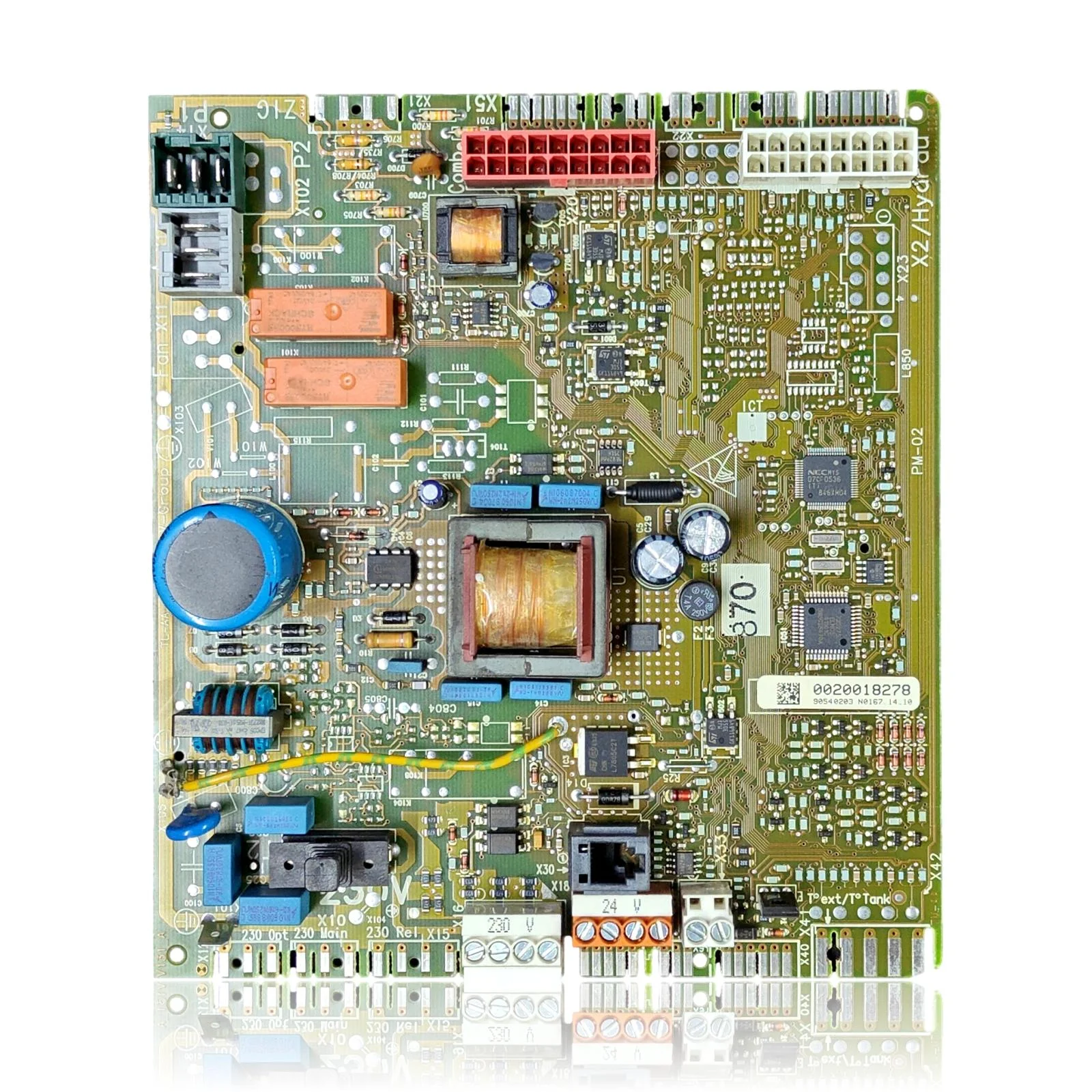
| F.63 | EEPROM fault: error in the memory/electronics of the main control board. | It is directly caused by the PCB itself (corrupt EEPROM memory or faulty electronics). Check: power reset; if it persists after ruling out connections, the PCB is the cause and usually requires replacement/recoding. NOTE: in older non-Condens ranges, this code has a different meaning (gas valve with delay), which is why the attribution to the PCB is firm only for the ThemaFast Condens range. |
| F.64 | Fault in the electronics / NTC: fault in the PCB electronics (associated with the NTC sensor circuit). | The PCB generates this fault when its own circuitry fails. Check: first rule out a short circuit in NTC sensors and harness; if the sensors are correct, the cause is the PCB. (The '/NTC' implies also checking the sensor before confirming the PCB.) |
| F.65 | Electronic temperature fault: the PCB has overheated or is faulty. | It is caused by the PCB itself when it detects excessive temperature in its electronics or an internal fault. Check: rule out external overheating/ventilation; if the ambient temperature is normal, the origin is the PCB. |
| F.42 | Coding resistor fault: short circuit/interruption of the power class or gas type coding resistor (on the PCB). | Very relevant when installing THIS spare PCB: after mounting/replacing the PCB, the coding resistor must be checked; a short circuit/interruption in it (on the PCB or heat exchanger harness) triggers the F.42. Verify the continuity of the resistor and correct coding after the PCB change. NOTE: the resistor may be located in the heat exchanger harness, not just on the PCB. |
| F.70 | Invalid product code (DSN): the boiler does not recognise its product identification after an electronics change. | Characteristic when replacing the PCB (display and/or PCB changed without recoding) or due to incorrect/missing power class coding resistor. Verify: recode the product (DSN) after installing this spare part and check the coding resistor. |