






























































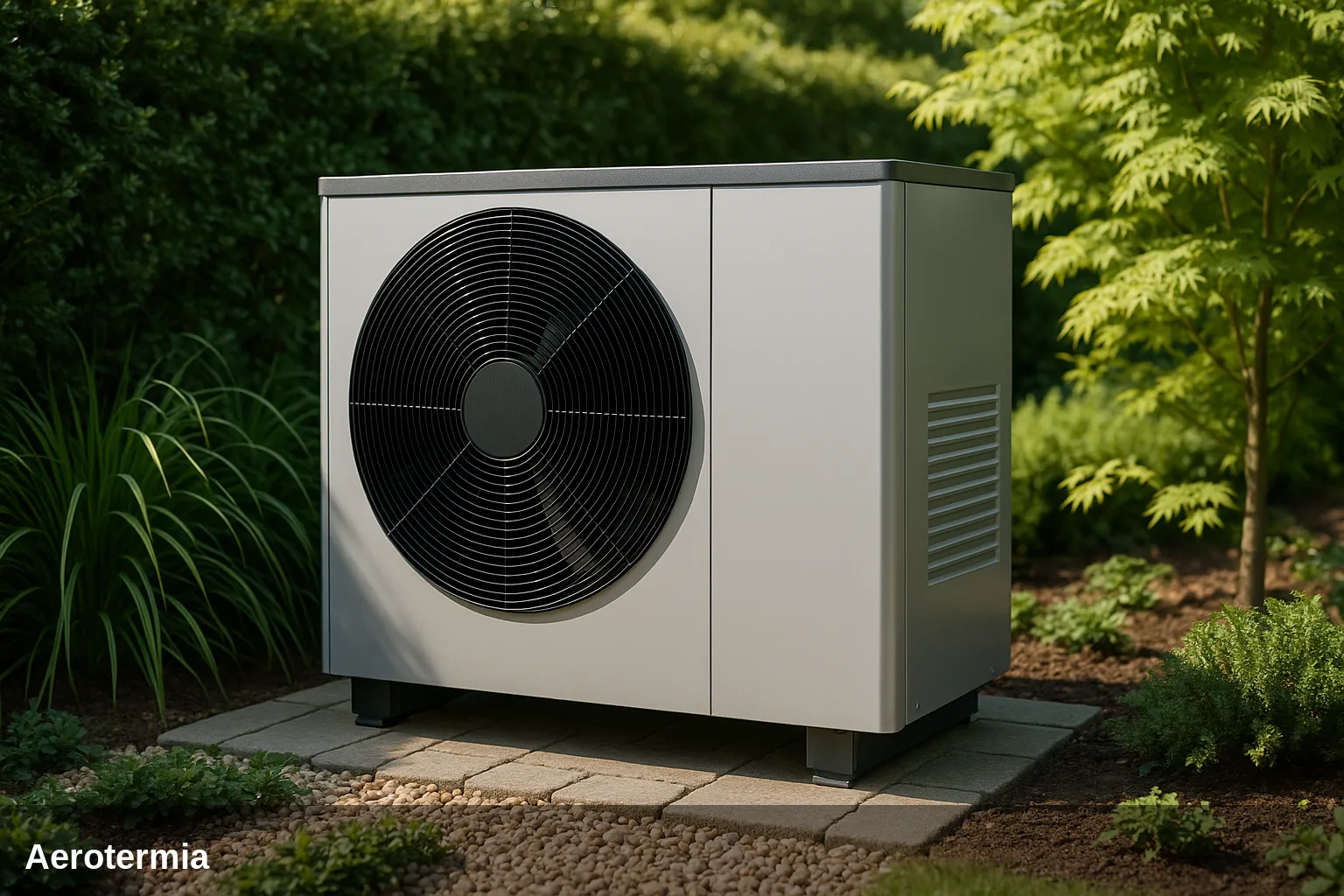

This guide explains what to compare before considering an aerothermal installation: home demand, emitters, space, declared performance, and budget scope. The decision requires property and consumption data. Uniclima Solutions
We will also see the actual efficiencies (COP and SPF), the common faults that reduce efficiency and when it is worth (or not) replacing your current system with an air source heat pump. If after reading the guide you have specific questions about your home, at the end you will find how to request a personalized study from us.
What exactly is aerothermal energy?
Aerothermal is a climate control system based on an air-to-water heat pump. that extracts thermal energy from the outside air and transfers it to the heating, cooling, and domestic hot water (DHW) circuit of the home. It does so without combustion: it does not burn gas, oil, or biomass.
According to Directive 2009/28/EC of the European Union, Aerothermal energy is officially a renewable energy source. when the Seasonal Performance Factor (SPF) exceeds 2.5. Modern aerothermal heat pumps comfortably surpass this threshold.
How does it work step by step?
Quick response: The system uses a refrigerant circuit that continuously evaporates, compresses, condenses, and expands, capturing heat from the outside air and delivering it indoors.
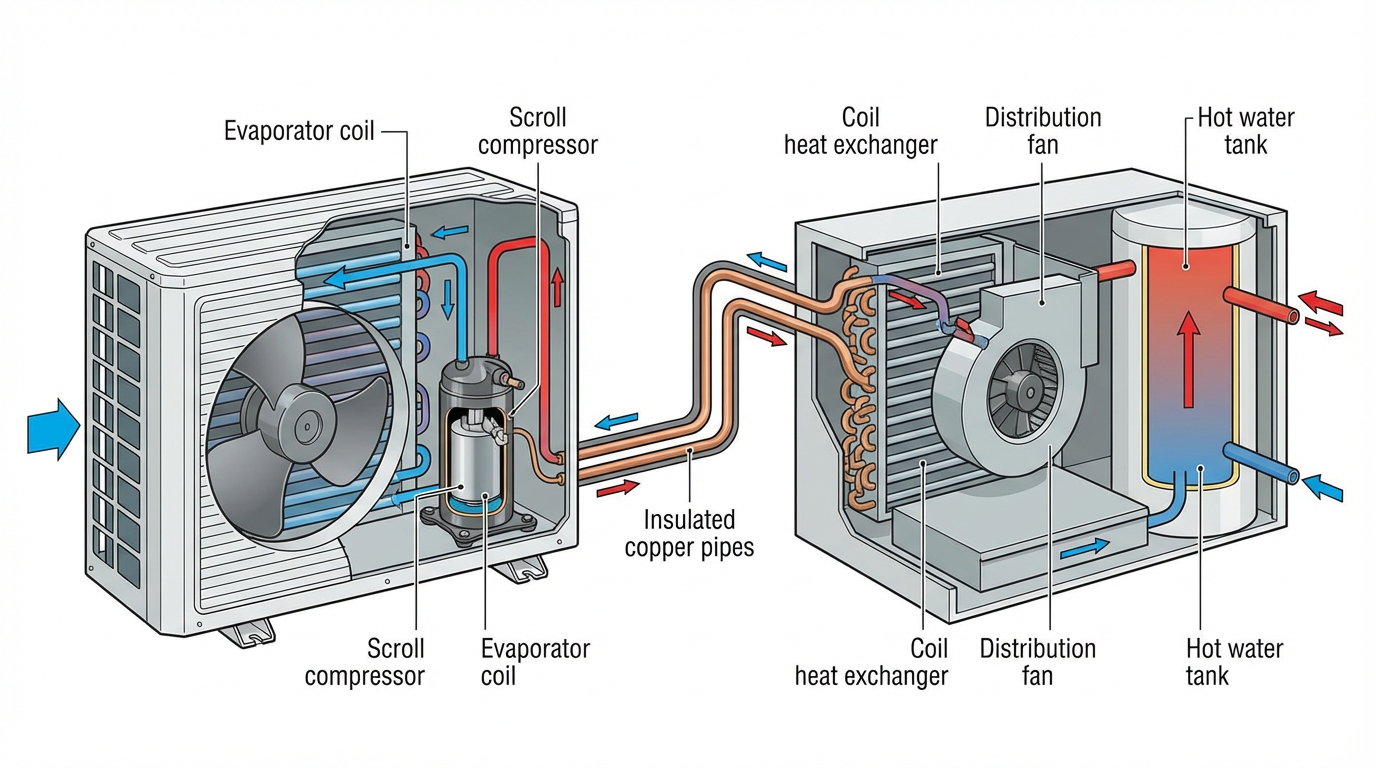
- Collection. A fan passes the outside air through a evaporator, where a refrigerant at a very low temperature absorbs heat from the air and evaporates.
- Compression. An electric compressor raises the pressure of the refrigerant gas and, with it, its temperature to 60–80 °C.
- Condensation. The hot refrigerant transfers its energy to the water in the internal circuit (underfloor heating, fan coils, or low-temperature radiators) in a capacitor and returns to a liquid state.
- Expansion. A valve sharply reduces the pressure of the liquid, cooling it again, and the cycle starts over.
Parts of an aerothermal installation
A typical domestic installation is composed of five clearly differentiated elements:
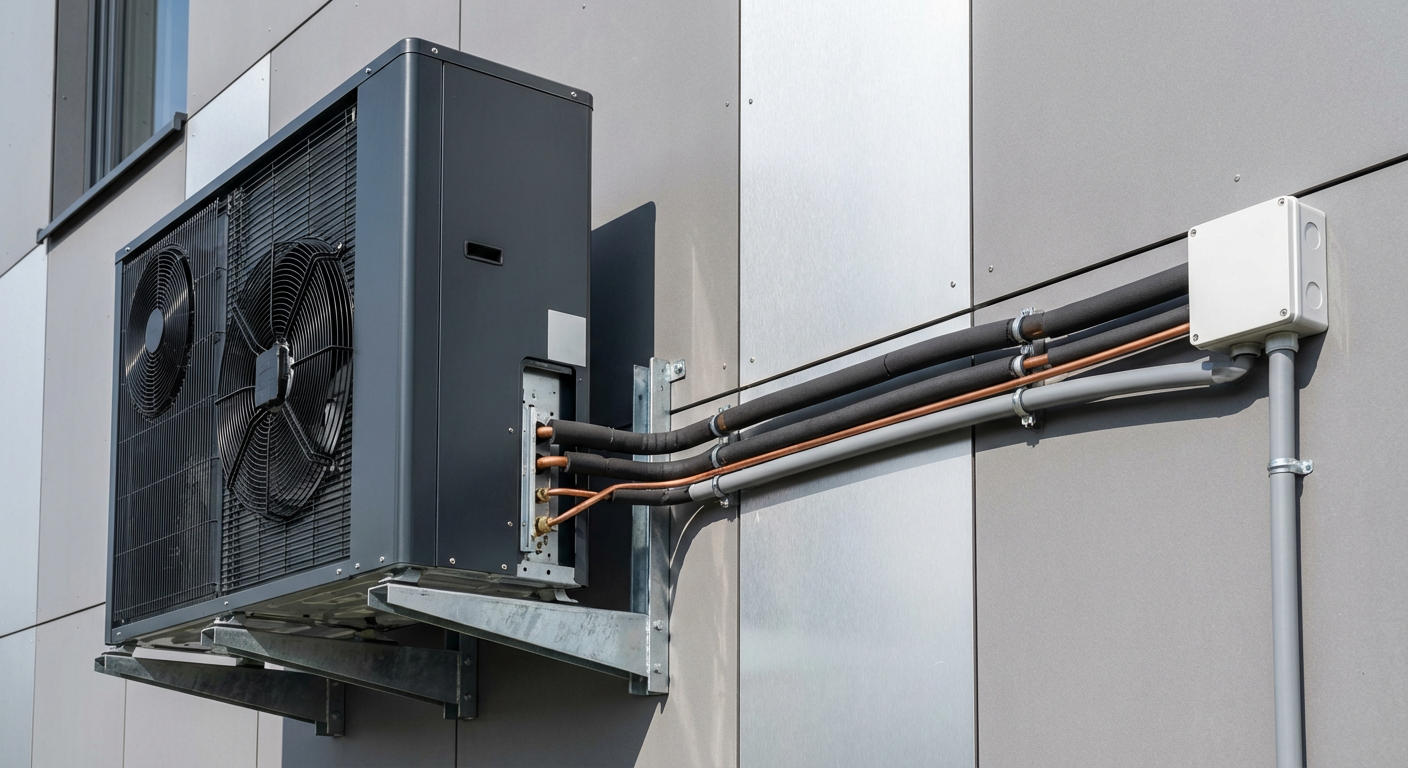
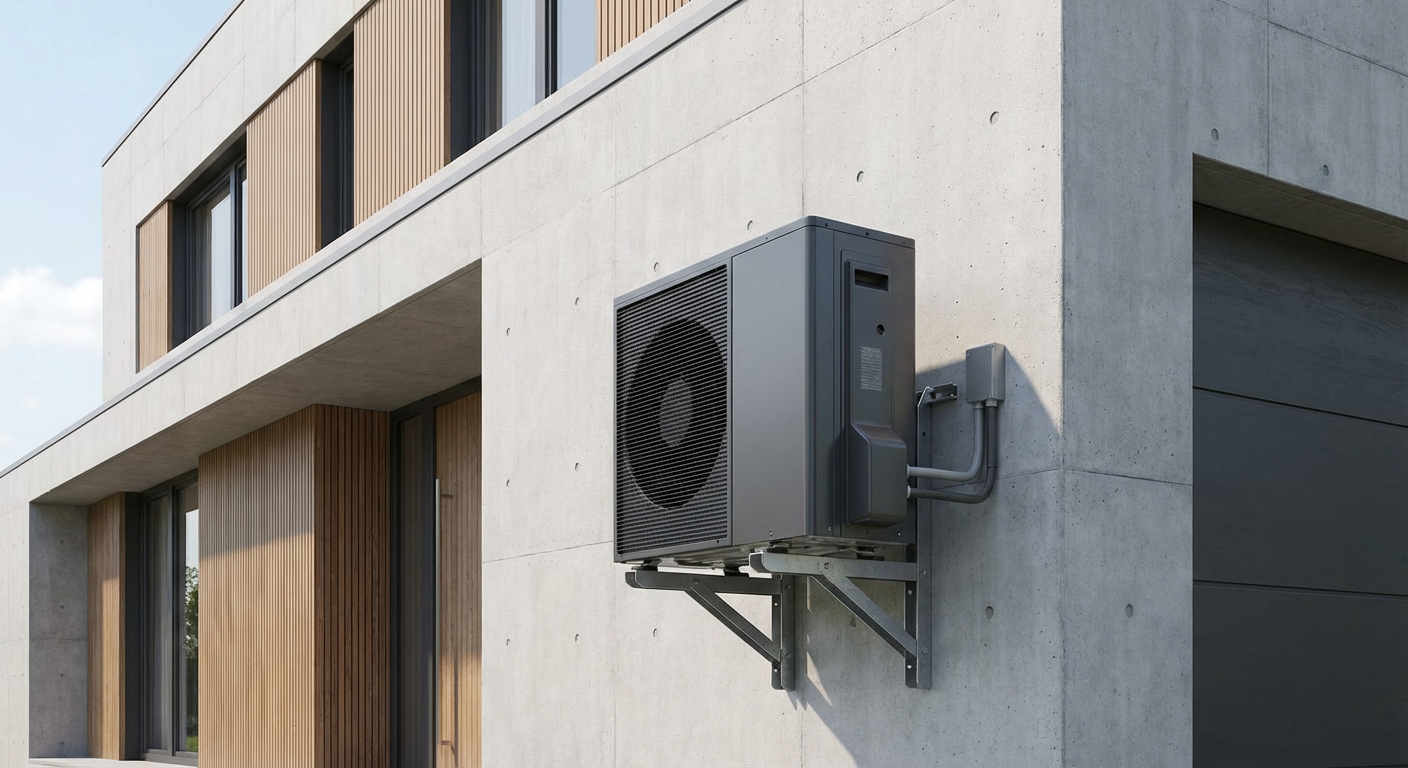
- Outdoor unit (heat pump): It contains the compressor, the evaporator, and the fan. It is placed on the facade, patio, or roof.
- Indoor unit (hydrobox): manages the exchange to the water circuit and usually integrates the pump group and the expansion vessel.
- DHW tank: Hot water storage tank (usually 150–300 L) to cover peak consumption in shower, kitchen, and bathrooms.
- Distribution system: Underfloor heating-cooling (the most efficient), fan coils or low-temperature radiators.
- Smart control: Thermostat/mobile app that automatically adjusts setpoint, scheduling, and eco modes.
Real advantages over a gas boiler
These are the fundamental differences between an aerothermal heat pump and a natural gas condensing boiler:
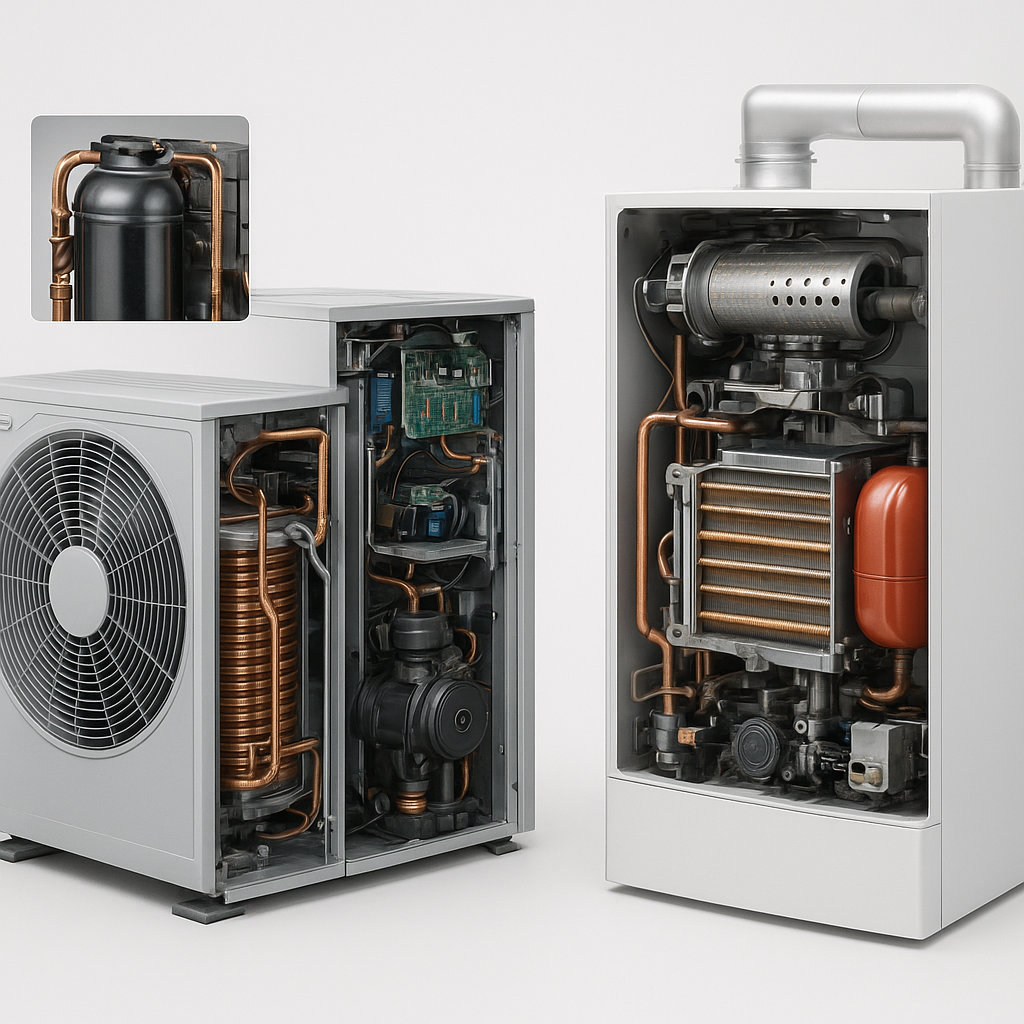
| Criterion | Aerothermal | Gas boiler |
|---|---|---|
| Efficiency (COP / η) | 3 – 4 (300–400 %) | 0,95 – 1,08 (95–108 %) |
| Energy source | Outdoor air + electricity | Natural gas (fossil) |
| CO₂ emissions | Almost zero with renewable energy | ~200 g CO₂/kWh |
| Cold in summer | Yes (same equipment) | No |
| Legal maintenance | Inspection every 4 years | Annual inspection + 4 years |
| Average lifespan | 18 – 25 years | According to equipment and conditions |
Why is aerothermal energy a sustainable option?
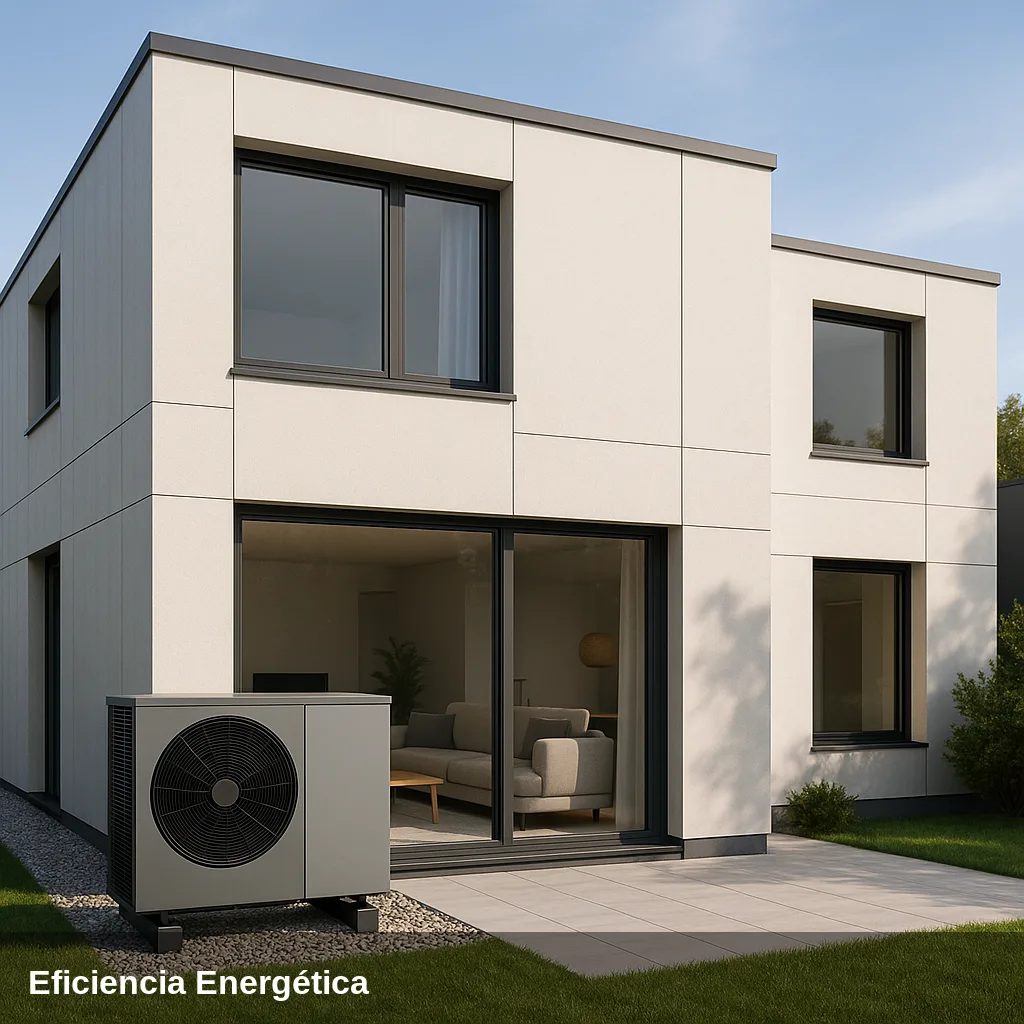
- Renewable energy recognized by the EU. At least 75% of the energy it delivers comes from the air — an inexhaustible and local source.
- Zero combustion on site. No burner, no chimney, no risk of leaks or fumes.
- Decreasing carbon footprint. As the Spanish electricity mix incorporates more renewables, aerothermal energy becomes even cleaner without changing anything at home.
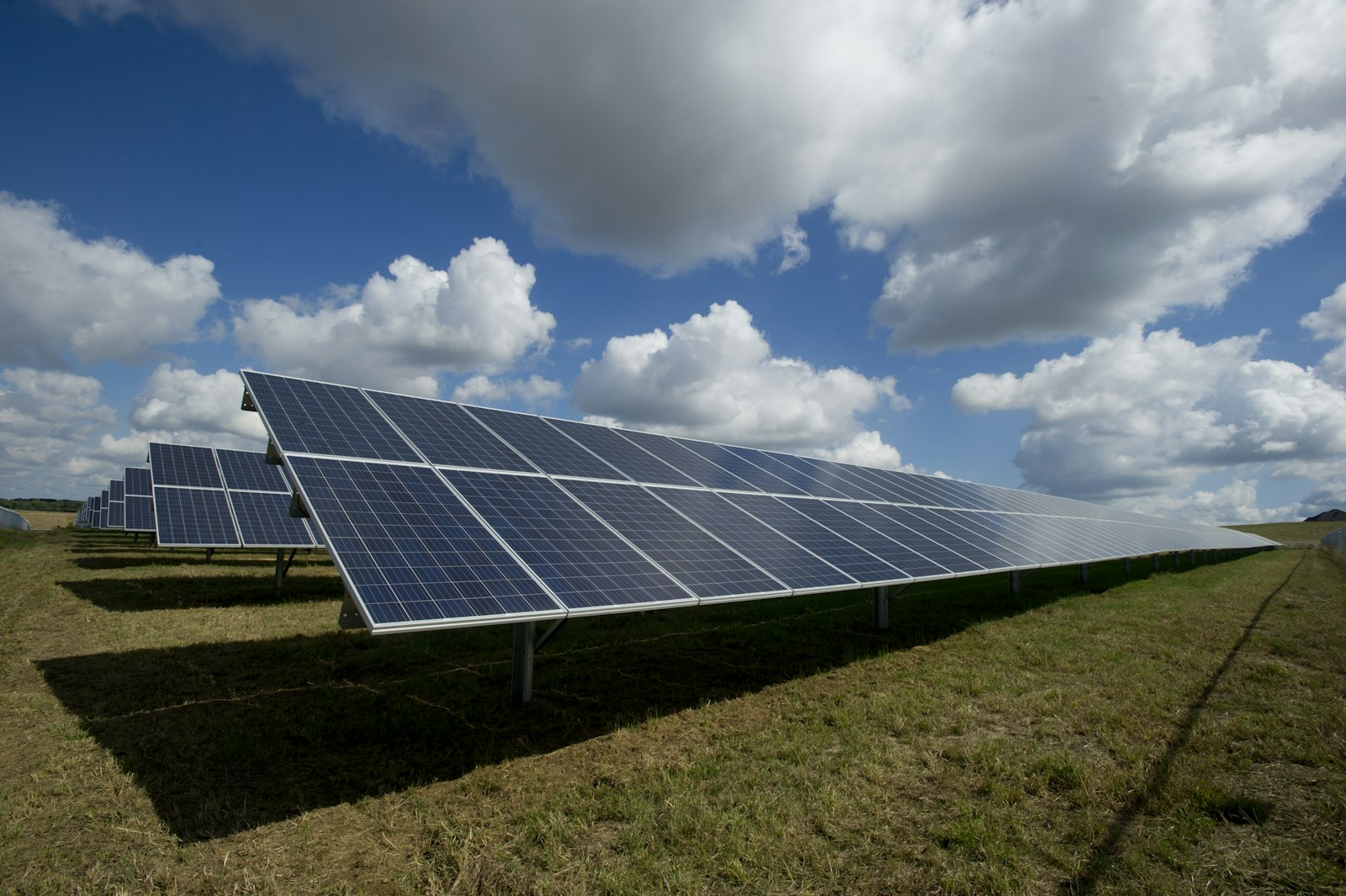
- Compatible with photovoltaic self-consumption. If you have solar panels, aerothermal systems utilize the surplus for DHW and air conditioning.
- New generation refrigerants (R32, R290). Lower Global Warming Potential (GWP) compared to older gases like R410A.
How much can be saved with an aerothermal system?
Savings are estimated with home demand, previous consumption, tariffs, emitters, and expected seasonal performance. Request a comparison with explicit assumptions; there is no fixed annual amount applicable to all Madrid households.

The figure depends on four main factors:
- Insulation: influences the demand the system must cover.
- Emission system — Underfloor heating increases the actual COP compared to radiators.
- Electricity tariff: compare price and schedule with your usage pattern.
- Usage habits — programming and realistic temperatures (20–22 °C in winter).
Installation: 5 keys for success
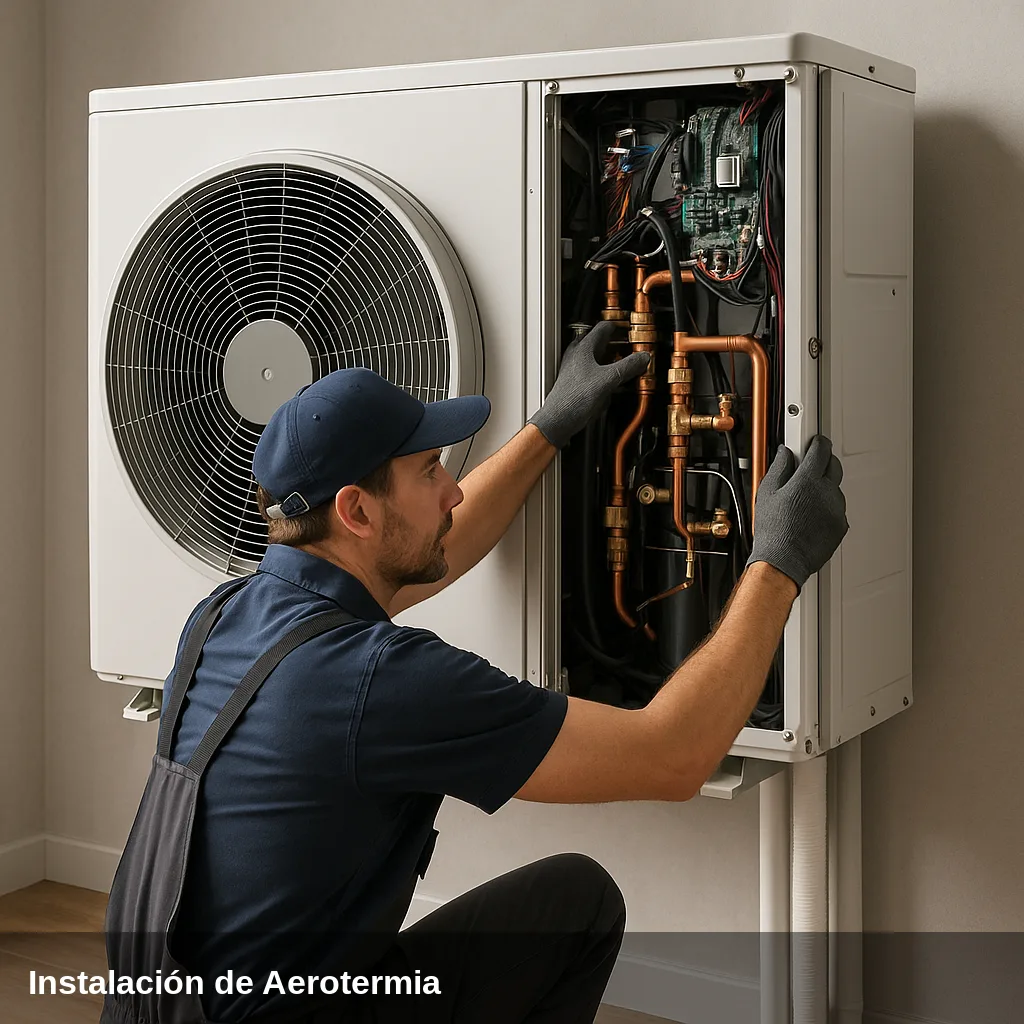
- Check applicable work authorisation and request the proposal to identify documentation, commissioning, and intervention responsibility. Uniclima Solutions
- Request a real sizing, not a "one-size-fits-all". A thermal load study according to the UNE-EN 12831 standard prevents oversizing (expensive) or undersizing (doesn't heat).
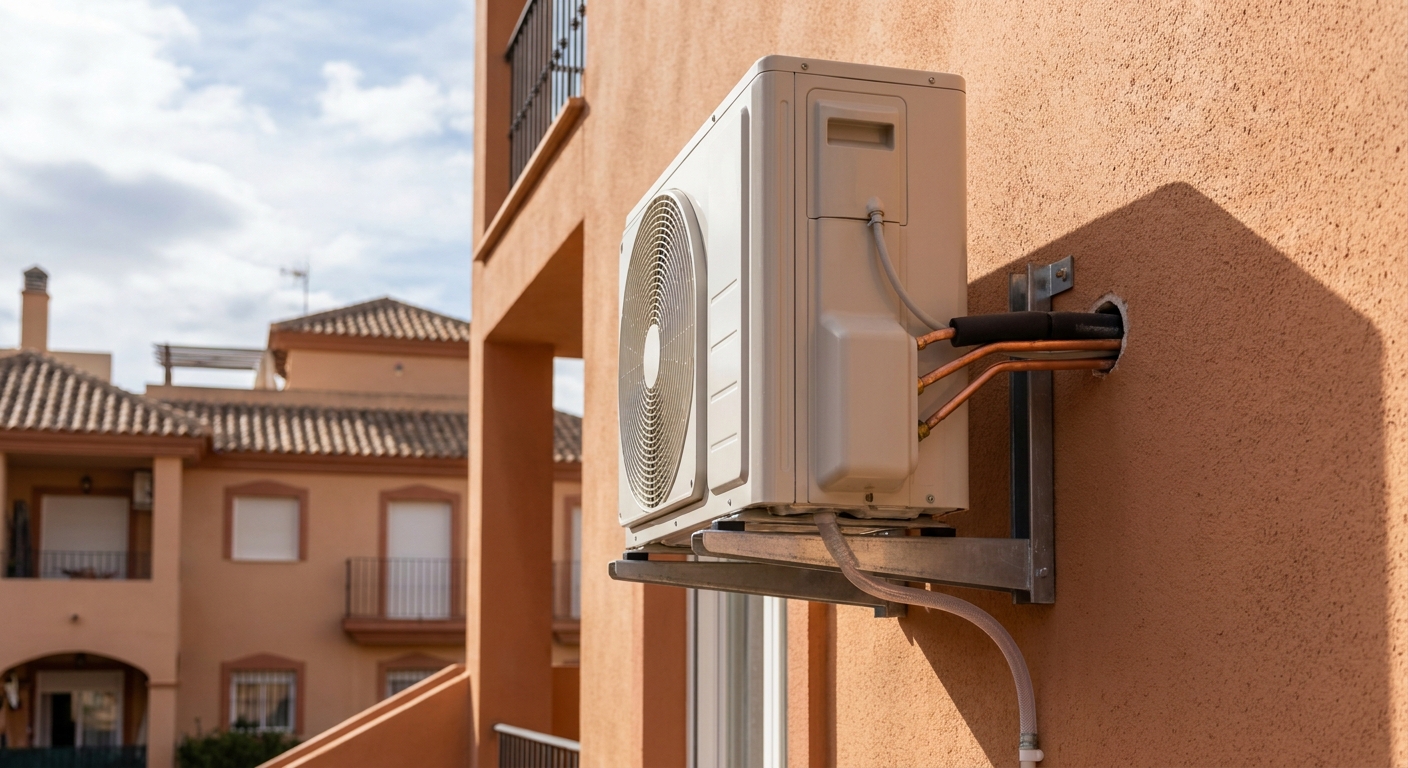
- Choose the location of the outdoor unit carefully. Ventilated, unobstructed, and maintaining distances from windows and neighbours. Noise accounts for 95% of poorly resolved complaints.
- Integrate smart control from day one. Thermostat with external sensors and compensation curve: the actual performance depends on it.
- Requires documented commissioning. Pressures, flow rates, factory settings, and first annual inspection included by contract.
Maintenance and lifespan

Does aerothermal energy need low maintenance, but the one required is critical:
- Maintenance, regulatory inspection and warranty conditions are different matters. Frequency depends on the equipment, power, use and maintenance manual. The contract identifies included visits and operations; it does not alone equate to a certificate or official inspection.
- Annual cleaning of the evaporator and the filters (the user can handle the filters).
- Hydraulic circuit control: pressure of the primary circuit, expansion vessel, and safety valves.
- Refrigerant tightness: inspection according to F-Gas regulation based on the charge.
Frequently Asked Questions about Aerothermal Systems
Does aerothermal work in cold climates like Madrid in winter?
Check the model sheet for capacity and efficiency at your area's design temperature and required flow. That equipment can operate in cold weather does not mean it covers any home without support.
Can I replace my gas boiler with an aerothermal system without changing the radiators?
Yes, but with a nuance. Aerothermal systems perform better at low flow temperatures (35–45 °C), typical of underfloor heating. With conventional radiators, the flow temperature rises to 55–60 °C and the COP decreases. Ideally, consider low-temperature radiators or underfloor heating; if not feasible, aerothermal is still more efficient than the boiler, just less so.
Does the aerothermal system make noise?
The outdoor unit generates between 45 and 55 dB(A) at one metre, equivalent to a medium-tone conversation. With proper placement (away from your own and neighbours' windows) and well-positioned anti-vibration mounts, the noise perceived inside the dwelling is practically negligible.
How many years does an aerothermal system last?
Duration depends on equipment, installation, use, and maintenance. The quote should not turn a lifespan estimate into a guarantee; also compare service availability and manufacturer conditions.
Does aerothermal energy also work for cooling in summer?
Yes. Most reversible models provide cooling in summer through the same circuit: with cooling floors (inverted radiant) or with fan coils. The typical EER (cooling efficiency) is between 3.5 and 5, meaning it is more efficient than conventional air conditioning.