






























































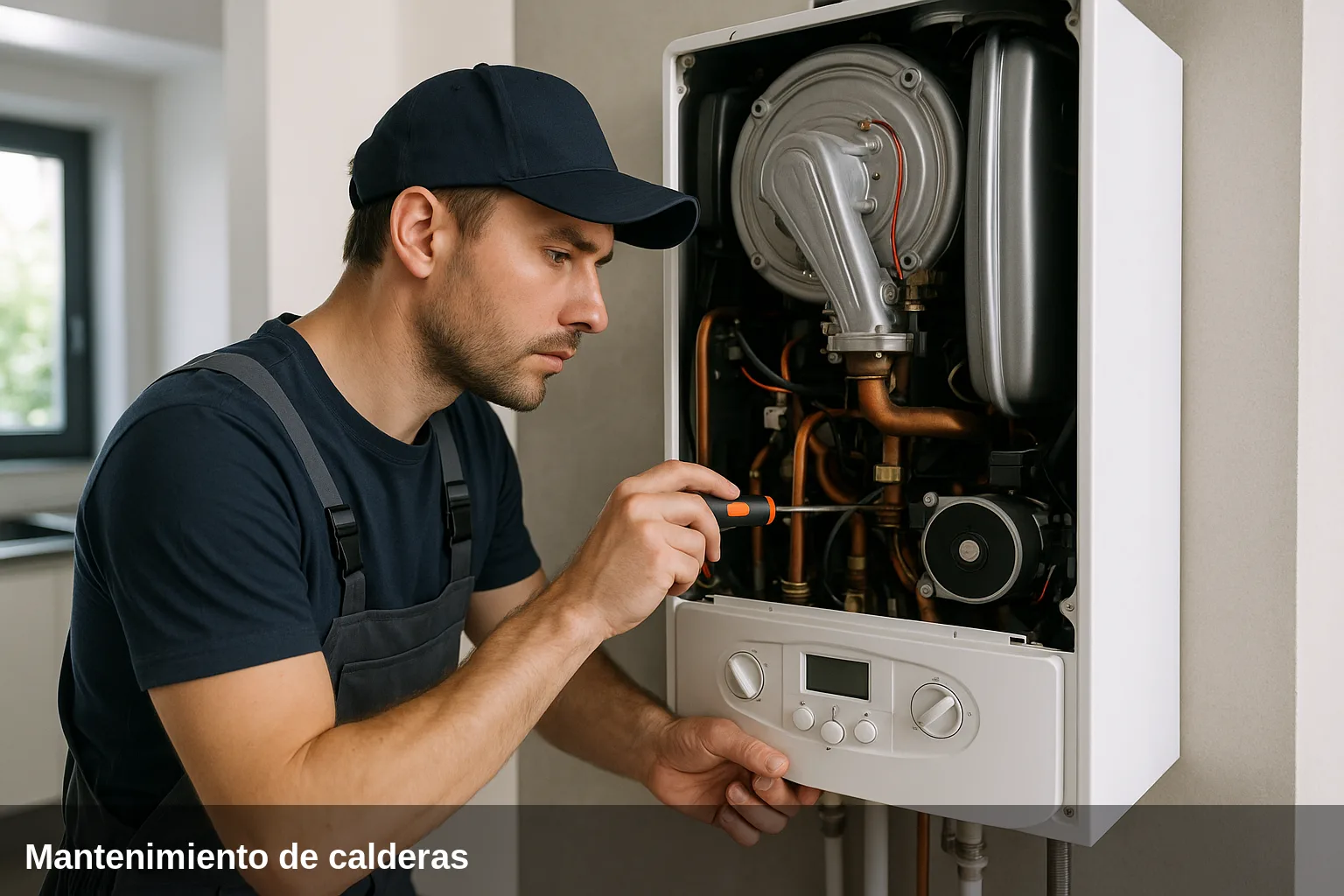
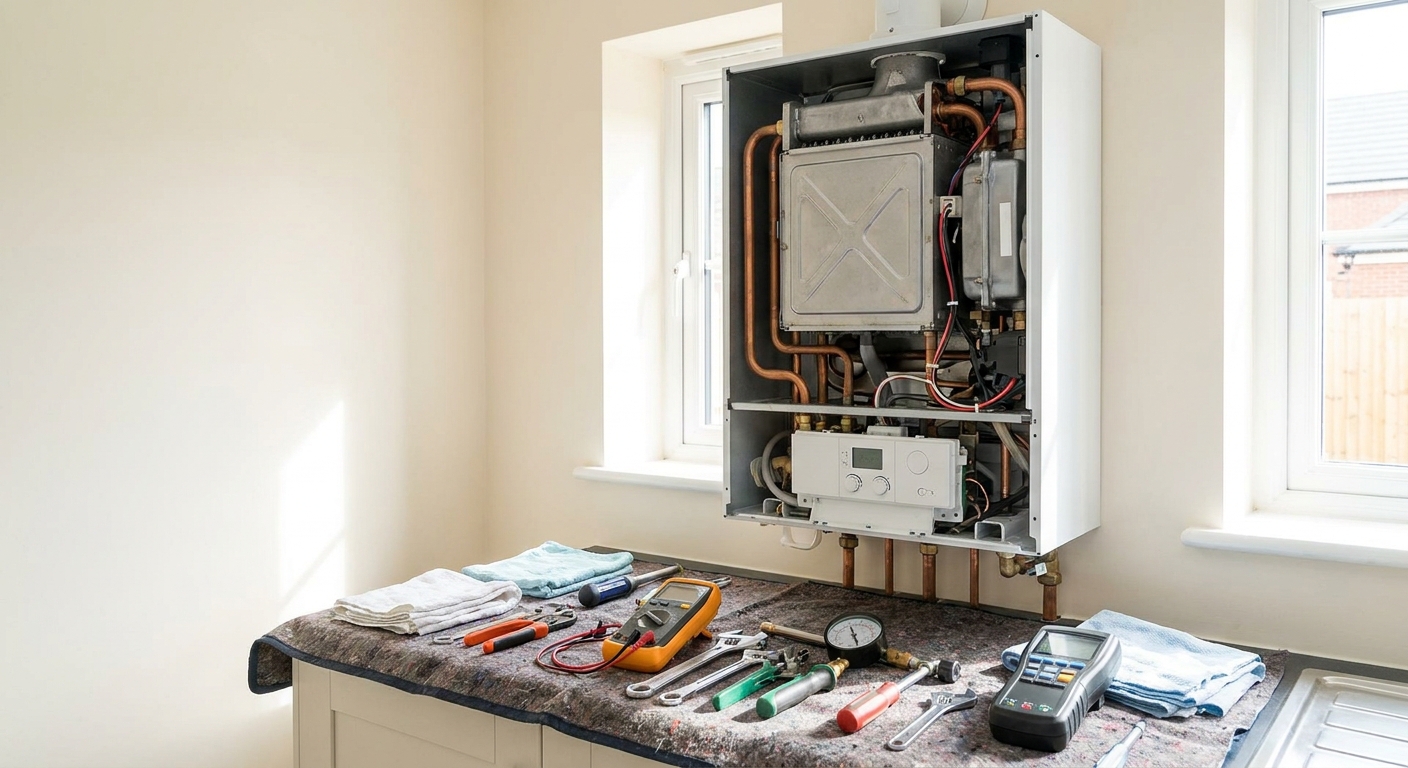
At Uniclima you can check your boiler maintenance by indicating model and locality. Contracts have different benefits and limits; a preventive review does not replace fault diagnosis. Uniclima Solutions
These are not generic listings taken from a manual: they are the actual faults we encounter in the field, with ranges, frequencies, and how to detect them before they leave you without domestic hot water on a Sunday.
Why does professional maintenance make a difference?
Maintenance, regulatory inspection and warranty conditions are different matters. Frequency depends on the equipment, power, use and maintenance manual. The contract identifies included visits and operations; it does not alone equate to a certificate or official inspection.
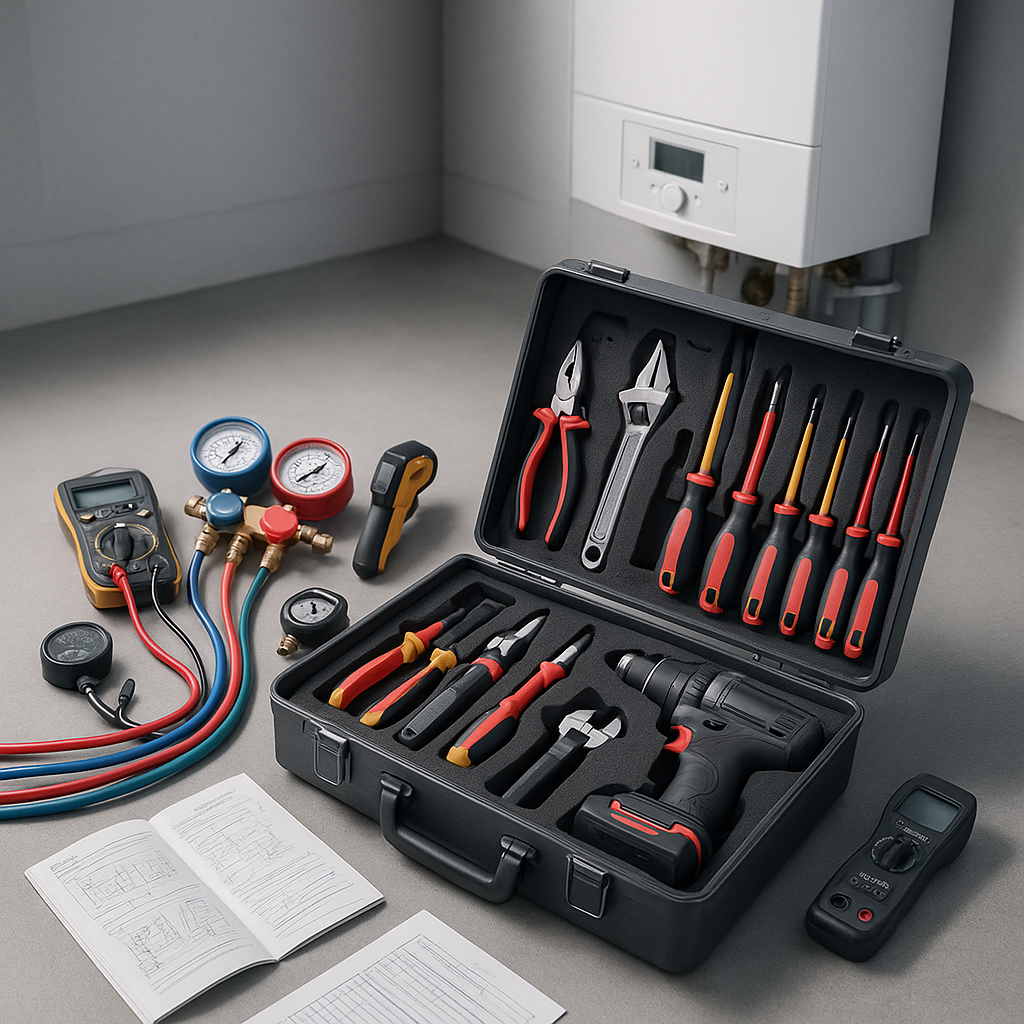
- Consumption: tanks and adjustments can influence operation. Improvement requires checks, not a preset percentage.
- LifespanDuration depends on equipment, installation, use and maintenance; a number of years is not guaranteed.
- SafetyCO in flue gases, gas leaks, uncalibrated safety sensors — all are silent faults that an inspection detects.
- Check applicable conditions for the equipment and contracted work: manufacturer, installation and repair do not necessarily have the same coverage. Keep the budget, invoice and documentation, without prejudice to the corresponding legal rights.
1. Check the circuit pressure
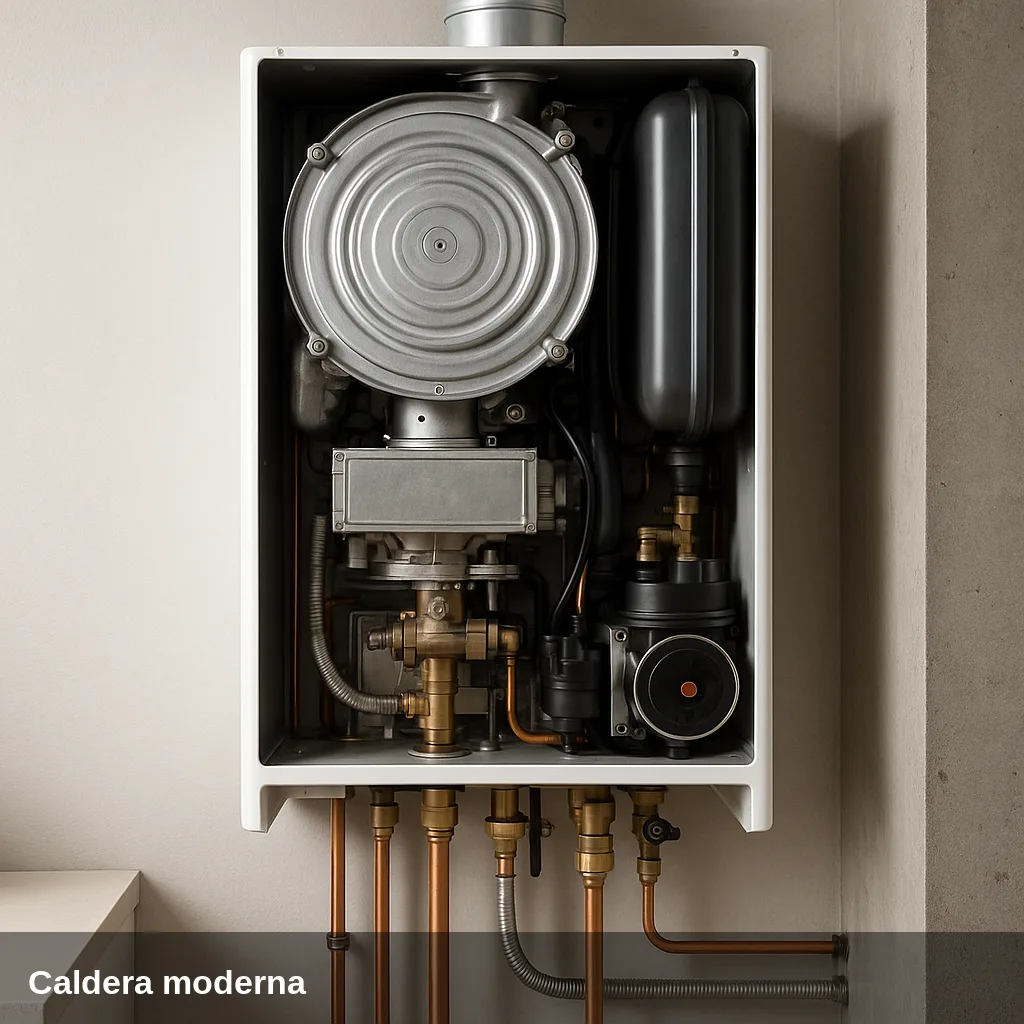
The pressure of the primary circuit should be between 1.2 and 1.8 bar cold (the boiler turned off and lukewarm). You can see it on the front pressure gauge or, in modern models, in the app.
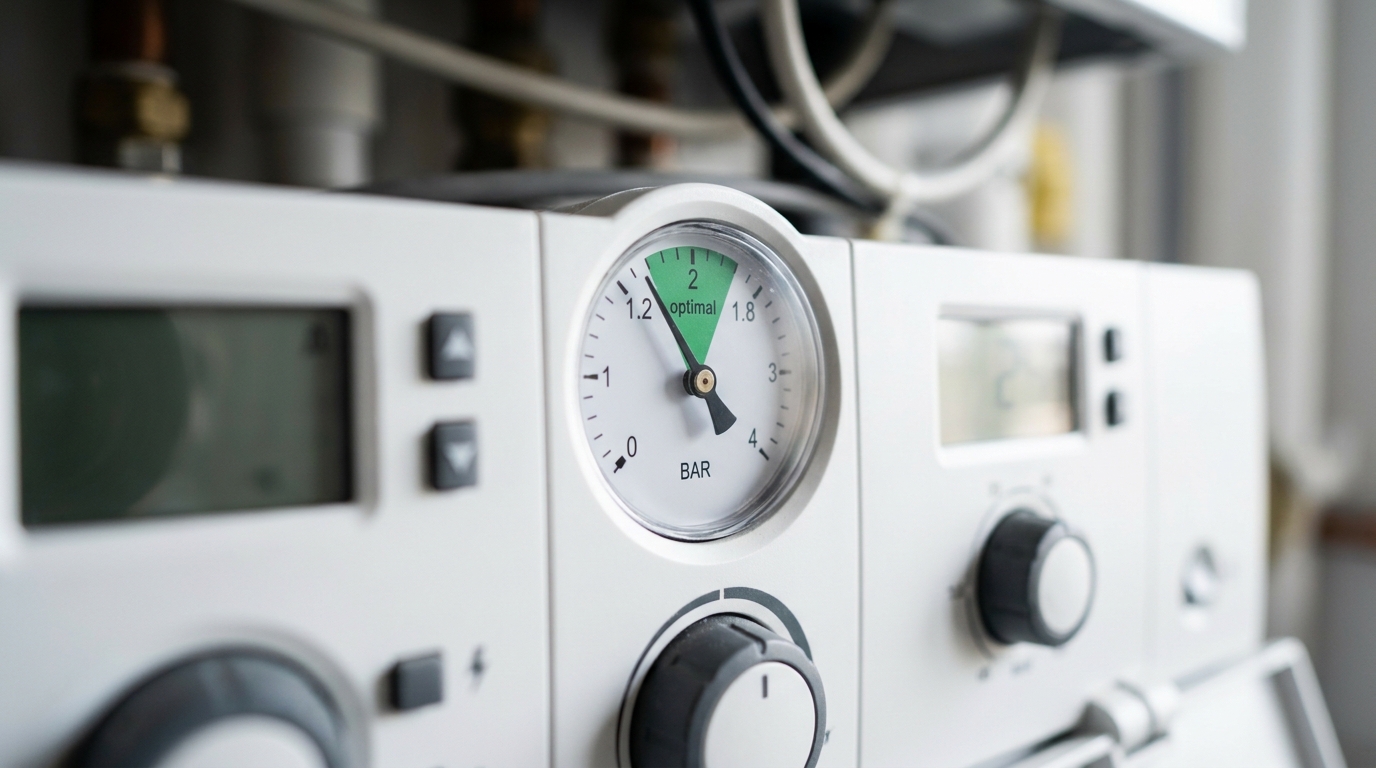
How to safely refill a modern boiler:
- Boiler off and cold.
- Open the filling valve under the boiler very slowly.
- Observe the pressure gauge: stop at 1.5 bar.
- Close the valve completely (this is the point where we see the most faults: a half-open valve saturates the expansion vessel).
2. Bleed the radiators (and the boiler)
If a radiator stays cold at the top and hot at the bottom, there is trapped air. This air prevents the hot water from circulating and also oxidizes the inside of the radiator.
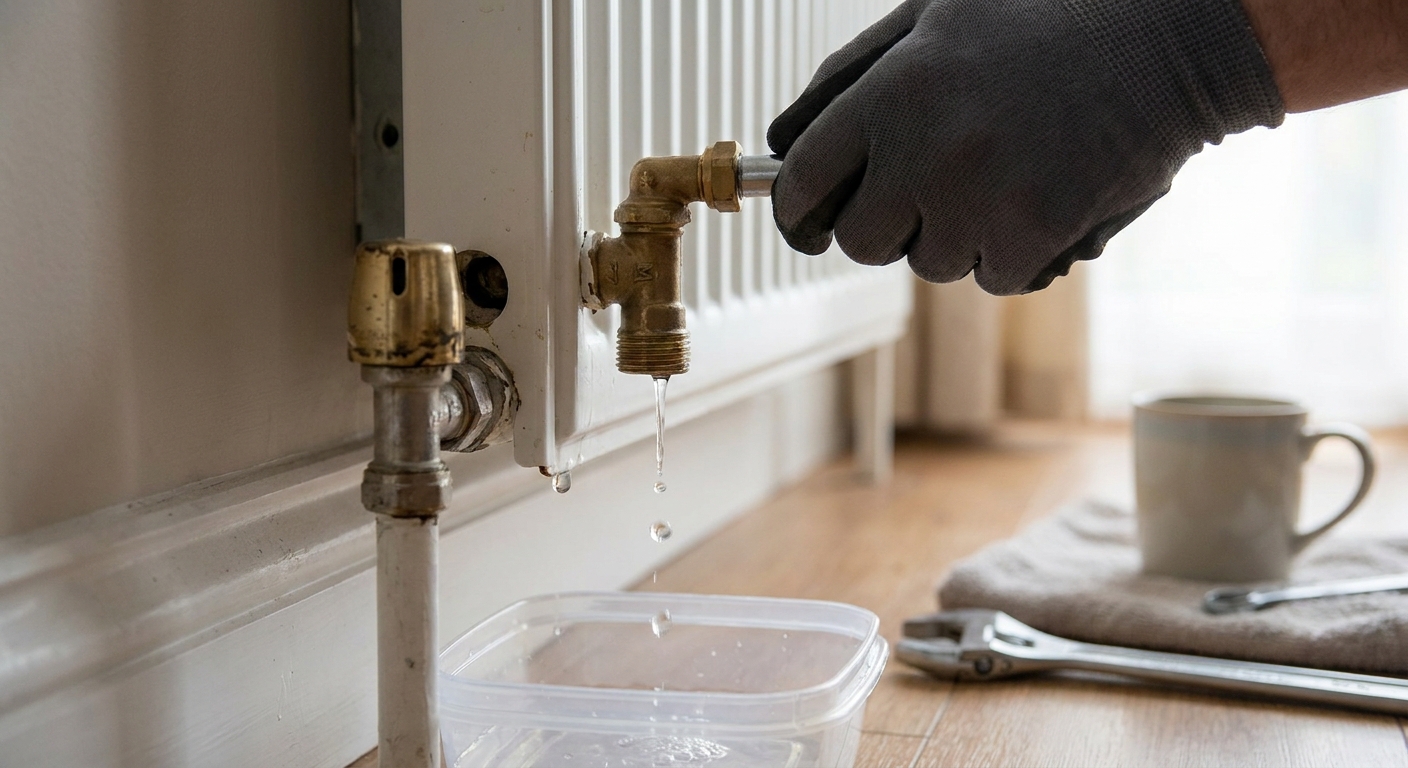
Correct order of steps:
- Turn off the boiler and wait 30 minutes.
- Start with the radiator furthest from the boiler (usually the furthest in the house).
- Open the bleed valve with the key or a flat screwdriver until stop the whistling and continuous water flows out.
- Close and move to the next one, going up by floors.
- Check the pressure at the end: it has probably dropped. Refill to 1.5 bar.
Modern boilers usually have their own automatic air vent at the top — check that it is not blocked by limescale (if so, it needs to be replaced during the inspection).
3. Cleaning of the heat exchanger and filters
The most important point, and the one that only a professional can do. Over the years it accumulates:
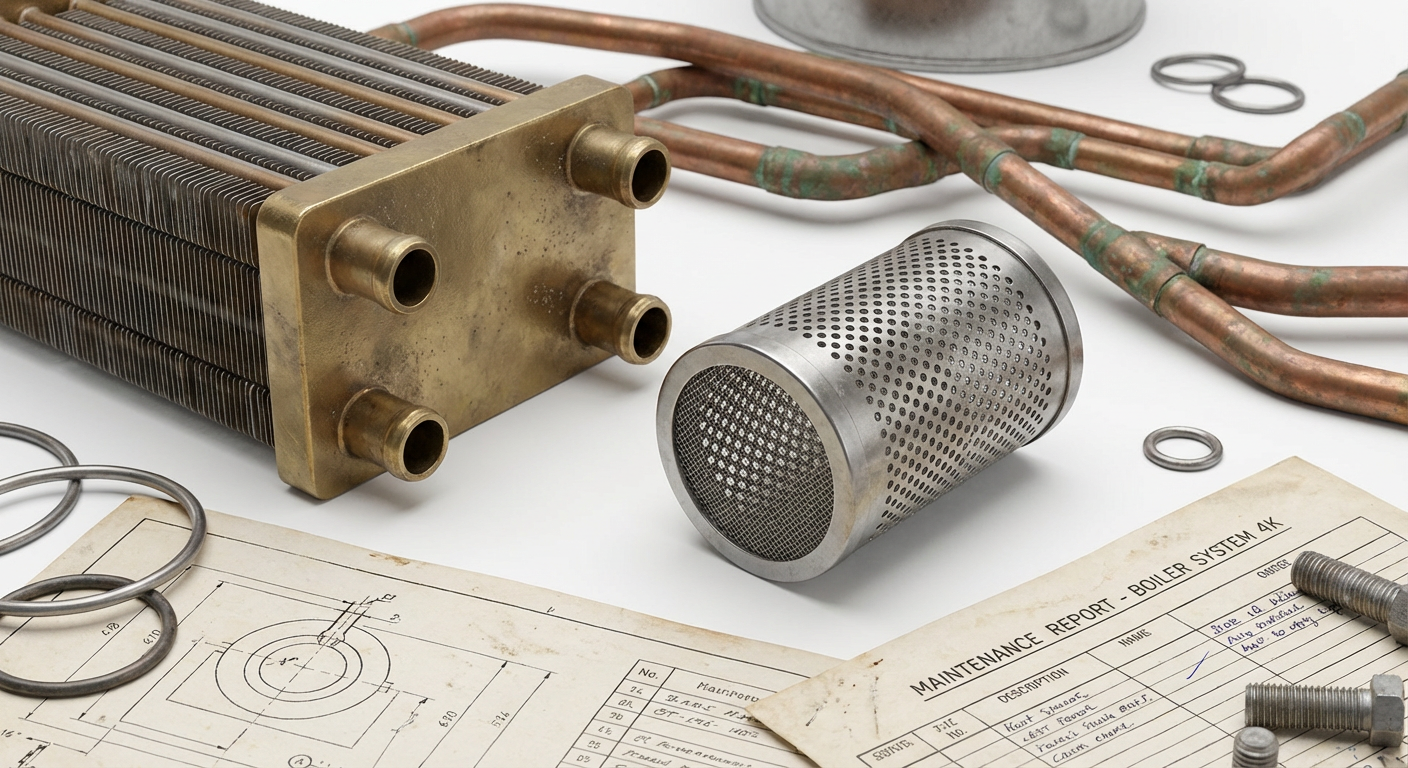
- Limescale / lime in the DHW heat exchanger (reduces the hot water flow).
- Sludge in the primary circuit (the typical black sludge from rust — reduces efficiency and clogs the 3-way valve).
- Soot in the burner (boilers with combustion problems).
Cleaning is done with specific productsSentinel X400 + X100 / Fernox F3 + F1) and it is advisable to complete it with the installation of a magnetic filter (Fernox TF1, MagnaClean) on the return: traps ferrous sludge and protects the pump and heat exchanger for life.
4. Burner inspection and flue gas analysis
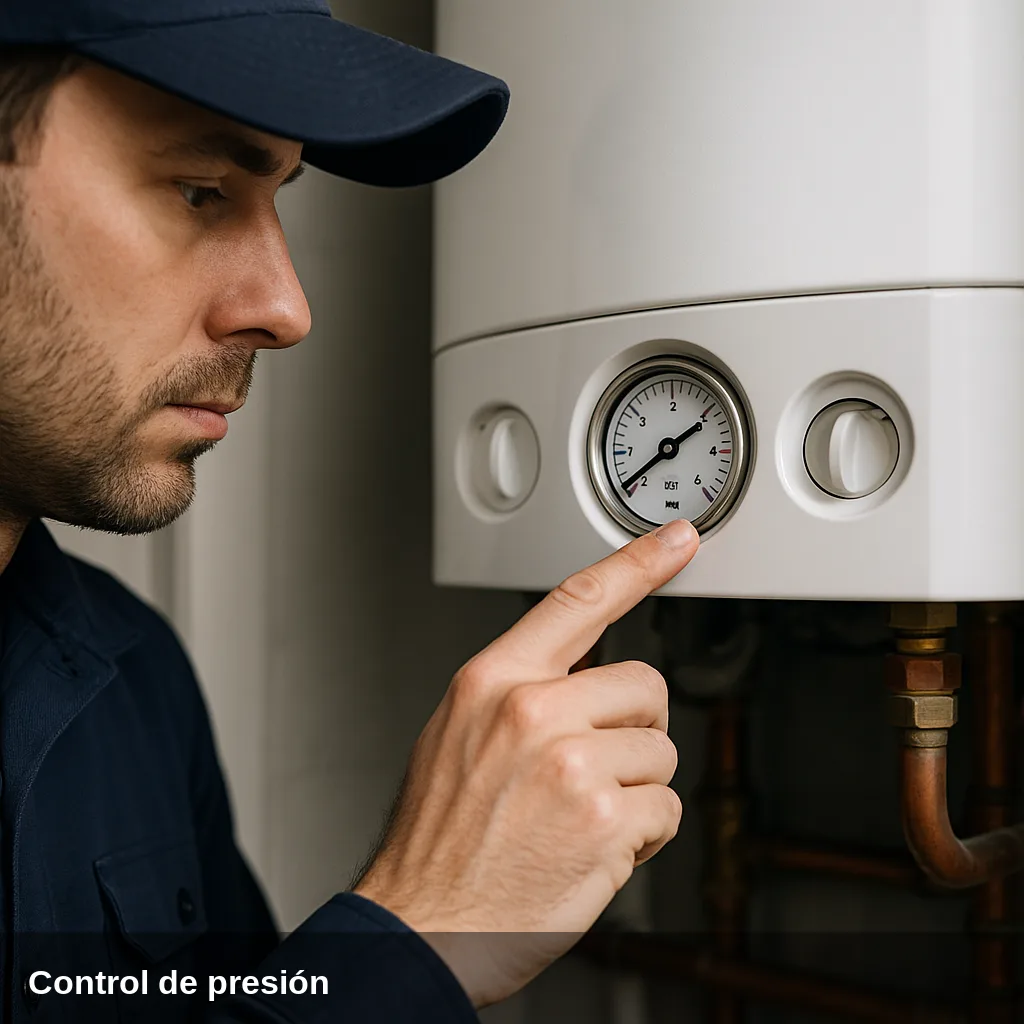
The combustion analysis With an approved analyser, it is the only objective way to know if your boiler is burning well. We measure:
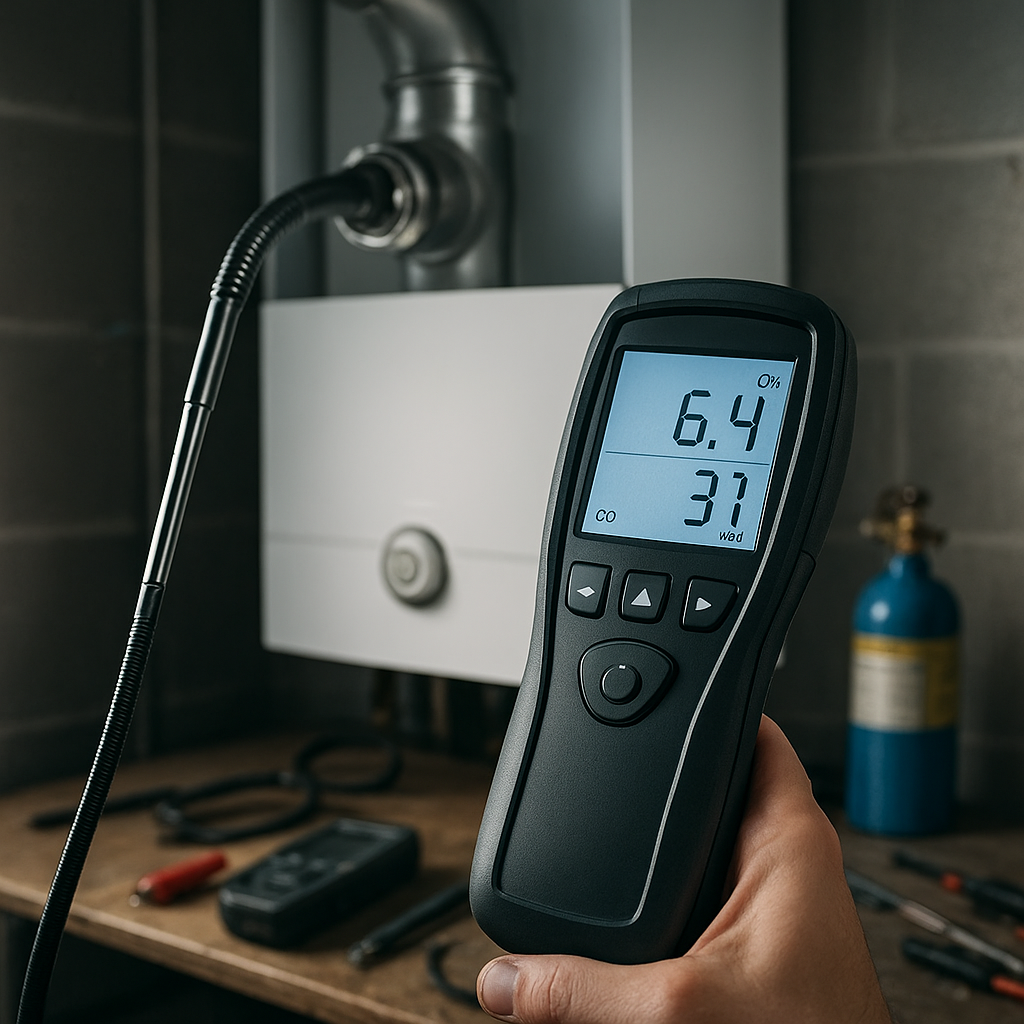
- CO₂ (8-10% in condensation)
- CO (target < 50 ppm — high CO is a symptom of a dirty burner or obstructed air intake)
- Flue gas temperature (50-65 °C in condensation; if it exceeds 80 °C, it is not condensing)
- Actual performance about PCB
5. Check of sensors, 3-way valve, and antifreeze
The components that cause the most faults out of warranty:
- Temperature probe: incorrect reading can alter equipment control. Diagnosis should check the probe and circuit, without attributing a fixed consumption increase.
- 3-way valveThe motorized valve gets stuck; the boiler provides DHW or heating, but not both.
- Expansion vessel: loses precharge over the years; be careful if you refill pressure often.
- Antifreeze (only boilers with external circuit or hybrid aerothermal): glycol expires — it is advisable to check pH and concentration every 3 years.
Recommended annual schedule
| Month | Action | Who |
|---|---|---|
| September | Complete annual review | Qualified personnel |
| October | Bleeding radiators | User |
| Nov – Feb | Check pressure every 2-3 weeks | User |
| March | Post-season review | Technician (optional) |
| June | Analyse DHW flue gases | Technician (biannual) |
Frequently Asked Questions
Is annual maintenance of a domestic boiler mandatory?
Maintenance, regulatory inspection and warranty conditions are different matters. Frequency depends on the equipment, power, use and maintenance manual. The contract identifies included visits and operations; it does not alone equate to a certificate or official inspection.
How much does a boiler maintenance cost in 2026?
Boiler plans are Revisión (€130), Plus (€190), and Seguro (€290) per boiler and year, VAT included. They include one annual preventive visit, usually in October or November. They do not include 24-hour emergencies. Check the benefits and limits of each plan on our maintenance page.
My boiler loses pressure every week, what should I do?
It's a leak, it's never normal. It could be in a radiator, in a joint of the circuit, in the expansion vessel, or in the heat exchanger itself. Don't keep refilling continuously: new water introduces lime and oxygen that damage the system. Call a technician to locate the leak.
Should I install a magnetic filter?
A magnetic filter can retain ferrous particles but does not solve all causes of dirt or malfunction. Consider water, circuit materials, manual, and installation condition before proposing it; savings cannot be guaranteed.
Can I bleed the radiators myself or should I call a technician?
You can bleed them perfectly yourself: turn off the boiler, start with the furthest radiator, open the bleed valve with the key until air stops coming out. Then refill the circuit pressure to 1.5 bar. You only need a technician if, after bleeding, a radiator remains cold at the top: there may be sludge, not air.