





























































Short answer
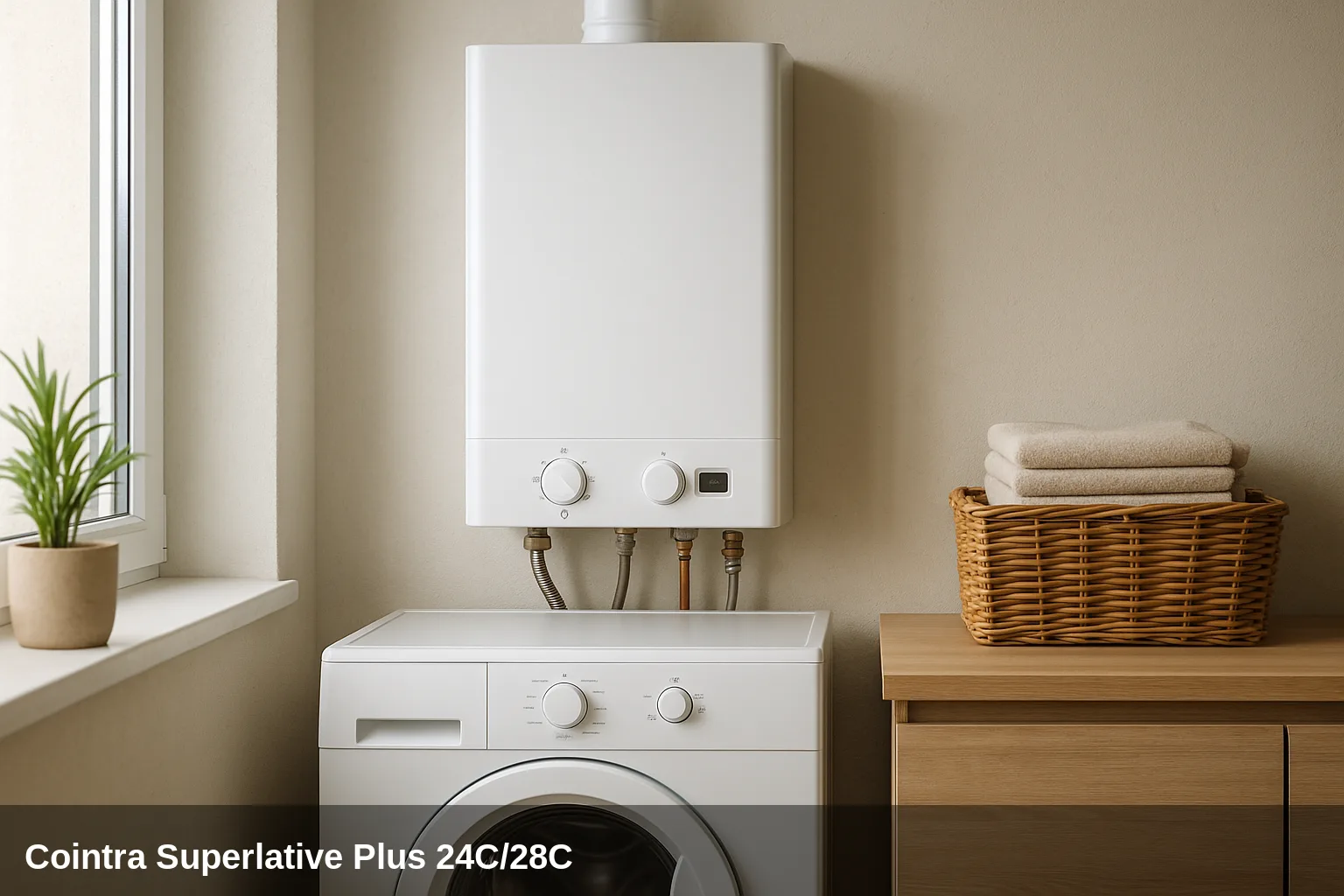
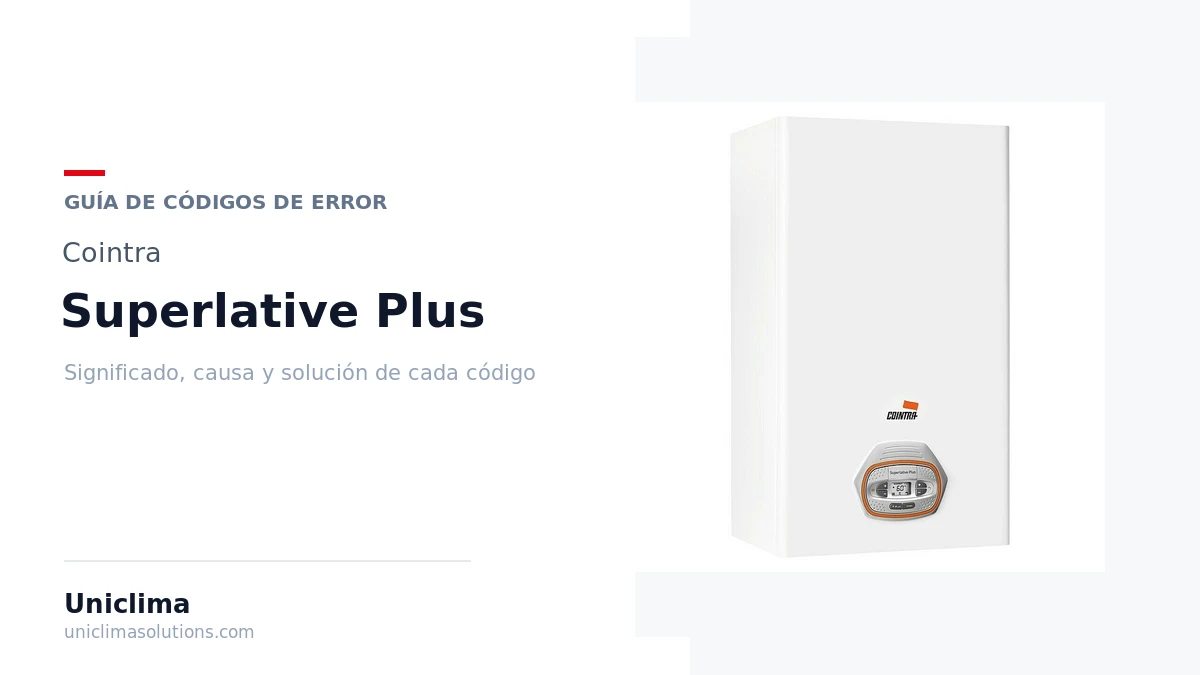
The boiler Cointra Superlative Plus (variants 24 °C and 28 °C) displays its faults with codes like A.. and F.. on the display. It is manufactured on the platform Ferroli Bluehelix Tech RRT, so their codes match those of that range. Here is the complete list: what each code means, why it appears and how to solve it, as well as what you can check yourself and when to call a technician.
Fault code table for the Superlative Plus 24C/28C
Quick summary of all fault codes. Below you have the details of each one with its cause and solution.
| Code | Meaning |
|---|---|
| A01 | No ignition of the burner |
| A02 | Flame signal detected with the burner off |
| A03 | Activation of overtemperature protection |
| A04 | Activation of the flue safety device (F07 repeated several times) |
| A05 | Fan protection activation (F15 maintained) |
| A06 | No flame at the end of the ignition phase |
| A07 | Excessive flue gas temperature |
| A08 / F08 | Overtemperature protection (flow sensor) |
| A09 / F09 | Overtemperature protection (return sensor) |
| A10 / F10 | Fault in the flow temperature sensor |
| A11 / F11 | Fault in the return temperature sensor |
| F12 | Fault in the domestic hot water (DHW) sensor |
| A13 / F13 | Fault in the flue gas sensor |
| A14 | Flue gas evacuation safety (repeated high temperature) |
| F07 | High flue gas temperature (transient warning) |
| F15 | Fan fault |
| F20 / F21 | Anomaly in a parameter of the control board |
| A23 / A24 / A26 / F40 / F47 / F50 / F51 / F53 | Anomaly in a parameter of the control board |
| F34 | Mains voltage below minimum (less than 170 V) |
| F35 | Abnormal network frequency |
| F37 | Incorrect water circuit pressure (low) |
| F39 | Fault in the external sensor (optional accessory) |
| F41 | Maximum temperature differential protection (excessive delta T) |
| A42 / F42 | Sensor control protection |
| F43 | Heat exchanger protection |
| A54 / A55 / A61 / F61 / A63 | Fault in the AGC01 control unit |
| A56 / F56 | Calibration error (combustion system) |
| A62 | No communication with the gas valve |
| A64 | Maximum number of consecutive resets exceeded |
What can you check yourself?
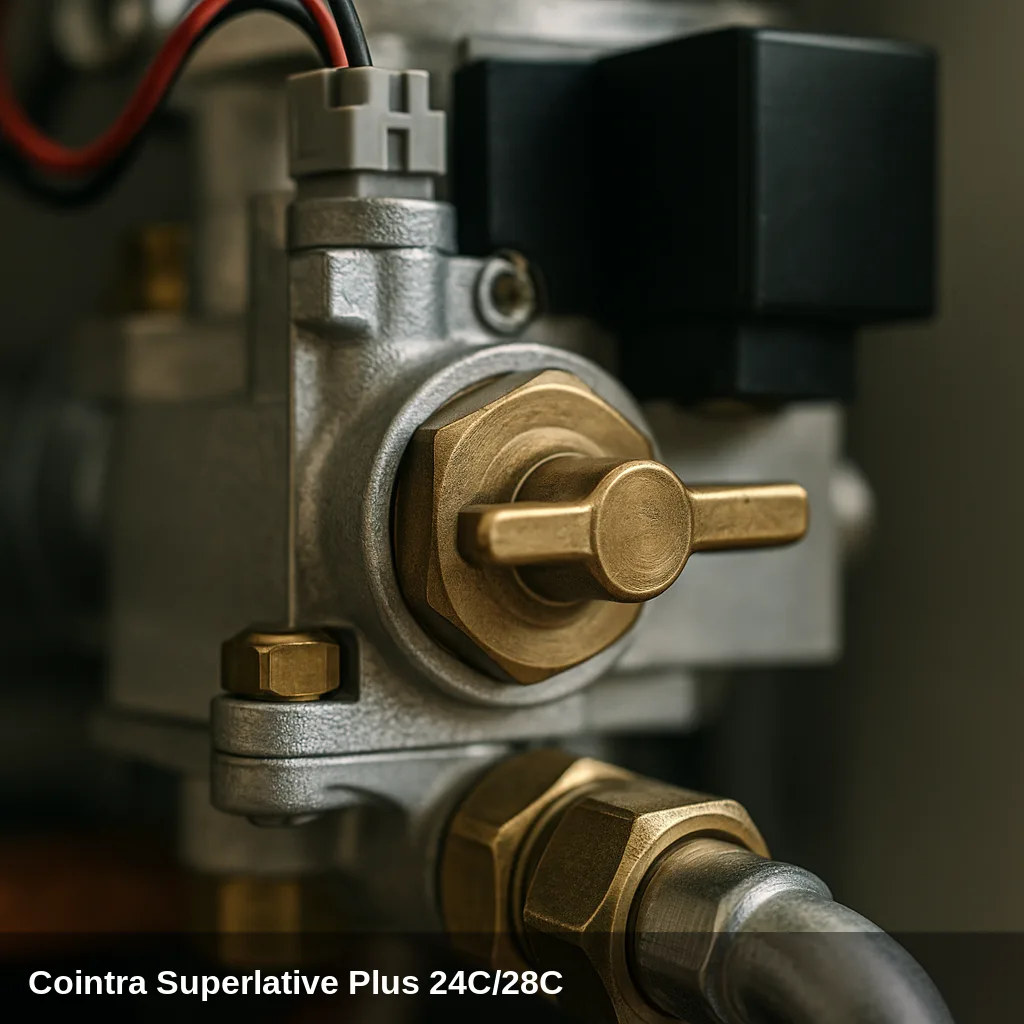
Some alerts can be resolved with simple and safe checks: replenishing the water pressure, bleeding the air from the radiators, checking that the gas valve is open, or resetting the boiler after a temporary lockout. If the code reappears after doing this, there is an underlying cause that should be reviewed by a qualified technician. Do not manipulate internal gas components nor electronics.
How to replenish the pressure step by step
- Locate the filling valve under the boiler.
- Open it slowly while observing the pressure gauge.
- Close the valve upon arrival at between 1 and 1.5 bar in cold.
- Bleed the radiators starting with the furthest one and check the pressure again.
- Reset the boiler; if the pressure warning disappears, the problem was resolved.
All fault codes and their solution
A01 — Burner ignition failure
Why does it appear: Gas supply shortage, insufficient gas pressure, dirty or damaged ignition electrode, faulty gas valve.
What to do: Check that the gas is open and the pressure is correct. Verify the condition and position of the ignition electrode. If the issue persists, it should be inspected by an authorised technician.
Affected component: Gas valve
A02 — Flame signal detected with the burner off
Why does it appear: Fault in the ionization electrode or failure in the control board.
What to do: Check the wiring and position of the ionisation electrode. If the issue persists, the PCB requires inspection by a technician.
Affected component: Ignition/Ionisation Electrode
A03 — Activation of overtemperature protection
Why does it appear: Heating sensor damaged, lack of water circulation or air in the circuit.
What to do: Check the circulation pump and bleed the circuit. The definitive diagnosis should be made by an authorised technician.
Affected component: Circulation pump
A04 — Activation of the flue safety device (F07 repeated several times)
Why does it appear: Excessive flue gas temperature repeatedly (see F07).
What to do: Resolve the cause of F07. The flue gas evacuation inspection must be carried out by an authorised technician.
Affected component: Heat exchanger
A05 — Activation of fan protection (F15 maintained)
Why does it appear: Fan damaged, unbalanced, or blocked.
What to do: The cleaning or replacement of the fan should be carried out by an authorised technician.
Affected component: Fan / extractor
A06 — No flame at the end of the ignition phase
Why does it appear: Low gas pressure, blocked flue ducts or condensate trap, unstable flame.
What to do: Check the gas and ensure that the ducts and siphon are clean. Requires an authorised technician.
Affected component: Ignition/Ionisation Electrode
A07 — Excessive flue gas temperature
Why does it appear: The flue gas sensor detects a temperature higher than allowed.
What to do: The inspection of the flue gas system must be carried out by an authorised technician.
Affected component: Heat exchanger
A08 / F08 — Overtemperature protection (flow sensor)
Why does it appear: Defective sensor, lack of circulation, or air in the circuit.
What to do: Check the pump and bleed the system. The sensor should be inspected by an authorised technician.
Affected component: Temperature sensor
A09 / F09 — Overtemperature protection (return sensor)
Why does it appear: Fault in the return sensor, lack of circulation or air in the circuit.
What to do: Check the flow rate and bleed the system. The sensor should be inspected by an authorised technician.
Affected component: Temperature sensor
A10 / F10 — Fault in the flow temperature sensor
Why does it appear: Defective sensor, short circuit or interrupted connection.
What to do: The wiring inspection and, if necessary, the replacement of the sensor is carried out by an authorised technician.
Affected component: Temperature sensor
A11 / F11 — Fault in the return temperature sensor
Why does it appear: Defective sensor, short circuit or interrupted connection.
What to do: The wiring inspection and, if necessary, the replacement of the sensor is carried out by an authorised technician.
Affected component: Temperature sensor
F12 — Fault in the domestic hot water (DHW) sensor
Why does it appear: Defective sensor, short circuit or interrupted connection.
What to do: The inspection and replacement of the sensor is carried out by an authorised technician.
Affected component: Temperature sensor
A13 / F13 — Fault in the flue gas sensor
Why does it appear: Defective sensor or wiring anomaly.
What to do: The inspection and replacement of the flue gas sensor is carried out by an authorised technician.
Affected component: Temperature sensor
A14 — Flue gas evacuation safety (repeated high temperature)
Why does it appear: Flue gas temperature elevated several times (see F07).
What to do: Resolve the cause of F07. Requires authorised technician.
Affected component: Heat exchanger
F07 — High flue gas temperature (transient warning)
Why does it appear: The flue gas sensor detects an excessive temperature in the exhaust.
What to do: The inspection of the flue (blockage or deterioration) is carried out by an authorised technician.
Affected component: Heat exchanger
F15 — Fan anomaly
Why does it appear: Speed signal out of range or incorrect supply voltage.
What to do: The inspection and, if necessary, replacement of the fan is carried out by an authorised technician.
Affected component: Fan / extractor
F20 / F21 — Anomaly in a parameter of the control board
Why does it appear: Incorrect configuration of the PCB.
What to do: The reconfiguration of the parameters is done by an authorized technician.
Browse catalogue: Catalogue: circuit boards · Cointra
A23 / A24 / A26 / F40 / F47 / F50 / F51 / F53 — Anomaly in a parameter of the control board
Why does it appear: Incorrect configuration on the PCB.
What to do: The reconfiguration of parameters or the replacement of the PCB is done by an authorised technician.
Browse catalogue: Catalogue: circuit boards · Cointra
F34 — Mains voltage below minimum (less than 170 V)
Why does it appear: Problems in the electrical installation or use of defective extension cords.
What to do: Check the electrical installation and avoid extension cords. If the issue persists, consult an electrician.
Affected component: Electrical installation
F35 — Anomalous mains frequency
Why does it appear: Problems in the electrical supply network.
What to do: The inspection of the electrical installation is carried out by a licensed electrician or technician.
Affected component: Electrical installation
F37 — Incorrect water circuit pressure (low)
Why does it appear: Pressure below minimum, possible microleaks or defective pressure sensor.
What to do: Fill the installation up to 1-1.5 bar with the filling tap. If it repeats, check for leaks or the expansion vessel; the pressure switch should be checked by a technician.
F39 — Fault in the external sensor (optional accessory)
Why does it appear: External sensor damaged, anomalous wiring, or sensor disconnected after activation.
What to do: Reconnect or check the external sensor. If you don't have an external sensor, a technician can deactivate the parameter.
Affected component: Temperature sensor
F41 — Maximum temperature differential protection (excessive delta T)
Why does it appear: Fault in a sensor, lack of circulation, or air in the circuit.
What to do: Check the sensors and the pump and bleed the system. Requires an authorised technician.
Affected component: Circulation pump
A42 / F42 — Protection by sensor control
Why does it appear: Fault or disconnection of the heating or return sensor.
What to do: The inspection and repair of the sensors is carried out by an authorised technician.
Affected component: Temperature sensor
F43 — Heat exchanger protection
Why does it appear: Absence of water or air circulation in the circuit.
What to do: Check the circulation pump and bleed the system.
Affected component: Circulation pump
A54 / A55 / A61 / F61 / A63 — Error in the AGC01 control unit
Why does it appear: Internal fault in the control unit.
What to do: The inspection or replacement of the control unit is carried out by an authorised technician.
Browse catalogue: Catalogue: circuit boards · Cointra
A56 / F56 — Calibration error (combustion system)
Why does it appear: Incorrect calibration or ionisation electrode improperly positioned or damaged.
What to do: The recalibration of the system or the repositioning of the electrode is done by an authorised technician.
Affected component: Ignition/Ionisation Electrode
A62 — No communication with the gas valve
Why does it appear: Control unit disconnected or defective gas valve.
What to do: The inspection of the connection between the control unit and the gas valve is carried out by an authorised technician.
Affected component: Gas valve
A64 — Maximum number of consecutive resets exceeded
Why does it appear: The boiler has performed too many resets in a row without resolving the cause.
What to do: Disconnect the boiler from the power supply for at least 60 seconds and then reconnect it. If the fault persists, a certified technician is required.
When to call a technician
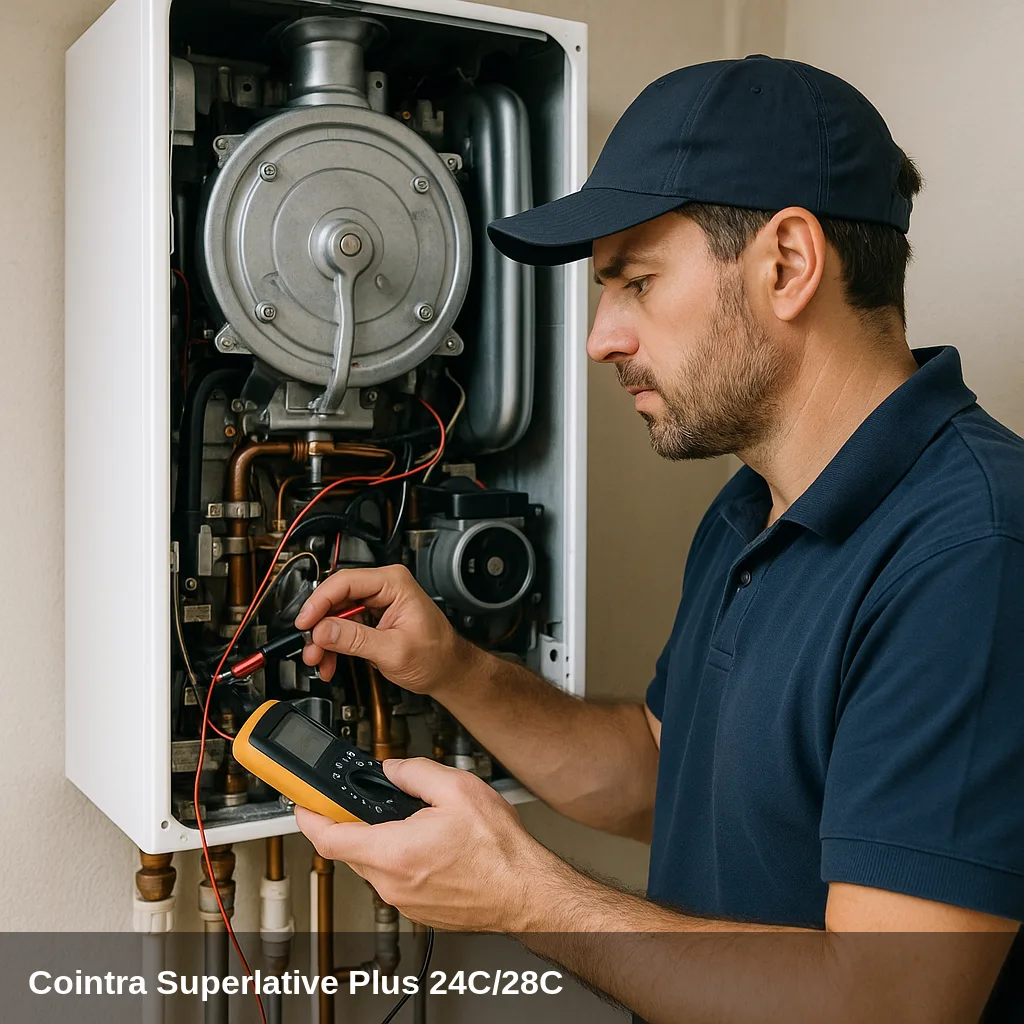
Fault codes related to sensors, electronics, gas valve, fan, or flue gas evacuation require a qualified technician with the appropriate equipment. If the same fault code reappears after a reset, or if the pressure drops repeatedly, a professional inspection is advisable. In Uniclima do you find spare parts for this boiler.
Frequently Asked Questions
Most lockouts can be cleared with the reset button. If you have reset several times in a row, A64 may appear: in that case, disconnect the boiler from the power for one minute and then reconnect it. If the code returns, there is an underlying cause that should be diagnosed.
Between 1 and 1.5 bar when cold. If it drops below the minimum, the pressure fault F37 appears and the boiler limits its operation.
The Cointra Superlative Plus is manufactured on the Ferroli Bluehelix Tech RRT platform, so it shares the electronics and diagnostic codes (A.. and F..).
Yes. The Superlative Plus 24 C and 28 C share the same electronics and the same list of codes; only the power output changes.