






























































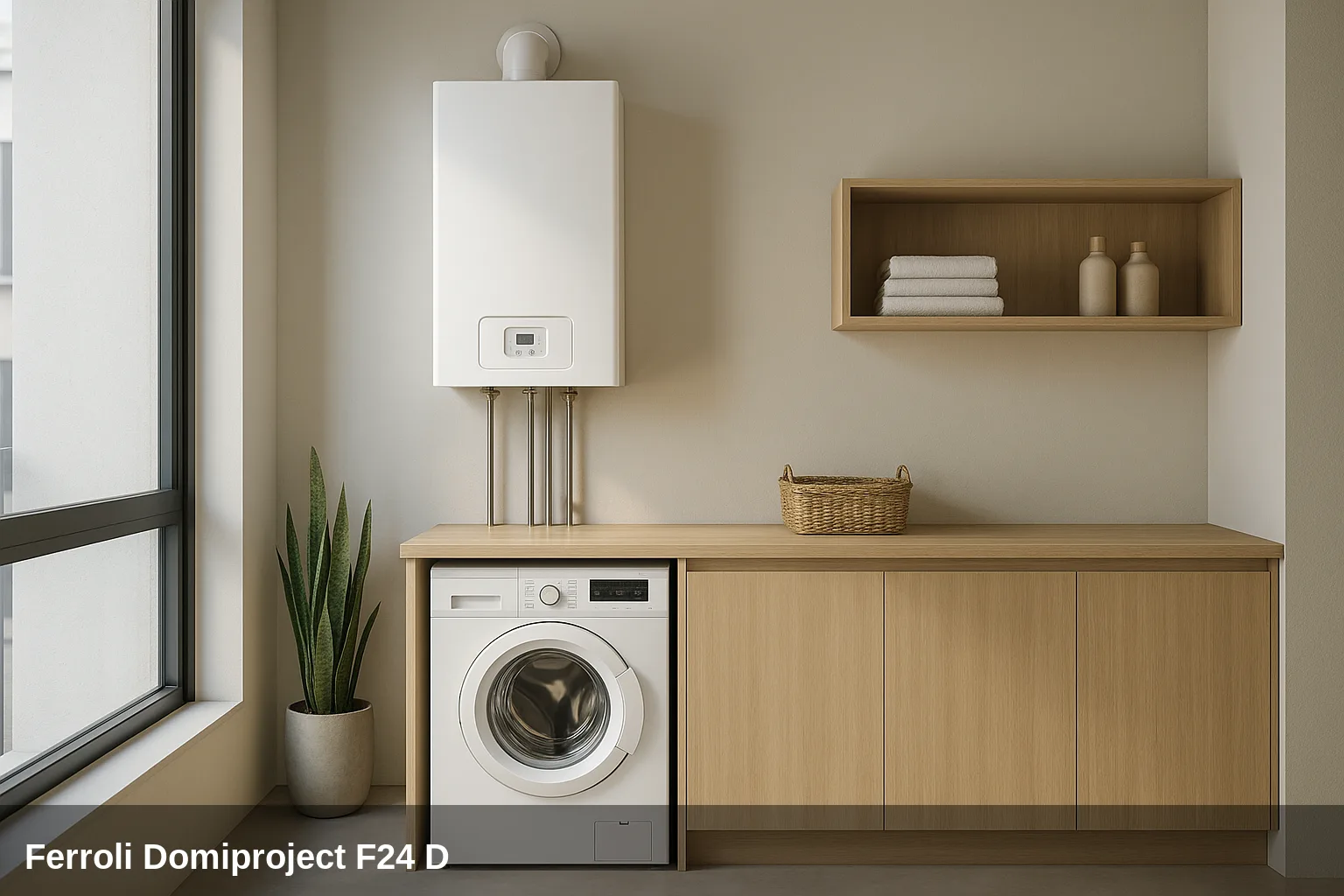
Short answer
If your boiler Ferroli Domiproject F24 D displays a code like A01, A03, or F37, here is what each warning means, why it appears, and how to solve it, along with the exact spare part when the fault corresponds to a specific component. Codes that start with A they are lockouts that usually require a reset; those that start with F they are anomalies of sensors, pressure, or electrical network.
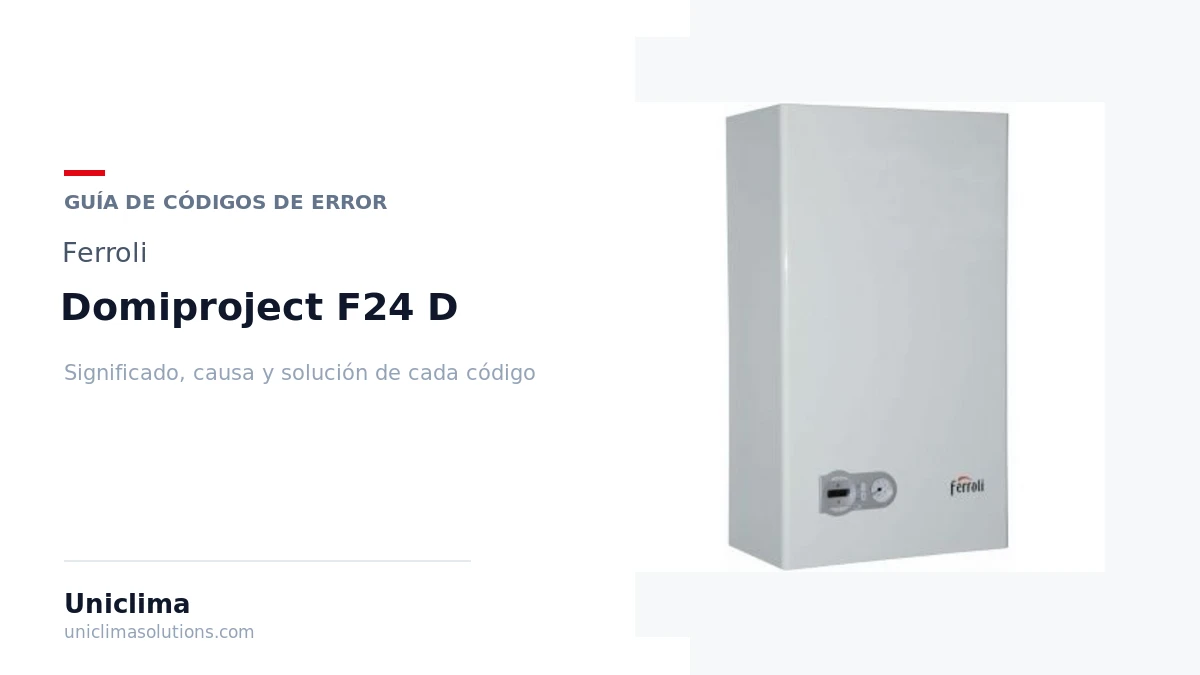
Error code table for the Domiproject F24 D
Quick summary of all fault codes. Below you have the details of each one with its cause and solution.
| Code | Meaning |
|---|---|
| A01 | The burner does not ignite (ignition lockout) |
| A02 | Call present with the burner off |
| A03 | Overtemperature protection operation |
| A06 | Lack of flame after the ignition phase |
| F04 | Flue thermostat anomaly |
| F05 | The air pressure switch does not close contacts after the fan starts. |
| F10 | Heating sensor anomaly |
| F34 | Supply voltage below 170 V |
| F35 | Abnormal electrical grid frequency |
| F37 | Water pressure in the system too low |
| F39 | Outdoor sensor anomaly |
| F40 | Water pressure in the system too high |
| F47 | Water pressure transducer anomaly |
What can you check yourself?
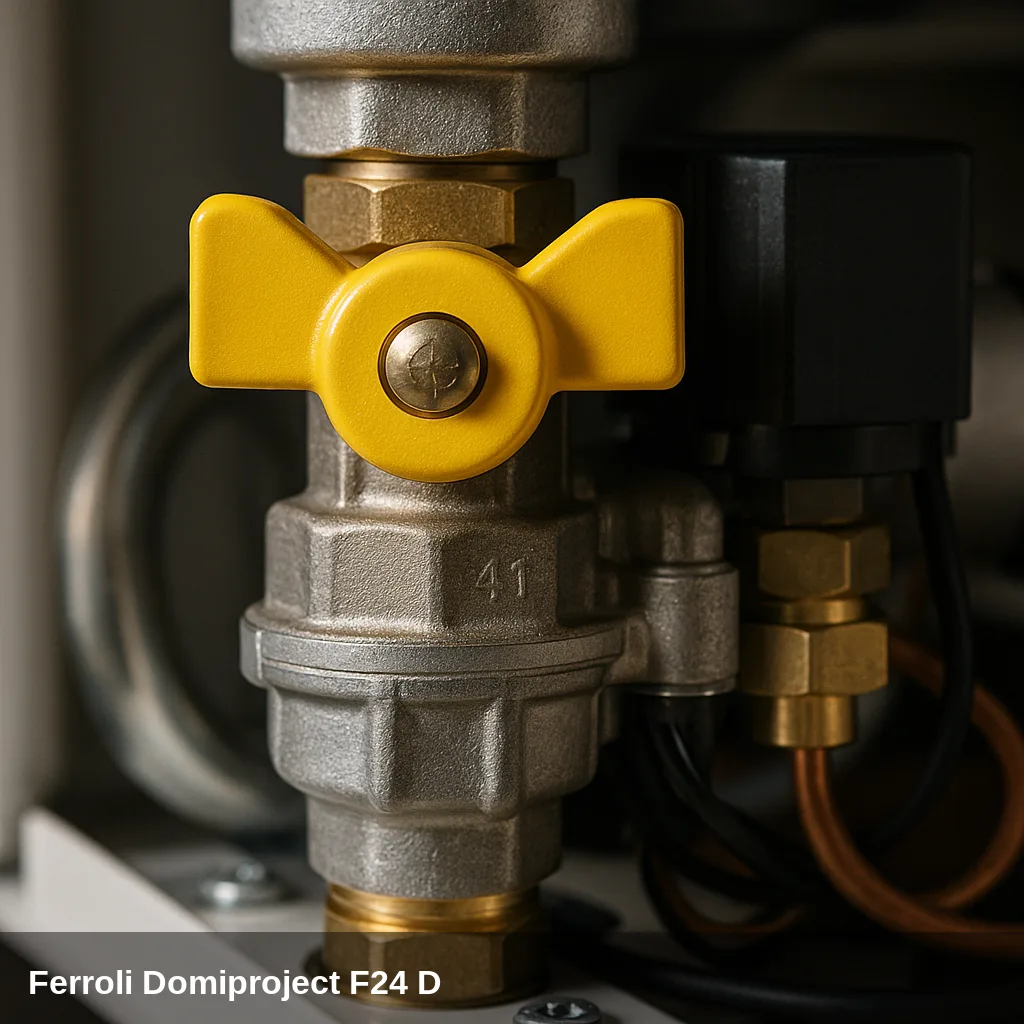
Some alerts can be resolved with simple and safe checks: replenishing the water pressure, bleeding the air from the radiators, checking that the gas valve is open, or resetting the boiler after a temporary lockout. If the code reappears after doing this, there is an underlying cause that should be reviewed by a qualified technician. Do not manipulate internal gas components nor electronics.
How to replenish the pressure step by step
- Locate the filling valve under the boiler.
- Open it slowly while observing the pressure gauge.
- Close the valve upon arrival at between 1 and 1.5 bar in cold.
- Bleed the radiators starting with the furthest one and check the pressure again.
- Reset the boiler; if the pressure warning disappears, the problem was resolved.
All fault codes and their solution
A01 — The burner does not ignite (ignition lockout)
Why does it appear: Gas shortage, gas valve closed, ignition or detection electrode dirty or poorly positioned, defective gas valve, or ignition power too low.
What to do: Check that the gas valve is open and that there is a supply, and reset the boiler. If the lockout repeats, a technician should inspect it: electrodes, wiring, and gas valve.
Browse catalogue: Catalogue: gas valves · Ferroli
A02 — Flame present with burner off
Why does it appear: Anomaly of the detection or ionization electrode, or of the PCB, which reads a flame that does not actually exist.
What to do: Requires technical inspection of the ionisation electrode, its wiring, and the control board.
Browse catalogue: Catalogue: circuit boards · Ferroli
A03 — Overtemperature protection activation
Why does it appear: The heating sensor detects an excessive temperature: lack of water circulation, blocked pump, air in the system, or damaged sensor.
What to do: Check the pressure and bleed the air from the radiators. If it persists, the circulation pump and the heating sensor need to be checked.
Browse catalogue: Catalogue: circulation pumps · Ferroli
A06 — Lack of flame after the ignition phase
Why does it appear: The flame repeatedly goes out after ignition. This is usually due to low gas pressure, a faulty detection electrode, or poor combustion.
What to do: Check the gas supply. The gas regulation and the detection electrode should be inspected by a technician.
Browse catalogue: Catalogue: gas valves · Ferroli
F04 — Flue thermostat anomaly
Why does it appear: Poor flue gas evacuation, obstructed duct, or defective flue thermostat.
What to do: Never disable the flue thermostat: it protects against poor gas exhaust. The flue evacuation and the thermostat itself should be checked by a technician.
F05 — The air pressure switch does not close contacts after the fan starts
Why does it appear: Weak or faulty fan, pressure switch tube blocked or disconnected, flue blocked or defective air pressure switch.
What to do: Requires checking the fan, pressure tubes, and air pressure switch.
Browse catalogue: Catalogue: spare parts · Ferroli
F10 — Heating sensor anomaly
Why does it appear: Flow sensor in short circuit or open circuit, or poor connection.
What to do: Check the wiring and, if necessary, replace the heating sensor.
Affected component: Temperature sensor
F34 — Supply voltage below 170 V
Why does it appear: Voltage drop in the electrical network or deficient electrical installation.
What to do: Check the mains voltage. It is an issue with the electrical installation, not the boiler.
Affected component: Electrical installation
F35 — Abnormal mains frequency
Why does it appear: Anomaly in the power supply network.
What to do: Check the electrical installation and the supply network.
Affected component: Electrical installation
F37 — Water pressure in the system too low
Why does it appear: Water loss in the circuit, lack of filling, or defective water pressure switch.
What to do: Replenish the pressure to 1-1.5 bar when cold using the filling key. If it drops again and again, there is a leak that needs to be located.
Browse catalogue: Catalogue: spare parts · Ferroli
F39 — External sensor anomaly
Why does it appear: External temperature sensor disconnected or faulty (if installed).
What to do: Check the external sensor and its wiring, or deactivate it in the parameters if it is no longer in use.
Affected component: Temperature sensor
F40 — Water pressure in the system too high
Why does it appear: Overfilling, expansion vessel without air pressure, or faulty safety valve.
What to do: Reduce the pressure by bleeding a radiator until it reaches 1-1.5 bar when cold. If it rises on its own, the expansion vessel needs to be checked.
Browse catalogue: Catalogue: spare parts · Ferroli
F47 — Water pressure transducer anomaly
Why does it appear: Water pressure sensor or pressure switch faulty or poorly connected.
What to do: Check the wiring and replace the water pressure sensor or pressure switch if it is defective.
Browse catalogue: Catalogue: spare parts · Ferroli
When to call a technician
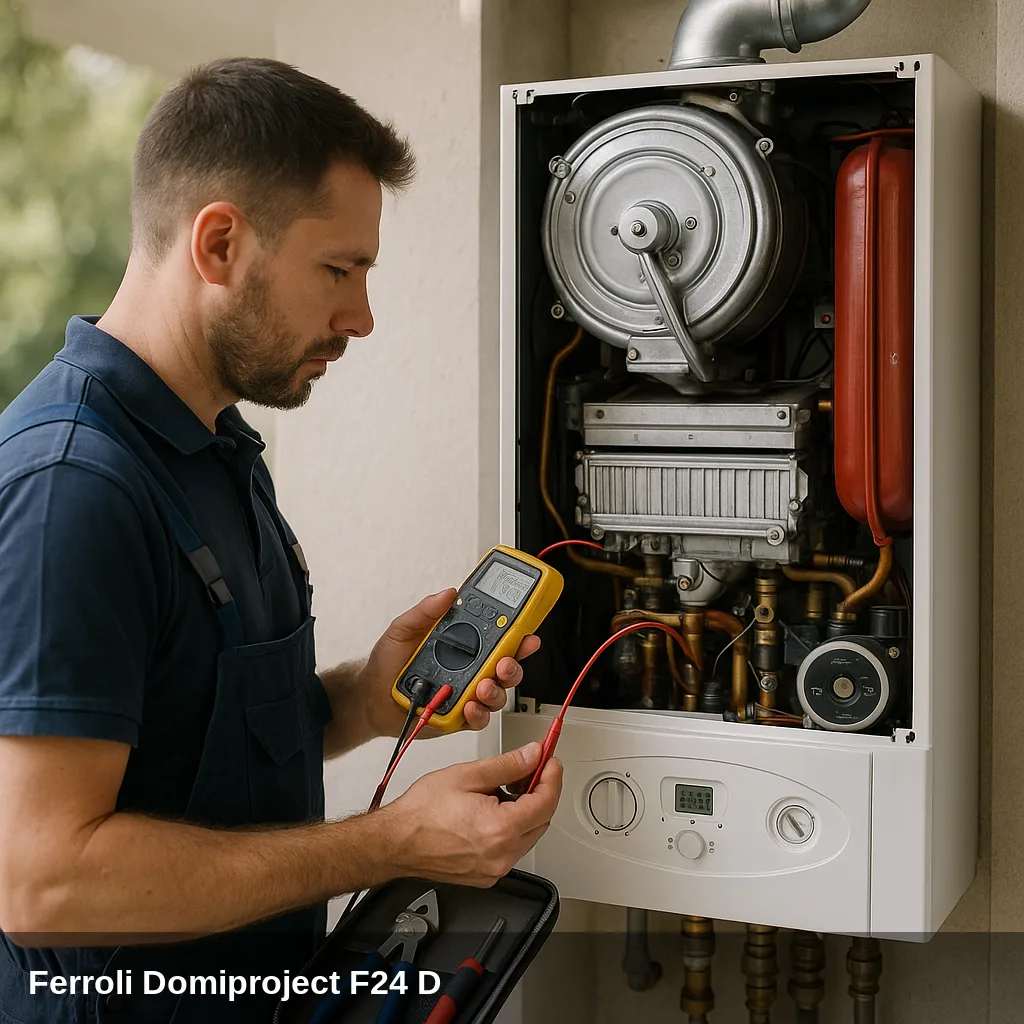
Fault codes related to sensors, electronics, gas valve, fan, or flue gas evacuation require a qualified technician with the appropriate equipment. If the same fault code reappears after a reset, or if the pressure drops repeatedly, a professional inspection is advisable. In Uniclima do you find spare parts for this boiler.
Frequently Asked Questions
The burner has not ignited. This is usually due to a lack of gas, a closed gas valve, or a dirty ignition electrode. After checking the gas, you can reset; if the lockout repeats, the electrodes and gas valve need to be checked.
With the function control or the reset button on the panel. If the code reappears after resetting, do not insist: it indicates a fault that should be checked by a qualified technician.
The correct cold pressure is 1 to 1.5 bar. If it frequently drops, there is usually a leak in the circuit or in the boiler itself, or an expansion vessel in poor condition.
F04 is related to flue gas evacuation. The flue thermostat should never be bypassed, as it protects against poor gas discharge. The duct and the thermostat need to be checked.