






























































Short answer
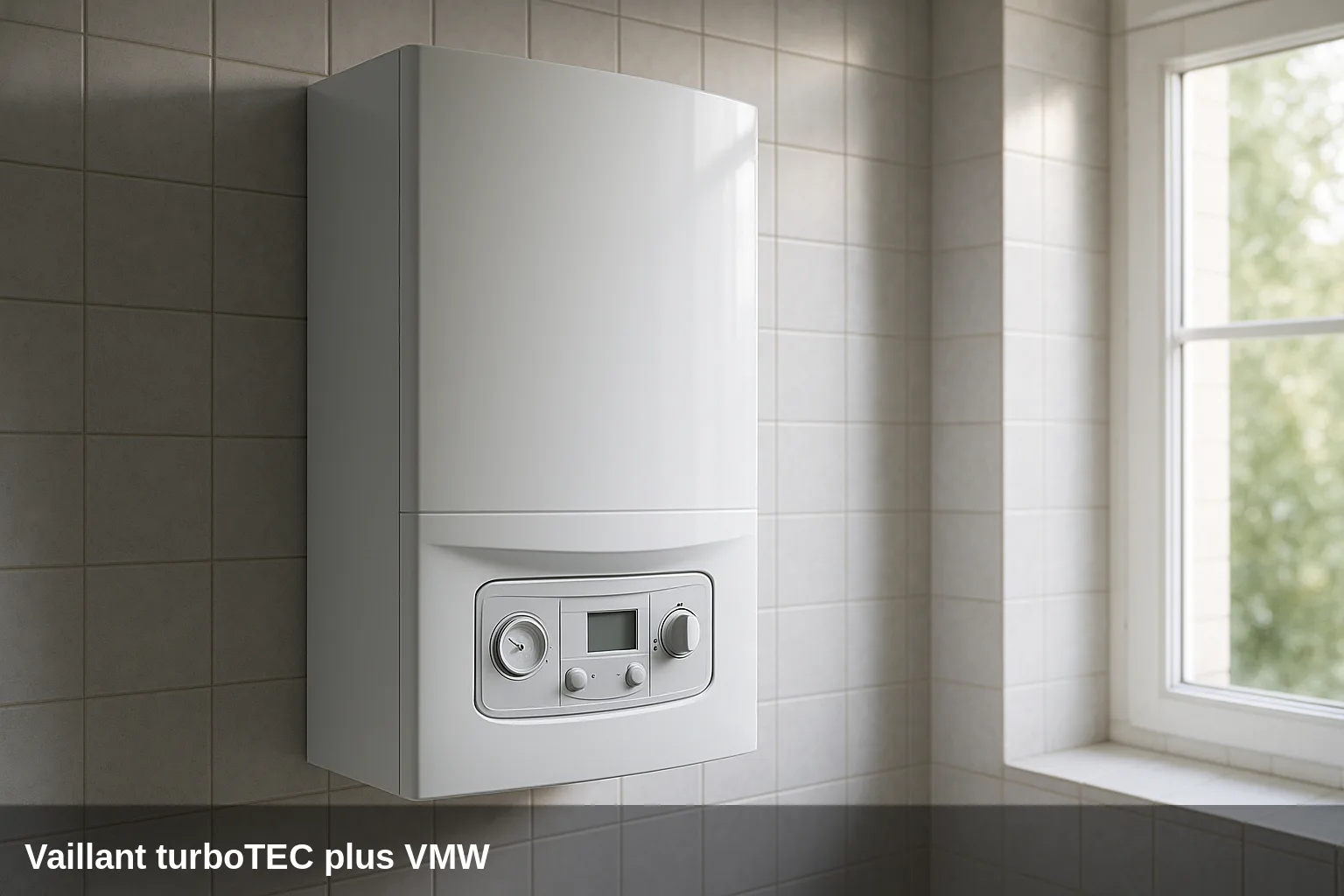
The Vaillant turboTEC plus It is a wall-mounted sealed system boiler (non-condensing) that displays its faults with codes. F.xx on the screen. In this guide, you have the meaning of each code, why it appears, and how to solve it, as well as the exact spare part when the fault corresponds to a specific component. It shares the diagnostic system of the Vaillant group, although not being a condensing type, it does not display the specific codes for that type of boiler.
Fault code table for the turboTEC plus VMW
Quick summary of all fault codes. Below you have the details of each one with its cause and solution.
| Code | Meaning |
|---|---|
| F.00 | Interruption in the flow temperature sensor (open circuit) |
| F.01 | Interruption in the return temperature sensor (open circuit) |
| F.10 | Short circuit in the flow temperature sensor |
| F.11 | Short circuit in the return temperature sensor |
| F.20 | Safety shutdown due to activation of the temperature limiter |
| F.22 | Safety shutdown due to lack of water (insufficient pressure) |
| F.23 | Safety shutdown due to excessive temperature difference between flow and return |
| F.24 | Safety shutdown due to excessively rapid temperature rise |
| F.27 | Safety shutdown due to flame simulation (flame detected without ignition command) |
| F.28 | Fault during start-up: ignition failure |
| F.29 | Fault during operation: failed re-ignition after flame loss |
| F.32 | Fault in the fan (speed variation detected) |
| F.49 | Fault in the eBUS (insufficient voltage or short circuit) |
| F.61 | Fault in the gas valve control |
| F.62 | Fault in the gas valve shutdown delay |
| F.63 | Fault in the EEPROM (memory of the PCB) |
| F.64 | Fault in the electronics or sensors (short circuit detected in flow or return sensor) |
| F.65 | Fault due to overheating of the electronics |
| F.67 | Fault in the flame detector signal (signal out of limits or not plausible) |
| F.70 | Invalid appliance code (Invalid DSN) |
| F.71 | Fault in the flow temperature sensor (implausible constant value) |
| F.72 | Fault in the flow or return sensor (excessive temperature difference) |
| F.73 | Fault in the water pressure sensor (signal too low, open circuit) |
| F.74 | Fault in the water pressure sensor (signal too high, short circuit) |
| F.75 | No change in pressure detected when the pump starts |
| F.83 | Fault due to lack of temperature change on start-up (temperature sensor) |
| F.84 | Temperature difference between sensors not plausible |
| F.85 | Incorrectly mounted temperature sensors |
What can you check yourself?
Some alerts can be resolved with simple and safe checks: replenishing the water pressure, bleeding the air from the radiators, checking that the gas valve is open, or resetting the boiler after a temporary lockout. If the code reappears after doing this, there is an underlying cause that should be reviewed by a qualified technician. Do not manipulate internal gas components nor electronics.
How to replenish the pressure step by step
- Locate the filling valve under the boiler.
- Open it slowly while observing the pressure gauge.
- Close the valve upon arrival at between 1 and 1.5 bar in cold.
- Bleed the radiators starting with the furthest one and check the pressure again.
- Reset the boiler; if the pressure warning disappears, the problem was resolved.
All fault codes and their solution
F.00 — Interruption in the flow temperature sensor (open circuit)
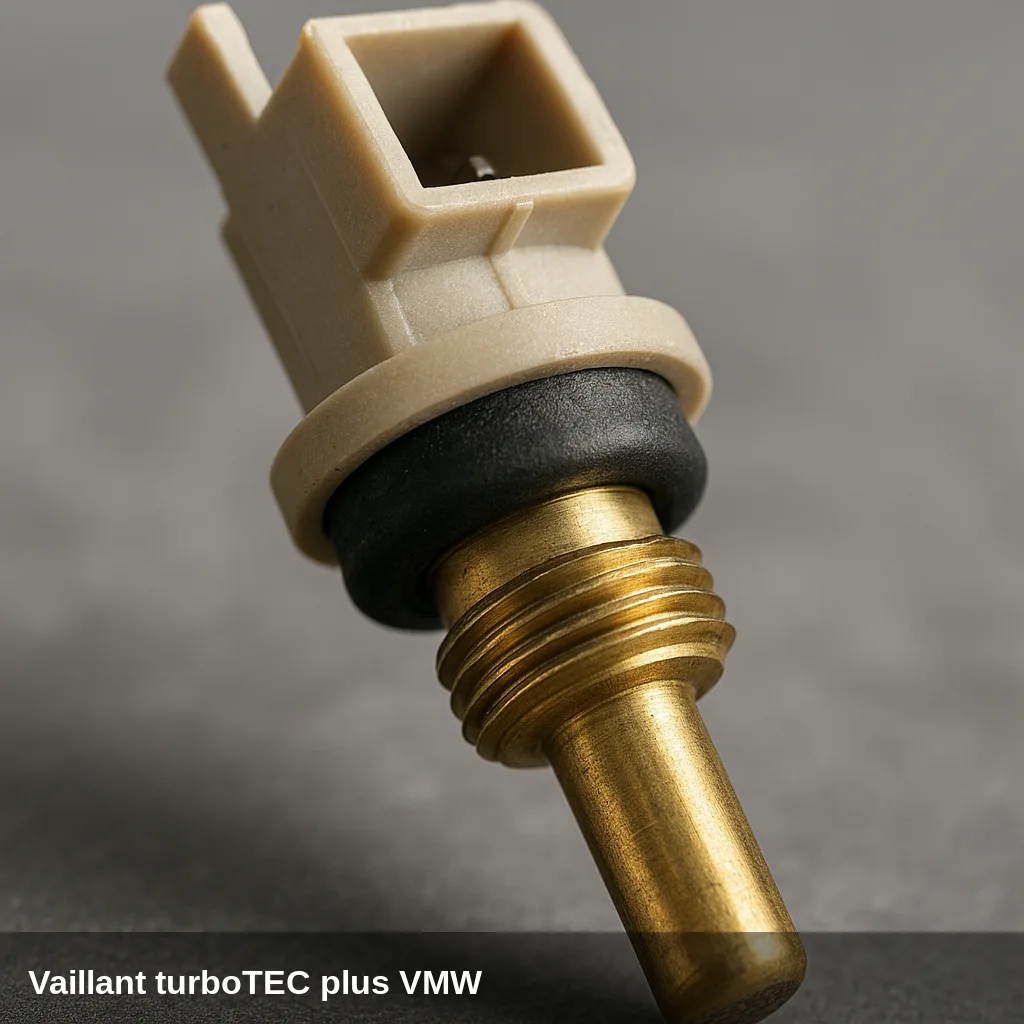
Why does it appear: Loose or incorrectly inserted NTC connector; poorly connected PCB multiple connector; wiring breakage; defective NTC sensor
What to do: Check and reconnect the flow sensor connector. If the wiring is in good condition and the fault persists, request replacement of the NTC sensor by an authorised technician.
Affected component: Temperature sensor
F.01 — Interruption in the return temperature sensor (open circuit)
Why does it appear: Loose or uninserted NTC connector; break in the wiring harness; defective NTC sensor
What to do: Check the connection of the return sensor connector. If the wiring is intact and the fault repeats, the sensor must be replaced by an authorized technician.
Affected component: Temperature sensor
F.10 — Short circuit in the flow temperature sensor
Why does it appear: NTC sensor fault; short circuit in the wiring harness or between cable and casing
What to do: Check the insulation of the wiring to the flow sensor. If a short circuit is confirmed or the sensor measures out of range, request replacement by an authorised technician.
Affected component: Temperature sensor
F.11 — Short circuit in the return temperature sensor
Why does it appear: NTC sensor fault; short circuit in the wiring harness or between cable and casing
What to do: Check the insulation of the wiring to the return sensor. If the short circuit is confirmed or the sensor measures out of range, request replacement by an authorised technician.
Affected component: Temperature sensor
F.20 — Safety shutdown due to activation of the temperature limiter
Why does it appear: Flow sensor not correctly connected thermally or faulty; grounding fault; the boiler does not perform the safety shutdown correctly.
What to do: Do not repeatedly reset without diagnosis. Request inspection of the flow sensor, grounding, and ignition system by an authorised technician.
Affected component: Temperature sensor
F.22 — Safety shutdown due to lack of water (insufficient pressure)
Why does it appear: Water pressure in the installation too low or zero; faulty pressure sensor; cable to the pump or pressure sensor loose or defective; pump blocked or faulty
What to do: Check the boiler's pressure gauge. If the pressure is below 1 bar, refill the system using the filling loop until it reaches between 1 and 1.5 bar. If the pressure is correct and the fault persists, request an inspection of the pressure sensor and the pump by an authorised technician.
Browse catalogue: Catalogue: spare parts · Vaillant
F.23 — Safety shutdown due to excessive temperature difference between flow and return
Why does it appear: Blocked or faulty circulation pump; insufficient minimum pump flow; supply and return sensors swapped; air in the circuit
What to do: Bleed the air from the heating circuit and check that the pressure is correct. If the fault persists, request a review of the pump and sensors by an authorised technician.
Browse catalogue: Catalogue: circulation pumps · Vaillant
F.24 — Safety shutdown due to excessively rapid temperature rise
Why does it appear: Blocked circulation pump or insufficient minimum power; air in the appliance; water pressure too low; faulty gravity valve; NTC sensors poorly positioned or reversed
What to do: Bleed the circuit and check the installation pressure. If the fault repeats, request an inspection of the pump, sensors, and non-return valve by an authorised technician.
Browse catalogue: Catalogue: circulation pumps · Vaillant
F.27 — Safety shutdown due to flame simulation (flame detected without ignition command)
Why does it appear: Moisture in the electronics; defective flame detector; gas valve with internal leaks allowing gas flow without command
What to do: Do not reset without diagnosis. Request inspection of the gas valve and electronics by an authorised technician. It may involve a risk of gas leakage.
Affected component: Gas valve
F.28 — Fault in start-up: ignition failed
Why does it appear: Gas supply interrupted or insufficient pressure; faulty gas meter or flow control activated; air in the gas; dirty or faulty ignition electrode; blocked condensate pipe; incorrect gas nozzle; grounding fault
What to do: Check that the gas taps are open and that the gas supply is correct. If the fault persists after bleeding the gas, request an inspection of the ignition electrode, the condensate pipe, and the gas valve by an authorised technician.
Affected component: Ignition/Ionisation Electrode
F.29 — Fault during operation: failed re-ignition after flame loss
Why does it appear: Temporary interruption of gas supply; recirculation of combustion gases; obstructed condensate pipe; appliance grounding fault
What to do: Check the gas supply. If the fault occurs frequently, request an inspection of the condensate pipe, earthing, and the flue system by an authorised technician.
Affected component: Ignition/Ionisation Electrode
F.32 — Fault in the fan (speed variation detected)
Why does it appear: Fan plug disconnected or poorly inserted; connector on the PCB loose; fan mechanically blocked; Hall sensor faulty; defective wiring harness; electronics faulty
What to do: Request inspection of the fan, its connections, and the Hall sensor by an authorised technician.
Browse catalogue: Catalogue: flue fans · Vaillant
F.49 — Fault in the eBUS (insufficient voltage or short circuit)
Why does it appear: Short circuit in the eBUS; eBUS overload; presence of two power sources in the eBUS with opposite polarity
What to do: Check the wiring of the eBUS and the connected devices (thermostats, control boards). Request an electrical installation diagnosis by an authorised technician.
Affected component: Electrical installation
F.61 — Fault in the gas valve control
Why does it appear: Contact to ground or short circuit in the wiring harness to the gas valve; gas valve coils faulty (ground fault); electronics faulty
What to do: Do not tamper with the gas valve. Request inspection of the wiring harness and the gas valve by an authorised technician.
Affected component: Gas valve
F.62 — Fault in the gas valve shutdown delay
Why does it appear: The gas valve does not close in time after the shutdown command; leaking gas valve; faulty electronics
What to do: Request replacement of the gas valve and inspection of the electronics by an authorised technician.
Affected component: Gas valve
F.63 — Fault in the EEPROM (memory of the PCB)
Why does it appear: Internal electronics fault
What to do: Request replacement of the PCB by an authorised technician
Related spare part: Vaillant circuit board catalogue
F.64 — Fault in the electronics or sensors (short circuit detected in flow or return sensor)
Why does it appear: Short circuit in the flow or return temperature sensor; electronics faulty or overheated
What to do: Request a review of the flow and return NTC sensors and the PCB by an authorised technician.
Related spare part: Vaillant circuit board catalogue
F.65 — Fault due to overheating of the electronics
Why does it appear: External heat source affecting the electronics; electronics faulty
What to do: Check that there are no heat sources near the PCB. Request inspection by an authorised technician.
Related spare part: Vaillant circuit board catalogue
F.67 — Fault in the flame detector signal (signal out of limits or not plausible)
Why does it appear: Faulty electronics; flame detector signal not plausible
What to do: Request a review of the electronics and the flame detector by an authorised technician.
Related spare part: Vaillant circuit board catalogue
F.70 — Invalid appliance code (Invalid DSN)
Why does it appear: The display and the PCB have been replaced simultaneously without adjusting the specific appliance code; incorrect power coding resistor.
What to do: Request the appliance code (DSN) configuration by an authorised technician after replacement of electronic components.
Related spare part: Vaillant circuit board catalogue
F.71 — Fault in the flow temperature sensor (implausible constant value)
Why does it appear: Sensor improperly placed in the inlet duct; faulty flow temperature sensor
What to do: Request verification of the positioning and condition of the flow sensor by an authorised technician.
Affected component: Temperature sensor
F.72 — Fault in the flow or return sensor (excessive temperature difference)
Why does it appear: Flow or return temperature sensor fault; difference between both sensors out of tolerance
What to do: Request inspection and replacement of the affected sensor by an authorised technician.
Affected component: Temperature sensor
F.73 — Fault in the water pressure sensor (signal too low, open circuit)
Why does it appear: Connection with the water pressure sensor interrupted; short circuit in the sensor wiring; sensor internally faulty
What to do: Request inspection of the wiring and pressure sensor by an authorised technician.
Browse catalogue: Catalogue: spare parts · Vaillant
F.74 — Fault in the water pressure sensor (signal too high, short circuit)
Why does it appear: Short circuit in the sensor cable to the 5V or 24V supply; internal sensor fault
What to do: Request inspection of the wiring and replacement of the pressure sensor by an authorised technician.
Browse catalogue: Catalogue: spare parts · Vaillant
F.75 — No pressure change detected when the pump starts
Why does it appear: Water pressure sensor fault; pump fault; air in the heating system; insufficient water volume; expansion vessel not connected to the return
What to do: Bleed the system and check the pressure. If the pressure is correct and the fault persists, request a review of the pressure sensor and the pump by an authorised technician.
Browse catalogue: Catalogue: spare parts · Vaillant
F.83 — Fault due to lack of temperature change on start-up (temperature sensor)
Why does it appear: Insufficient water level in the appliance; temperature sensor improperly positioned
What to do: Check the installation pressure. If it is below 1 bar, refill. If the fault persists, request a review of the sensor by an authorised technician.
Affected component: Temperature sensor
F.84 — Temperature difference between sensors not plausible
Why does it appear: The flow and return sensors provide inconsistent values with each other; sensors inverted or incorrectly mounted.
What to do: Request verification of the positioning and connection of both sensors by an authorised technician.
Affected component: Temperature sensor
F.85 — Temperature sensors mounted incorrectly
Why does it appear: Are the flow sensor and the return sensor mounted on the same pipe or on the swapped pipes?
What to do: Request correction of the temperature sensors installation by an authorised technician.
Affected component: Temperature sensor
When to call a technician
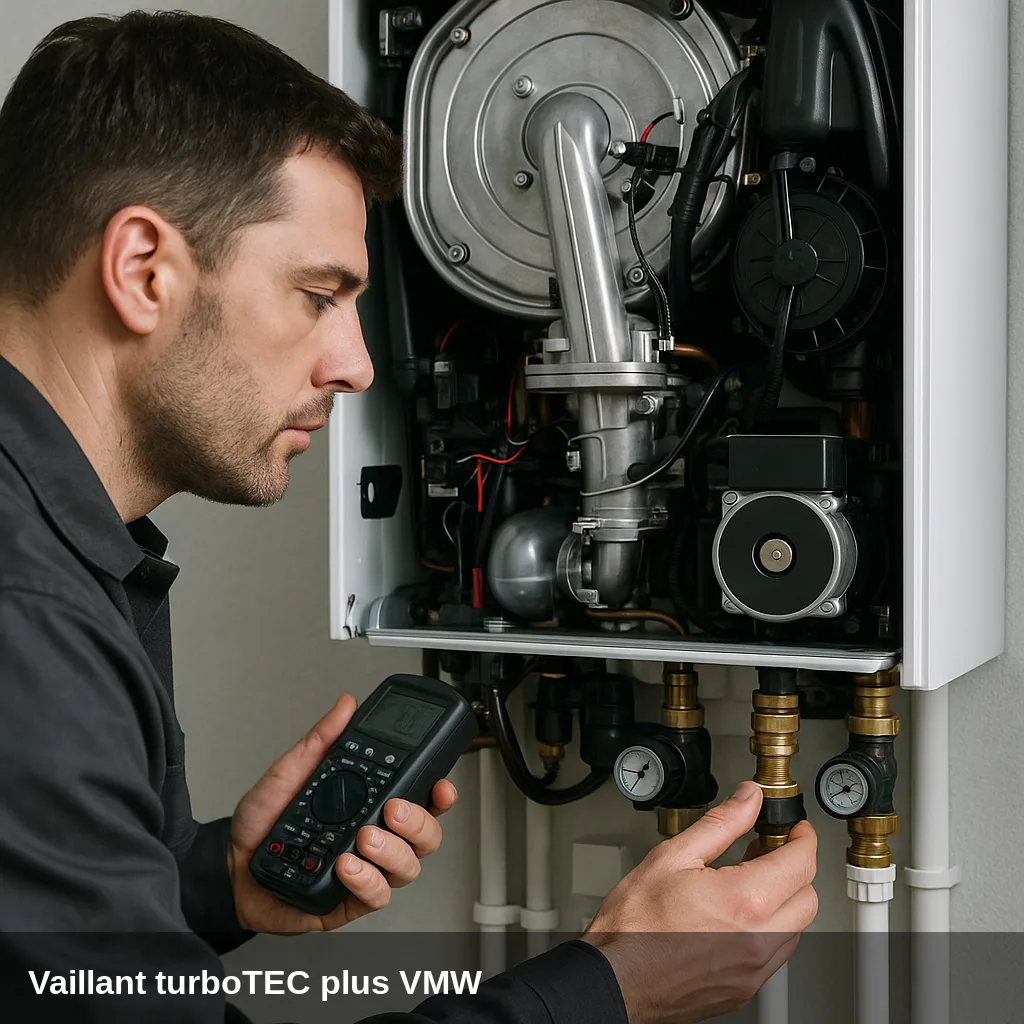
Fault codes related to sensors, electronics, gas valve, fan, or flue gas evacuation require a qualified technician with the appropriate equipment. If the same fault code reappears after a reset, or if the pressure drops repeatedly, a professional inspection is advisable. In Uniclima do you find spare parts for this boiler.
Frequently Asked Questions
It is an ignition fault: the boiler fails to ignite after several attempts. Check that the gas valve is open and there is supply, and reset. If the lockout repeats, a technician should inspect the ignition/ionisation electrode and the gas valve.
F.22 is a safety shutdown due to lack of water: the circuit pressure is too low. Refill the pressure to 1-1.5 bar when cold using the filling key. If it drops again, there is a leak or a defective pressure sensor that should be checked by a technician.
With the reset button on the panel. If the code reappears after resetting, do not insist repeatedly: it indicates an underlying fault that should be diagnosed by a qualified technician.
It shares a good part of the F. code system from the Vaillant group, but as it is not a condensing boiler, it does not display the codes exclusive to condensing boilers. Therefore, its list is shorter.